Climate Change in Iraq and Its Impact

The Center for the Revival of Heritage Organizes a Panel Discussion “Climate Change in Iraq and Its Impact on Ancient Civilizations in Iraq.”

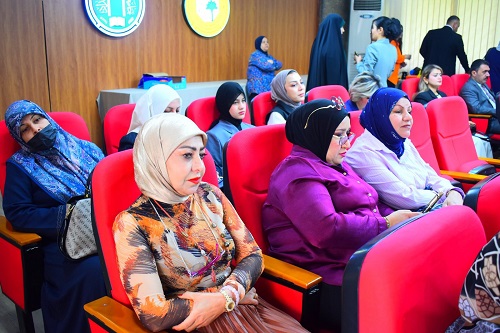
The Department of Human Studies at the Center for the Revival of Arab Scientific Heritage, University of Baghdad, held a panel discussion on Tuesday morning, 17/2/2026, at 10:00 a.m., entitled “Climate Change in Iraq and Its Impact on Ancient Civilizations in Iraq.” The event took place in the hall of Professor Nabila Abdul-Munim Dawood and was attended by a number of faculty members and researchers.The session was chaired by Professor Dr. Salar Ali Khudr, Head of the Department of Human Studies, while the lecture was delivered by Professor Dr. Khamees Dahham Muslih Al-Sabahani from the Department of Geography and Geographic Information Systems, College of Arts – University of Baghdad. In his lecture, he addressed the impact of ancient climate changes on the course of human civilizations in Mesopotamia.He explained that the region experienced cycles of humidity and drought, which directly affected patterns of human settlement and the agricultural economy dependent on the Tigris and Euphrates rivers. He noted that ancient societies reorganized their economic, political, and administrative systems in response to these changes, particularly through the development of irrigation systems and water management..Al-Sabahani also pointed out that the impact of climate extended beyond the economic sphere to influence social and intellectual structures, as reflected in beliefs and myths related to floods and fertility. He emphasized that human adaptability and innovation were among the most important factors in the استمرار (continuity) of civilizations in the region. The panel concluded with several recommendations, أبرزها (most notably) the need to support interdisciplinary research combining climatology, archaeology, and ancient history, as well as to expand the use of Geographic Information Systems technologies for reconstructing the environmental landscape of Mesopotamia and understanding the civilizational transformations the region has undergone throughout history.

637567715_1239051061660335_1271845208766100606_n
637461631_1239050938327014_4071879281295219898_n

Workshop

The Center for the Revival of Heritage Organizes a Workshop on Violent Extremism and Ways to Address It  “Violent Extremism in Contemporary Societies: Causes, Implications, and Methods of Treatment.”

The Center for the Revival of Arab Scientific Heritage at the University of Baghdad held a workshop on Monday, 16/2/2026, on the occasion of the International Day for Countering Violent Extremism. The workshop was entitled “Violent Extremism in Contemporary Societies: Causes, Implications, and Methods of Treatment.” It took place at 10:00 a.m. in the hall of Professor Nabila Abdul-Munim Dawood, with the attendance of a number of professors, researchers, and interested participants. The lecture was delivered by Professor Dr. Taha Sabti Ibrahim and Professor Dr. Anas Issam Ismail, faculty members at the Center. They addressed the concept of violent extremism and its most prominent manifestations in contemporary societies, highlighting the intellectual, social, economic, and psychological factors that contribute to its emergence and spread, particularly in light of rapid global changes and modern communication technologies. The speakers also discussed the serious consequences of violent extremism on the security and stability of societies, as well as its impact on the social fabric and the values of peaceful coexistence. They emphasized the important role of educational, cultural, and religious institutions in promoting a culture of moderation, dialogue, acceptance of others, and strengthening a unified national identity. The workshop witnessed active participation through interventions and scientific discussions from attendees, focusing on mechanisms of intellectual prevention and the importance of directing educational and media discourse toward spreading awareness. It also highlighted the need to adopt educational and cultural programs targeting youth, as they are the group most vulnerable to being influenced by extremist ideas. At the conclusion of the workshop, participants recommended intensifying scientific and research activities addressing the phenomenon of violent extremism, strengthening cooperation between universities, government institutions, and civil society organizations, and developing sustainable training and awareness programs that contribute to building a safe society based on moderation, tolerance, and respect for intellectual and cultural diversity.

637403183_1238219895076785_3726266475267029338_n
637494650_1238219901743451_6194122443716200662_n

Seminar

The Center for the Revival of Heritage Organizes a Seminar “Climate Change in Iraq and Its Impact on Ancient Civilizations in Iraq.”

The Center for the Revival of Arab Scientific Heritage at the University of Baghdad held a seminar on Sunday , 15/2/2026, entitled “The Conditions for Deserving the Title of ‘Scholar’ in the Narratives of Historians and Jurists.” The seminar took place in the hall of Professor Nabila Abdul-Munim Dawood and was attended by a number of professors and researchers. The lecture was  presented by Lecturer Dr. Liqa Shakir Al-Sharifi, a faculty member at the Center, who discussed during her presentation the concept of the title “Scholar” in Islamic heritage. She explained that, among early scholars, this title was not مرتبطا(associated) with obtaining a formal degree or holding a professional position, but rather with a set of scientific and ethical standards established by scholars and historians in biographical and classificatory works. She presented examples from the sayings of leading imams and jurists, emphasizing the necessity of combining deep knowledge with practical application, piety, direct learning from teachers, and obtaining scholarly authorizations (ijazahs). She also clarified that scholars stipulated that anyone described as a “scholar” must possess knowledge of Qur’anic sciences, Hadith, the principles of jurisprudence, and the Arabic language, in addition to familiarity with juristic اختلاف (differences of opinion) and the ability to weigh evidence and derive rulings. She noted that these criteria formed a rigorous scholarly system for regulating legal opinions (fatwas) and protecting society from unqualified individuals assuming authoritative roles. The lecture concluded by emphasizing the need to restore the value of academic specialization and knowledge authentication, and to encourage researchers to study biographical and classificatory works as important sources for understanding the development of scientific activity. It also called for intensifying seminars and scholarly activities that help connect postgraduate students with their intellectual heritage and its well-established methodological foundations.

Workshop “The Role of Oversight Media in Combating Corruption.”

The Center for the Revival of Heritage Organizes a Workshop “The Role of Oversight Media in Combating Corruption.”

The Media and Government Communication Unit at the Center for the Revival of Scientific Heritage at the University of Baghdad organized a workshop on Sunday 15/2/2026, at 10:00 a.m., entitled “The Role of Oversight Media in Combating Corruption.” The workshop was held in the hall of Professor Nabila Abdul-Munim Dawood and was attended by a number of professors, researchers, and those interested in media affairs.

The workshop was delivered by Lecturer Dr. Shahd Haider Aboud from the Department of Media and Government Communication at the Presidency of the University of Baghdad. She discussed the importance of media oversight, its concept and types, as well as the role of oversight media in combating corruption. She also highlighted the functions and roles that various media institutions should adopt in order to achieve the highest levels of transparency and objectivity in reporting news and information.

The workshop also addressed the importance of the media message and its role in society, emphasizing the need to organize continuous training courses to develop the skills of media professionals and improve their ability to cover and convey information impartially, without bias toward any party. It stressed that the media message is a noble humanitarian mission and a responsibility that must be delivered to the public with honesty and clarity.

In conclusion, the workshop witnessed active engagement from the attendees through questions and discussions addressing the challenges facing oversight media in light of digital developments and the spread of social media, as well as the need to enhance journalists’ skills in investigative reporting and fact-checking.

634222573_1237297045169070_1479627451788314194_n

Eid greetings

With the highest expressions of congratulations and blessings on the occasion of the blessed Eid al-Fitr, we ask God to accept our good deeds and yours, and to bring it back to us, to you and to the Islamic nation with the blessings of His grace, and to grant our nation security and prosperity.

Announcement

The Department of Pure Sciences at the Center for the Revival of Arab Scientific Heritage / University of Baghdad announces its scientific seminar entitled: (The Art of Crisis Management Between the Past and the Present) on Tuesday, April 7, 2026, in the Professor Nabila Abdul-Moneim Dawood Hall at our center.

Celebration of the 49th Anniversary of the Center for Revival of Arab Scientific Heritage

Celebration of the 49th Anniversary of the Center for Revival of Arab Scientific Heritage

In 12/2/2026, the Center for Revival of Arab Scientific Heritage at University of Baghdad held a celebration marking its 49th anniversary since its establishment in 1977, attended by a number of professors, leading academics, and Center staff. The ceremony began with the recitation of Surat Al-Fatiha in memory of the late professors who had a significant impact on the scientific journey of the Center. This was followed by a review of the biographies of the Center’s past directors and heads since its founding, highlighting their major achievements and contributions in consolidating the Center’s status and serving heritage. The event also featured dialogues and discussions in which attendees recalled important milestones and memories from the Center’s history, expressing pride in the accomplishments achieved over many years of dedication and service. At the conclusion of the celebration, several professors and staff members were honored in recognition of their efforts and contributions. They were awarded certificates of appreciation, reflecting the Center’s commitment to honoring its pioneers and personnel and reinforcing a culture of gratitude and acknowledgment.

632058022_1234809172084524_8328088456614069047_n
632284158_1234810852084356_4521398133916366943_n

The Women’s Affairs Division at the Center for Revival of Arab Scientific Heritage Holds

The Women’s Affairs Division at the Center for Revival of Arab Scientific Heritage Holds a Discussion Session

In12/2/2026, the Women’s Affairs Division at the Center for Revival of Arab Scientific Heritage at University of Baghdad held a discussion session entitled:  “Effective Family Dialogue: How to Build a Cohesive Family”

The session was held in the Center’s hall and attended by a number of faculty members and researchers. The discussion included a lecture by Dr. Imtithal Kazem Wershan, a faculty member at the Center, in which she addressed the importance of dialogue within the family, its role in resolving daily challenges, and its contribution to enhancing psychological and social stability among family members. Additionally, Dr. Liqaa Amer Ashour, also a faculty member at the Center, presented a research study on the art of family communication and its impact on strengthening family bonds. She highlighted that positive communication helps build mutual trust, reinforce familial relationships, and reduce conflicts, emphasizing that a cohesive family is based on dialogue grounded in respect and understanding. The session included active participation from attendees, who emphasized the importance of the topic and the role of the Women’s Affairs Division in promoting family awareness and fostering a culture of constructive communication within society.

632822566_1234789552086486_1877883870831772337_n

Workshop

The Center for Revival of Arab Scientific Heritage Organizes a Workshop

 As part of Entrepreneurship Week activities, the Center for Revival of Arab Scientific Heritage at University of Baghdad held a workshop on the morning of Thursday, 12/2/2026, entitled: “The Importance of Time Management and Its Impact on the Quality of Life for University Youth.” The workshop was delivered by Assistant Lecturer Juman Adnan Hussein, a faculty member at the Center. During the session, the lecturer discussed the concept of time management, modern techniques, methods for prioritizing tasks, and ways to avoid distractions. She highlighted the impact of proper time planning on achieving balance between academic responsibilities and personal life, which contributes to enhancing academic achievement and improving the overall quality of life for individuals within society. She also emphasized the importance of utilizing this day as an awareness opportunity to instill entrepreneurial culture and develop essential skills, stressing that time management is one of the most important skills a university student needs to build a successful personality capable of meeting the demands of the labor market. The workshop witnessed active participation from attendees, with questions and theoretical inquiries addressed by the lecturer. The discussion enriched the session and reinforced the significance of time management in both academic research and student life.

632822566_1234789552086486_1877883870831772337_n
632281359_1234803682085073_8710265246387818113_n

Delegation from the Center for Revival of Arab Scientific

Delegation from the Center for Revival of Arab Scientific Heritage Attends an International Scientific Conference

By the invitation of Assistant Professor Dr. Hanaa Hani Abdul-Hussein Al-Saffar, Director of the Research Center and Museum of Natural History, Professor Dr. Laith Majeed Hussein, Director of the Center for Revival of Arab Scientific Heritage at University of Baghdad, was invited to participate in the 2nd International Scientific Conference on Natural History and Wildlife, held on Wednesday, 11/2/2026. A number of faculty members from the Center were delegated to attend on his behalf. The delegation was headed by Professor Dr. Anas Issam Ismail and Professor Dr. Wasan Hussein Muhaimid, representing the Center for Revival of Arab Scientific Heritage. This participation aims to strengthen scientific and academic cooperation, facilitate the exchange of research expertise between scientific institutions, and contribute to supporting heritage and scientific studies related to the history of sciences

Scientific seminar

The Baghdad Documentation Department at the Center for Revival of Arab Scientific Heritage Organizes a Scientific Seminar

the Baghdad Documentation Department at the Center for Revival of Arab Scientific Heritage at University of Baghdad organized a scientific seminar entitled: “Markets and Traditional Crafts in Baghdad: Between Past and Present” The seminar was held at Professor Nabila Abdul Munim Dawood Hall, with the attendance of a number of professors, researchers, and specialists in the fields of history, popular heritage, and urban studies. The seminar began with a welcoming speech by Dr. Liqaa Shaker Al-Sharifi, Chair of the Session, followed by remarks from Assistant Lecturer Hajar Bassem Mohammed, who emphasized the importance of documenting Baghdad’s heritage and preserving the city’s historical memory, particularly concerning the old markets and traditional crafts that have been a central part of Baghdad’s social, economic, and cultural identity throughout the ages. The seminar addressed several key topics, including the origins and development of Baghdad’s markets across historical eras, the role of markets in economic and social life, and a review of the most prominent traditional crafts for which Baghdad is known, such as copperwork, carpentry, goldsmithing, popular sewing, and other heritage-related professions. Several scientific papers were presented during the seminar:\ Professor Dr. Ahmed Farhan Jassam from the College of Open Education presented a paper entitled “Heritage Markets on Al-Rasheed Street and Old Markets in Baghdad”, discussing the establishment of traditional markets and their importance in shaping the daily and economic life of the city’s residents. Dr. Qusay Dhiab Abbas Al-Tamimi, also from the College of Open Education, presented a paper on the relationship between the geographical locations of markets and Baghdad’s urban structure, addressing the influence of city planning and site selection on the distribution and functions of the markets. Professor Dr. Anas Ahmed Hammadi Al-Mashhadani from the College of Open Education presented a paper entitled “The Emergence of Markets in Baghdad during the Abbasid Era”, outlining the stages of market establishment and their development during that historical period. Additionally, several other faculty members and researchers presented studies and research related to the topic. The final presentation was delivered by Assistant Lecturer Juman Adnan Hussein from our Center, focusing on the customs, traditions, and popular reputation associated with heritage markets. Her presentation highlighted the results of field and archival studies on the history of Baghdad’s markets and craftsmen, their working methods, and included archival photos and documents illustrating daily life in old Baghdad. The seminar concluded with an open discussion, during which attendees offered a range of opinions and recommendations, emphasizing the need to support craftsmen, enhance documentation and archiving programs, and promote cultural and educational initiatives aimed at preserving Baghdad’s heritage and transmitting it to future generations.

632190990_1233097278922380_2480223821894767261_n

Center’s Faculty Member Receives Academic Recognition

Center’s Faculty Member Receives Academic Recognition

Professor Dr. Zainab Kamil Karim, a faculty member at the Center for Revival of Arab Scientific Heritage at University of Baghdad, received a letter of thanks and appreciation issued by the Ministry of Higher Education and Scientific Research, based on the recommendation of the Arabic Language Committee, in recognition of her distinguished scientific and academic efforts and her contributions to serving the Arabic language and enhancing its presence within the university environment.This recognition honors her active role in supporting scientific and linguistic activities, her dedication to raising the academic level of graduate students, and her continuous efforts to promote pride in the Arabic language while preserving its integrity. The award underscores her academic standing and the sincere efforts she has made in the field of higher education, with best wishes for her continued success and further contributions in serving the scientific mission and the Arabic language