Discussion Panel “Reshaping the Historical

The Center for the Revival of Heritage Organizes a Discussion Panel “Reshaping the Historical Research Methodology with Artificial Intelligence.”

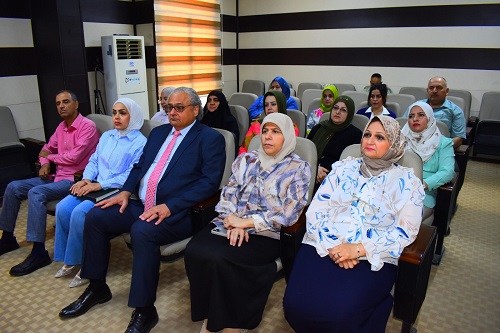
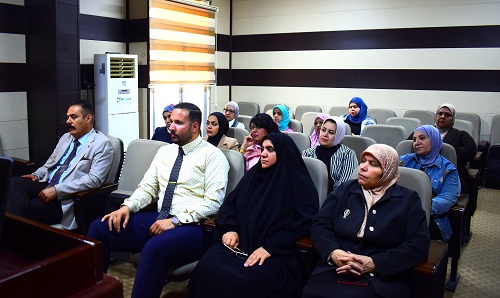
The Baghdad Documentation Department at the Center for the Revival of Arab Scientific Heritage, University of Baghdad, organized a discussion panel on Tuesday,17/3/2026,entitled “Reshaping the Historical Research Methodology with Artificial Intelligence.” The panel was attended by a number of researchers and faculty members interested in historical studies.

The lecture was delivered by Assistant Professor Dr. Raheem Farhan Saddam, a faculty member at the Center. He discussed the major transformations taking place in historical research methodology in light of the rapid developments in artificial intelligence technologies, highlighting the role of these tools in analyzing historical sources, accelerating documentation processes, and opening new horizons for researchers to reinterpret the past with modern perspectives.

The lecturer emphasized that history remains a humanistic discipline grounded in interpretation and critical analysis. He noted that artificial intelligence cannot fully replace historians but provides advanced tools to enhance the efficiency of their work. He added that the integration of AI’s technical capabilities with human analytical insight can create a qualitative shift in understanding history—not only in re-reading the past but also in applying its lessons to build a more stable and informed future.

The lecture also included several interventions from attendees, discussing the challenges of employing AI in historical studies and the importance of maintaining scientific methodology and objectivity, alongside developing strategies to enhance researchers’ skills in line with these technological transformations. The session concluded with an emphasis on the importance of continuing such academic events, which contribute to the development of scholarly research and strengthen the integration between the humanities and modern technologies.

653894769_1260203646211743_8576660412008138666_n

workshop

The Center for the Revival of Heritage Organizes a Workshop under the Theme: “Mesopotamian Women – Their Presence and Role in Ancient Society”

The Women’s Affairs Division at the Center for the Revival of Arab Scientific Heritage, University of Baghdad, organized an unscheduled workshop on Sunday 15/3/2026, entitled “Women in Mesopotamian Society: An Analysis of Their Position and Role within Family and Religious Structures.” The workshop was held in the hall of Professor Nabila Abdul-Munim Dawood and attended by a number of faculty members and Center staff.

The lecture was delivered by Dr. Israa Saad Saleh, a faculty member at the Center. She explained the status and role of women in the civilization of Mesopotamia through the study and analysis of cuneiform texts and historical sources, which clearly demonstrate the important contributions women made to Mesopotamian society. These sources indicated that women were not marginal figures but active participants in various aspects of life.

The workshop addressed women’s presence in religious life, highlighting their roles in ancient beliefs and myths as goddesses of high status. It also explored women’s political influence, showcasing female figures who held significant positions such as queens or queen mothers. Additionally, the workshop examined women’s contributions to economic, cultural, and daily life within the society.

Discussions also pointed out that laws and historical documents from Mesopotamia reflect women’s clear rights and social status, demonstrating their importance in building the society, contributing to its stability, and supporting its development.

657726282_1266781042220670_3911375495156131142_n

workshop

Sustainable Development as a Framework for the Protection and Management of Cultural Heritage

The Baghdad Documentation Department at the Center for the Revival of Arab Scientific Heritage, University of Baghdad, organized a workshop on Tuesday, 24/2/2026, , entitled “Sustainable Development of Heritage and the Management of Archaeological Sites.” The workshop was held in the hall of Professor Nabila Abdul-Munim Dawood, with the attendance of a distinguished group of professors, researchers, and those interested in heritage affairs.

The session was chaired by Dr. Rasha Issa Fares, Head of the Baghdad Documentation Department, who welcomed the attendees and emphasized at the beginning of the session the importance of integrating academic and institutional efforts in the field of preserving cultural and civilizational heritage. She also stressed the need to adopt modern scientific approaches that contribute to safeguarding the historical identity of Baghdad as a city with a rich civilizational legacy.

The workshop began with a lecture by Dr. Liqa Shakir Al-Sharifi, presenting her research entitled “Employing Sustainable Development in the Service of Baghdad’s Heritage.” In her presentation, she addressed the concept of sustainable development as a practical framework through which cultural heritage can be protected and invested in a balanced manner. She explained that applying sustainable development to Baghdad’s heritage contributes to strengthening national identity, stimulating the local economy, creating job opportunities, and raising societal awareness of the importance of preserving cultural legacy.

This was followed by a presentation from Assistant Lecturer Hajar Basim Mohammed, entitled “The Role of Sustainable Development in the Management of Archaeological Sites.” She discussed the concept of sustainable management of archaeological sites as a framework that achieves a balance between heritage preservation and its utilization for development purposes. This involves maintaining the archaeological site as a historical value while also employing it as an economic and social resource that serves the community. She reviewed the major challenges facing archaeological sites, such as increasing tourism, urban pressure, climate change, and limited funding, referring to international experiences. She also discussed the environmental, economic, and social dimensions of sustainable management and presented a practical five-stage model for managing archaeological sites in accordance with internationally recognized standards.

Both speakers emphasized that sustainable management is a fundamental requirement for ensuring the preservation and protection of cultural heritage for future generations.

641637020_1244848891080552_2777054651262084121_n
642315245_1244849054413869_5380917870319984769_n

Eid greetings

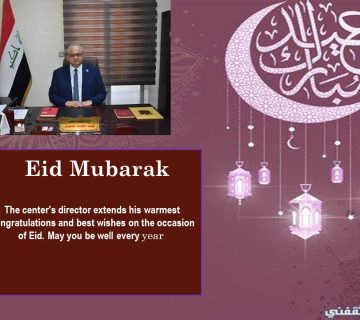
With the highest expressions of congratulations and blessings on the occasion of the blessed Eid al-Fitr, we ask God to accept our good deeds and yours, and to bring it back to us, to you and to the Islamic nation with the blessings of His grace, and to grant our nation security and prosperity.

Seminar

The Center for Revival of Arab Scientific Heritage Organizes a Seminar

the Center for Revival of Arab Scientific Heritage at University of Baghdad organized a seminar entitled:

“Sleep in the Holy Qur’an.” The seminar was attended by a number of professors and researchers and was held at Professor Nabila Abdul Munim Dawood Hall. The lecture was delivered by Professor Dr. Zainab Kamil Karim, a faculty member at the Center. In her lecture, Dr. Karim discussed the importance of sleep in human life from both Qur’anic and health perspectives. She explained that the Qur’an refers to sleep in nine verses due to its essential role in physical rest, revitalizing energy, and stabilizing the human psyche. She cited several Qur’anic verses, including: “And We made your sleep [a means for] rest”; “And of His signs is your sleep by night and by day”; and “Allah takes the souls at the time of their death, and those that do not die during their sleep.” She further explained that the Qur’an presents a balanced understanding of sleep, describing it as a divine blessing, a sign of God’s power, and a means of preserving physical and mental health. She emphasized that sleep disorders negatively affect thinking, behavior, and scientific productivity. The lecture included scientific discussions and contributions from attendees regarding the relationship between Qur’anic guidance and modern studies in psychology and medicine. At the conclusion, Dr. Karim recommended adherence to proper sleep practices and health guidelines derived from Qur’anic and Prophetic teachings.

628964165_1232007752364666_941224068747707760_n

Center’s participation 

Under the patronage of the Office of the President of the University of Baghdad, the eleventh meeting of the liaison officers of the University of Baghdad Museum was held on Tuesday, January 20, 2026, at in Dr. Mahdi Hantoosh Hall, College of Engineering. The meeting witnessed the participation of Ms. Enas Gharib Mousa, the museum liaison officer at our Center, as part of the Center’s efforts to strengthen institutional communication and actively engage in activities related to museum and cultural affairs at the University of Baghdad. This meeting comes within the framework of supporting the work of the University of Baghdad Museum and coordinating efforts among liaison officers in a manner that contributes to the development of museum work and enhances its academic and cultural role.

Course on Editing and Preserving Arabic

Conclusion of the Training Course on Editing and Preserving Arabic Manuscripts at the Heritage Revival Center

The Center for the Revival of Arab Scientific Heritage at the University of Baghdad concluded its specialized manuscript course entitled “Editing and Preserving Arabic Manuscripts,” held from January 11 to 14, in cooperation with the Continuing Education Center at the University of Baghdad. The course aimed to develop the skills of researchers and enthusiasts in the field of Arabic manuscript editing, introducing the scientific and methodological foundations used in verifying and preserving heritage texts, thereby contributing to supporting scholarly research and safeguarding the Arab scientific heritage. The course included the presentation of several specialized research papers. Professor Dr. Zainab Kamel Karim, a faculty member at the Center, presented a paper entitled “Fundamentals of Manuscript Editing.” Dr. Liqaa Amer Ashour, also a faculty member at the Center, presented “Manuscript Cataloging and Its Role in Supporting Research and Text Verification.” Dr. Sundus Zaidan Khalaf contributed a paper titled “Introduction to Textual Verification,” while Assistant Professor Dr. Nihal Ni‘ma Majid from the Department of History, College of Education for Women, presented “Challenges in Manuscript Editing,” discussing the major difficulties faced by researchers in this field.

At the conclusion of the course, Assistant Professor Dr. Iman Saleh Mahdi presented a paper entitled “Critiquing Manuscript Editing,” emphasizing the importance of rigorous scientific review in manuscript verification processes. The course concluded with a final assessment exam to evaluate the participants’ level of learning and the achievement of the course’s educational objectives. Ms. Fatima Mohammed Ali, the liaison officer for the course, played an active role in organizational and administrative matters, supervising and following up on all technical aspects, which contributed to the successful completion of the course. The Heritage Revival Center affirmed at the conclusion of the course its commitment to continuing the organization of future training courses and workshops dedicated to Arab scientific heritage and manuscript editing, in support of researchers and in reinforcement of the University’s academic and cultural role.

616798753_1213816767517098_8808619324748128638_n
616498865_1213816304183811_3405278214444758016_n
617510873_1213816474183794_4479949245938519529_n
616384186_1213816250850483_3662266890351833756_n

Heritage Revival Center Staff Launch a Comprehensive Cleaning Campaign

In line with the directives of the University of Baghdad’s administration to enhance the cultural and environmental appearance of university institutions, a number of male staff members at the Center participated in a comprehensive cleaning campaign for the corridors and surrounding areas of the Center. This initiative aims to preserve the aesthetic appeal of the premises and to create a proper work environment that reflects a spirit of cooperation and institutional belonging, while providing a healthy and clean atmosphere for all staff and employees. The Center’s administration affirmed its continued support for such initiatives, which contribute to improving the overall appearance and promoting a culture of teamwork and shared responsibility.

615365814_1213728137525961_2028723665133448714_n
615789808_1213728140859294_1709739090182161659_n

in Arabic and Islamic Manuscripts between Protection and Ornamentation.”

The Center for the Revival of Arab Scientific Heritage at the University of Baghdad held a scientific symposium on Tuesday morning, January 13, 2026, entitled “Art and Craftsmanship in Arabic and Islamic Manuscripts between Protection and Ornamentation.” The symposium was attended by a number of professors, researchers, and individuals interested in manuscripts and heritage, and was held in Professor Nabila Abdul Munim Dawood Hall at the Center. The session was chaired by Professor Dr. Zainab Kamel Karim, Head of the Manuscripts Department at the Center, who emphasized in her opening remarks the importance of manuscripts as a civilizational and intellectual testimony reflecting the development of sciences and arts in Arab and Islamic civilization, and the necessity of balancing their protection and preservation on the one hand with highlighting their aesthetic and artistic value on the other.

The symposium commenced with a lecture by Ms. Muna Naji Abbas from the Ministry of Culture / Iraqi Manuscripts House. Her research paper, entitled “Ornamented Manuscripts between Definition and Care: Selected Holdings of the Iraqi Manuscripts House as a Model,” addressed the artistic and technical aspects of manuscripts, methods of decoration and illumination, and the role these elements play in preserving manuscripts and presenting them simultaneously as artistic and historical artifacts. Dr. Nihal Ni‘ma Majid from the College of Education for Women at the University of Baghdad also participated with a paper entitled “Papermaking in Islamic Heritage,” in which she highlighted the role of manuscripts in documenting history and transmitting knowledge across the ages, as well as the mastery involved in selecting and producing paper.

Meanwhile, Dr. Sundus Zaidan Khalaf, a faculty member at the Center, presented her research paper entitled “The Craft of Inks and Types of Writing Media,” discussing the importance of modern techniques in protecting and conserving manuscripts while preserving their authenticity and heritage value, as well as the selection of manuscript colors and the symbols used by scribes. The symposium included a visual presentation showcasing selected examples of Arabic and Islamic manuscripts, highlighting their artistic and intellectual richness and their great importance in the study of history, science, and the arts. The symposium concluded with fruitful scholarly discussions between the attendees and speakers, collectively emphasizing the need to intensify scientific and institutional efforts to preserve Arabic and Islamic manuscripts as an invaluable human heritage and a bridge connecting the past with the present, safeguarding the nation’s identity for future generations.

615829828_1210310634534378_6172544459469524113_n
616237331_1210309951201113_3655574398284127658_n
615796111_1210310977867677_4943685643975344544_n

Celebrating a Distinguished Academic Career at the Heritage Revival Center

Celebrating a Distinguished Academic Career at the Heritage Revival Center

In a gesture of loyalty and appreciation for a distinguished academic and administrative career rich in dedication and achievement, the Center for the Revival of Arab Scientific Heritage at the University of Baghdad honored Professor Dr. Alaa Nafi, the former Director of the Center, on the occasion of her retirement. This recognition comes in appreciation of her outstanding efforts and the valuable scientific and administrative contributions she made, which had a significant impact on developing the Center’s work and advancing its academic mission.

The honoring ceremony was conducted by Professor Dr. Laith Majid Hussein, Director of the Center for the Revival of Heritage, who praised in his speech her prominent role, sincerity, and dedication in performing her duties. He emphasized that her contributions and imprint will remain present in the Center’s journey and achievements.

At the conclusion of the ceremony, the staff of the Center expressed their sincere gratitude and appreciation to Professor Dr. Alaa Nafi, wishing her continued health and well-being, and a happy retirement filled with comfort, success, and ongoing fulfillment.

615416718_1209548957943879_9137426902359137546_n
615496201_1209549094610532_7834135353770026700_n
614782492_1209384824626959_3268755776530326721_n

Seminar

Heritage Revival Center Organizes a Seminar “Types of Interpretation by the Close (Associated) Meaning.”

The Center for the Revival of Arab Scientific Heritage at the University of Baghdad organized a seminar on Monday morning, January 12, 2026,., entitled “Types of Interpretation by the Close Meaning.” The seminar was attended by a number of researchers and academics and was held in Professor Nabila Abdul Munim Dawood Hall. The lecture was delivered by Professor Dr. Taha Sabti Ibrahim, Head of the Department of Pure Sciences at the Center.

The lecturer explained that interpretation by the close meaning refers to explaining a word or a verse through a meaning that is related to the original meaning by implication, by a part of it, or by example (type). He then outlined the types of interpretation by the close meaning, beginning with interpretation by implication (al-lāzim), in which the derived meaning is not directly indicated by the wording but is necessarily entailed by it, both rationally and customarily—just as writing necessarily implies the existence of a writer. An example of this is interpreting the word “tadḥā” as “to sweat” in the verse: “And you will not suffer therein from thirst, nor from exposure to the sun” (Surat Ṭā Hā, verse 119). Commentators have offered two explanations for its meaning: first, that one will not be exposed to the sun and thus harmed by its heat; and second, that one will not sweat. Sweating is a natural consequence of exposure to harmful sunlight.

The researcher further clarified interpretation by part, which occurs when the exegete mentions only a part of the meaning that a word may carry in order to indicate the remaining meanings. An example is interpreting “the sacred ordinances of Allah” as the rituals in the verse: “That is so. And whoever honors the sacred ordinances of Allah—it is best for him in the sight of his Lord” (Surat al-Ḥajj, verse 30). If “the sacred ordinances” are understood to mean everything that is inviolable, this represents interpretation by the original meaning; however, if they are understood as the rituals of Hajj, this constitutes interpretation by part of the meaning, since the rituals are one aspect of what must not be violated.

Finally, the lecturer referred to interpretation by example (type), in which the exegete mentions a specific example or type of the word’s meaning, such as interpreting the word “their imam” as the Book, the Prophet, or deeds in the verse: “On the Day We will call every people by their imam. Then whoever is given his record in his right hand—those will read their records, and they will not be wronged even as much as a thread” (Surat al-Isrā’, verse 71). In this verse, “imam” may refer to their Book, their Prophet, the leader of their era, or their deeds; each of these interpretations represents a type and an example of the original meaning

Congratulations

On the occasion of the 104th anniversary of the establishment of the valiant Iraqi Police, commemorated on the ninth of January each year, we are pleased to extend our highest congratulations and sincerest feelings of pride to all members of the Iraqi Police—officers and ranks alike—in recognition of the great sacrifices they have made and continue to make in order to maintain security and stability and to safeguard the dignity of the home and its citizens. This cherished national occasion represents a moment of pride and honor for a history rich in dedication and discipline, and it embodies the pivotal role of the Iraqi Police in upholding the rule of law, building a state of institutions, and protecting national achievements. We pray to Almighty God to protect Iraq and its people, to grant our security forces continued success and guidance, to bestow His vast mercy upon the martyrs of the police, and to grant a speedy recovery to the wounded.

May the Iraqi Police always be well, and may they continue to serve with honor year after year