Seminar

The Center for the Revival of Heritage Organizes a Seminar “Sunspots in Ancient and Modern Sources and Their Climatic Effects.”

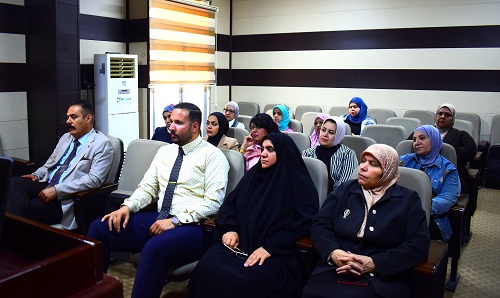
The Center for the Revival of Arab Scientific Heritage at the University of Baghdad organized a scientific seminar on Sunday morning, 15/3/2026, entitled “Sunspots in Ancient and Modern Sources and Their Climatic Effects.” The seminar was held in the hall of Professor Nabila Abdul-Munim Dawood and attended by a number of professors and researchers.

The lecture was delivered by Dr. Salar Ali Khidr, Head of the Department of Humanities. He introduced sunspots as an astronomical phenomenon appearing on the surface of the Sun, reviewing what has been recorded about them in ancient scientific sources as well as in modern studies. He explained their nature, cyclical patterns, and the main climatic effects associated with solar activity, highlighting the relationship between the increase or decrease in the number of sunspots and potential changes in Earth’s climate.

The seminar also featured a scientific presentation with modern images and data illustrating how sunspots form and their role in affecting the solar radiation reaching Earth. The event included scientific discussions and questions from attendees, allowing for an exchange of ideas on the importance of studying solar activity and its climatic impacts.

workshop

The Center for the Revival of Heritage Organizes a Workshop under the Theme: “Mesopotamian Women – Their Presence and Role in Ancient Society”

The Women’s Affairs Division at the Center for the Revival of Arab Scientific Heritage, University of Baghdad, organized an unscheduled workshop on Sunday 15/3/2026, entitled “Women in Mesopotamian Society: An Analysis of Their Position and Role within Family and Religious Structures.” The workshop was held in the hall of Professor Nabila Abdul-Munim Dawood and attended by a number of faculty members and Center staff.

The lecture was delivered by Dr. Israa Saad Saleh, a faculty member at the Center. She explained the status and role of women in the civilization of Mesopotamia through the study and analysis of cuneiform texts and historical sources, which clearly demonstrate the important contributions women made to Mesopotamian society. These sources indicated that women were not marginal figures but active participants in various aspects of life.

The workshop addressed women’s presence in religious life, highlighting their roles in ancient beliefs and myths as goddesses of high status. It also explored women’s political influence, showcasing female figures who held significant positions such as queens or queen mothers. Additionally, the workshop examined women’s contributions to economic, cultural, and daily life within the society.

Discussions also pointed out that laws and historical documents from Mesopotamia reflect women’s clear rights and social status, demonstrating their importance in building the society, contributing to its stability, and supporting its development.

657726282_1266781042220670_3911375495156131142_n

The Reality of Water in Iraq – Problems and Solutions.”

The Center for the Revival of Heritage Organizes a Discussion Panel “The Reality of Water in Iraq – Problems and Solutions.”

The Department of Pure Sciences at the Center for the Revival of Arab Scientific Heritage, University of Baghdad, organized a discussion panel on Tuesday, 10/3/2026, entitled “The Reality of Water in Iraq – Problems and Solutions.” The event was held in the hall of Professor Nabila Abdul-Munim Dawood and attended by a number of professors and researchers.

The lecture was delivered by Dr. Salar Ali Khidr, Head of the Department of Pure Sciences. He discussed the challenges facing Iraq’s water resources and ways to address them. The panel included a scientific presentation on the state of water in Iraq, highlighting that the country possesses significant water resources, primarily the Tigris and Euphrates rivers and their tributaries, as well as seasonal valleys coming from Iran and those in the western desert. Despite these resources, water volumes fluctuate noticeably from year to year.

Dr. Khidr explained that reduced water availability in some years leads to increased pollution levels in rivers and other water sources, necessitating scientific and environmental measures to mitigate the problem. He also emphasized the importance of treating wastewater before discharging it into rivers, as this plays a major role in maintaining water quality, protecting the environment, and safeguarding public health. The discussion concluded with a call to strengthen scientific and technical efforts for the sustainable management of water resources and to develop practical solutions that help reduce pollution and ensure the long-term sustainability of water in Iraq.

649942215_1255640150001426_1628758506174648132_n
650039598_1255640210001420_4788263508753820391_n

Faculty Member from the Center Receives Academic Promotion

The administration of the Center for the Revival of Arab Scientific Heritage at the University of Baghdad extends its warmest congratulations to Dr. Liqaa Shakir Khattar Al-Sharifi according to get promotion to the rank of Assistant Professor. We wish her continued success and excellence in her academic career.

Seminar

The Center for the Revival of Arab Scientific Heritage Organizes a Seminar “Al-Hamdani and His Scientific Contributions.”

The Center for the Revival of Arab Scientific Heritage at the University of Baghdad organized a seminar on Sunday, 8/3/2026, at 10:00 a.m., entitled “Al-Hamdani and His Scientific Contributions.” The seminar was held in the hall of Professor Nabila Abdul-Munim Dawood and attended by a number of professors and researchers. The lecture was delivered by Dr. Sahar Hassan Abdul-Rasool, a faculty member at the Center. She introduced Al-Hamdani (Al-Hasan ibn Ahmad ibn Ya‘qub, d. 350 AH / 961 CE), who belonged to the largest tribes of Bakil and traced his lineage to Hamdan. His father was a traveler who moved between Basra, Kufa, Baghdad, and Egypt, eventually settling in Sa‘da. Al-Hamdani later moved to Mecca in 305 AH / 917 CE for over six years before returning to Sa‘da, which was a center of Zaydi Imams and attracted many scholars and students of knowledge. Al-Hamdani was called “the Tongue of Yemen” in recognition of his knowledge and eloquence. It was said of him: “No one was born in Yemen like him in knowledge, understanding, language, poetry, and mastery of Arabic sciences, including grammar, language, poetry, genealogy, biography, and history.”

Dr. Sahar highlighted his most prominent work, “Al-Aklil,” a scientific encyclopedia written in 330 AH / 941 CE in ten volumes, covering the history and culture of ancient Yemen. Of these, the first, second, eighth, and tenth volumes have survived. She also mentioned the “Jewels of the Ancient Ones” in gold and silver, with the first edition prepared and edited by Muhammad Al-Sha‘ibi in 1983, among other works.

She explained that his writings demonstrate the scholarly methodology he employed in acquiring knowledge. Like other Muslim scholars, he began by studying the works of his predecessors, examining their points of agreement and disagreement, and ultimately forming his own reasoned conclusions. He relied on a scientific, empirical approach—a precise research method based on systematic observation and controlled experimentation to test hypotheses.

workshop

The Center for the Revival of Heritage Organizes a Workshop Types of Scripts and Their Importance in Reading Manuscripts.”

The Manuscripts Department at the Center for the Revival of Arab Scientific Heritage, University of Baghdad, organized a workshop on Wednesday, 4/3/2026, entitled “Types of Scripts and Their Importance in Reading Manuscripts.” The workshop was held in the hall of Professor Nabila Abdul-Munim Dawood and attended by a number of researchers and faculty members. The lecture was delivered by Professor Dr. Zainab Kamil Karim, Head of the Manuscripts Department at the Center. During the workshop, she reviewed the most prominent types of Arabic scripts used in manuscript writing throughout the ages, including Kufi, Naskh, Thuluth, Diwani, Ruq’ah, and Nastaliq scripts. She explained the artistic characteristics of each type, their visual differences, and how to distinguish letters and words in each script. She also highlighted the importance of knowing script types for facilitating accurate reading and understanding of manuscripts, particularly when dealing with ancient manuscripts where letter forms and writing styles vary. She emphasized that mastery of these scripts is a fundamental pillar for the work of researchers and scholars in the field of heritage studies. The workshop witnessed active engagement from attendees through questions and discussions, and concluded with an emphasis on the importance of continuing specialized scientific workshops that help develop the skills of professionals in the field of manuscripts and enhance the quality of scholarly work.

647679073_1250892477142860_6951156011268286342_n

seminar

Center for the Revival of Heritage Organizes a Seminar “The Relationship Between History and Education and Its Impact on Developing the Educational Process.”

The Center for the Revival of Arab Scientific Heritage at the University of Baghdad organized a seminar on Monday, 2/3/2026, entitled “The Relationship Between History and Education and Its Impact on Developing the Educational Process.” The lecture was delivered by Dr. Bashayer Mawlood Tawfiq, a faculty member at the Center. She discussed the integrative relationship between history and education, explaining that history is not limited to narrating past events but contributes to building learners’ awareness, developing their identity, and enhancing their analytical and reasoning abilities. Education, on the other hand, uses historical knowledge to instill values, shape behavior, and foster positive attitudes. She highlighted the research problem, noting the weak application of the educational dimension of history in classrooms, where traditional memorization-based methods prevail. This has resulted in limited development of critical thinking and a weak connection between the subject and students’ reality. The study aimed to clarify the nature of the relationship between history and education, identify areas of deficiency, and propose mechanisms to activate this integration in ways that contribute to developing the educational process. The theoretical framework emphasized teaching history analytically to foster values such as belonging and tolerance, while enhancing critical thinking and decision-making skills. Integrating the educational dimension into history teaching transforms the classroom into an active learning environment based on dialogue, document analysis, and problem-solving.In conclusi on, she stressed that developing the educational process requires using history as a tool to cultivate thoughtful, aware individuals rather than mere receivers of information. If you want, I can also merge this with your previous heritage seminars and workshops into one polished English report, ready for publication or newsletter use. Do you want me to do that?

workshop

Sustainable Development as a Framework for the Protection and Management of Cultural Heritage

The Baghdad Documentation Department at the Center for the Revival of Arab Scientific Heritage, University of Baghdad, organized a workshop on Tuesday, 24/2/2026, , entitled “Sustainable Development of Heritage and the Management of Archaeological Sites.” The workshop was held in the hall of Professor Nabila Abdul-Munim Dawood, with the attendance of a distinguished group of professors, researchers, and those interested in heritage affairs.

The session was chaired by Dr. Rasha Issa Fares, Head of the Baghdad Documentation Department, who welcomed the attendees and emphasized at the beginning of the session the importance of integrating academic and institutional efforts in the field of preserving cultural and civilizational heritage. She also stressed the need to adopt modern scientific approaches that contribute to safeguarding the historical identity of Baghdad as a city with a rich civilizational legacy.

The workshop began with a lecture by Dr. Liqa Shakir Al-Sharifi, presenting her research entitled “Employing Sustainable Development in the Service of Baghdad’s Heritage.” In her presentation, she addressed the concept of sustainable development as a practical framework through which cultural heritage can be protected and invested in a balanced manner. She explained that applying sustainable development to Baghdad’s heritage contributes to strengthening national identity, stimulating the local economy, creating job opportunities, and raising societal awareness of the importance of preserving cultural legacy.

This was followed by a presentation from Assistant Lecturer Hajar Basim Mohammed, entitled “The Role of Sustainable Development in the Management of Archaeological Sites.” She discussed the concept of sustainable management of archaeological sites as a framework that achieves a balance between heritage preservation and its utilization for development purposes. This involves maintaining the archaeological site as a historical value while also employing it as an economic and social resource that serves the community. She reviewed the major challenges facing archaeological sites, such as increasing tourism, urban pressure, climate change, and limited funding, referring to international experiences. She also discussed the environmental, economic, and social dimensions of sustainable management and presented a practical five-stage model for managing archaeological sites in accordance with internationally recognized standards.

Both speakers emphasized that sustainable management is a fundamental requirement for ensuring the preservation and protection of cultural heritage for future generations.

641637020_1244848891080552_2777054651262084121_n
642315245_1244849054413869_5380917870319984769_n

seminar

The Center for the Revival of Arab Scientific Heritage at the University of Baghdad organized a scientific seminar “The Scholarly Contributions of Professor Fatima Zabbar Anizan in (serving) Arab-Islamic Heritage.”

on Sunday, 22/2/2026,., entitled “The Scholarly Contributions of Professor Fatima Zabbar Anizan in (serving) Arab-Islamic Heritage.” The seminar was presented by Dr. Rasha Issa Fares, a lecturer at the Center, and was attended by a number of professors, researchers, and staff members in the hall of Professor Nabila Abdul-Munim Dawood. The researcher spoke about the academic biography of Professor Dr. Fatima Zabbar Anizan, her academic career in the field of Islamic history and historical research methodology, and her significant scholarly contributions to the study of Arab-Islamic heritage. These included her work in editing manuscripts and analyzing sources of Islamic history. The lecturer also reviewed her extensive research output, her supervision of postgraduate theses and dissertations, as well as her participation in scientific conferences and seminars, highlighting her esteemed academic standing.The researcher explained that the late scholar was considered one of the most prominent Iraqi researchers in the field of Islamic history, as her writings and methodological studies enriched the historical library with rigorous research that has become a key reference for scholars in universities and research centers. The seminar concluded with several scholarly interventions that praised the efforts of Professor Dr. Fatima Zabbar Anizan and her role in serving historical and heritage studies, emphasizing the importance of reviving her academic legacy and introducing it to new generations

640268964_1243195347912573_4534822695885462631_n

Climate Change in Iraq and Its Impact

The Center for the Revival of Heritage Organizes a Panel Discussion “Climate Change in Iraq and Its Impact on Ancient Civilizations in Iraq.”

The Department of Human Studies at the Center for the Revival of Arab Scientific Heritage, University of Baghdad, held a panel discussion on Tuesday morning, 17/2/2026, at 10:00 a.m., entitled “Climate Change in Iraq and Its Impact on Ancient Civilizations in Iraq.” The event took place in the hall of Professor Nabila Abdul-Munim Dawood and was attended by a number of faculty members and researchers.The session was chaired by Professor Dr. Salar Ali Khudr, Head of the Department of Human Studies, while the lecture was delivered by Professor Dr. Khamees Dahham Muslih Al-Sabahani from the Department of Geography and Geographic Information Systems, College of Arts – University of Baghdad. In his lecture, he addressed the impact of ancient climate changes on the course of human civilizations in Mesopotamia.He explained that the region experienced cycles of humidity and drought, which directly affected patterns of human settlement and the agricultural economy dependent on the Tigris and Euphrates rivers. He noted that ancient societies reorganized their economic, political, and administrative systems in response to these changes, particularly through the development of irrigation systems and water management..Al-Sabahani also pointed out that the impact of climate extended beyond the economic sphere to influence social and intellectual structures, as reflected in beliefs and myths related to floods and fertility. He emphasized that human adaptability and innovation were among the most important factors in the استمرار (continuity) of civilizations in the region. The panel concluded with several recommendations, أبرزها (most notably) the need to support interdisciplinary research combining climatology, archaeology, and ancient history, as well as to expand the use of Geographic Information Systems technologies for reconstructing the environmental landscape of Mesopotamia and understanding the civilizational transformations the region has undergone throughout history.

637567715_1239051061660335_1271845208766100606_n
637461631_1239050938327014_4071879281295219898_n

Workshop

The Center for the Revival of Heritage Organizes a Workshop on Violent Extremism and Ways to Address It  “Violent Extremism in Contemporary Societies: Causes, Implications, and Methods of Treatment.”

The Center for the Revival of Arab Scientific Heritage at the University of Baghdad held a workshop on Monday, 16/2/2026, on the occasion of the International Day for Countering Violent Extremism. The workshop was entitled “Violent Extremism in Contemporary Societies: Causes, Implications, and Methods of Treatment.” It took place at 10:00 a.m. in the hall of Professor Nabila Abdul-Munim Dawood, with the attendance of a number of professors, researchers, and interested participants. The lecture was delivered by Professor Dr. Taha Sabti Ibrahim and Professor Dr. Anas Issam Ismail, faculty members at the Center. They addressed the concept of violent extremism and its most prominent manifestations in contemporary societies, highlighting the intellectual, social, economic, and psychological factors that contribute to its emergence and spread, particularly in light of rapid global changes and modern communication technologies. The speakers also discussed the serious consequences of violent extremism on the security and stability of societies, as well as its impact on the social fabric and the values of peaceful coexistence. They emphasized the important role of educational, cultural, and religious institutions in promoting a culture of moderation, dialogue, acceptance of others, and strengthening a unified national identity. The workshop witnessed active participation through interventions and scientific discussions from attendees, focusing on mechanisms of intellectual prevention and the importance of directing educational and media discourse toward spreading awareness. It also highlighted the need to adopt educational and cultural programs targeting youth, as they are the group most vulnerable to being influenced by extremist ideas. At the conclusion of the workshop, participants recommended intensifying scientific and research activities addressing the phenomenon of violent extremism, strengthening cooperation between universities, government institutions, and civil society organizations, and developing sustainable training and awareness programs that contribute to building a safe society based on moderation, tolerance, and respect for intellectual and cultural diversity.

637403183_1238219895076785_3726266475267029338_n
637494650_1238219901743451_6194122443716200662_n

Seminar

The Center for the Revival of Heritage Organizes a Seminar “Climate Change in Iraq and Its Impact on Ancient Civilizations in Iraq.”

The Center for the Revival of Arab Scientific Heritage at the University of Baghdad held a seminar on Sunday , 15/2/2026, entitled “The Conditions for Deserving the Title of ‘Scholar’ in the Narratives of Historians and Jurists.” The seminar took place in the hall of Professor Nabila Abdul-Munim Dawood and was attended by a number of professors and researchers. The lecture was  presented by Lecturer Dr. Liqa Shakir Al-Sharifi, a faculty member at the Center, who discussed during her presentation the concept of the title “Scholar” in Islamic heritage. She explained that, among early scholars, this title was not مرتبطا(associated) with obtaining a formal degree or holding a professional position, but rather with a set of scientific and ethical standards established by scholars and historians in biographical and classificatory works. She presented examples from the sayings of leading imams and jurists, emphasizing the necessity of combining deep knowledge with practical application, piety, direct learning from teachers, and obtaining scholarly authorizations (ijazahs). She also clarified that scholars stipulated that anyone described as a “scholar” must possess knowledge of Qur’anic sciences, Hadith, the principles of jurisprudence, and the Arabic language, in addition to familiarity with juristic اختلاف (differences of opinion) and the ability to weigh evidence and derive rulings. She noted that these criteria formed a rigorous scholarly system for regulating legal opinions (fatwas) and protecting society from unqualified individuals assuming authoritative roles. The lecture concluded by emphasizing the need to restore the value of academic specialization and knowledge authentication, and to encourage researchers to study biographical and classificatory works as important sources for understanding the development of scientific activity. It also called for intensifying seminars and scholarly activities that help connect postgraduate students with their intellectual heritage and its well-established methodological foundations.