The center of Heritage Revival Receives Delegation from the Holy Kadhimayn Shrine

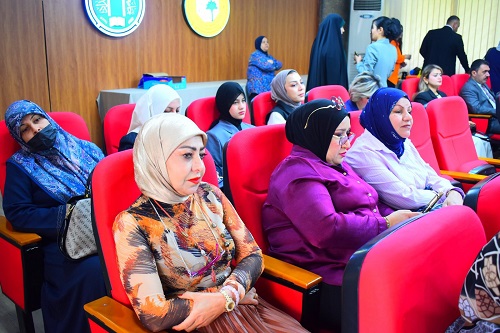
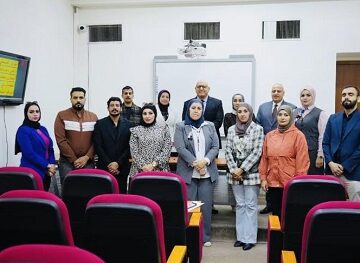
 On the morning of Monday, August 24, 2026, the Center for the Revival of Arab Scientific Heritage at the University of Baghdad received a delegation from the Kadhimayn Heritage Revival Center (affiliated with the Holy Kadhimayn Shrine). Mr. Faris Issa Al-Shammari, the Center’s Administrative Director, welcomed the delegation.

This visit is part of a series of ongoing visits by the Holy Kadhimayn Shrine delegation to the Center, aimed at fostering joint cooperation and exchanging expertise in the field of heritage preservation and revival.

During the visit, the Holy Kadhimayn Shrine delegation presented the Center for the Revival of Arab Scientific Heritage with the latest issues of their specialized journal, *Sada al-Turath* (Echoes of Heritage), thereby enriching the scholarly and library resources shared between the two parties.

For his part, the Center’s Administrative Director welcomed the visiting delegation, expressing his gratitude and appreciation for this initiative and the continuous engagement. He noted that this interaction reflects the mutual commitment of both sides to join forces in serving and documenting heritage, ultimately enhancing scholarly synergy between the University and the Holy Shrine

786242864_1392896556275784_5285842943229570275_n-400x400

Heritage Center Director Reappointed as Japanese-Iraqi Institute Advisor

Director of the Heritage Revival Center Reappointed as Advisor to the Japanese-Iraqi Institute for Archaeological Education in Mesopotamia (JIAEM)

In a new scholarly achievement reflecting the distinguished academic standing of the Center for the Revival of Arab Scientific Heritage at the University of Baghdad, the Japanese-Iraqi Institute for Archaeological Education in Mesopotamia (JIAEM) has reappointed Prof. Dr. Laith Majeed Hussein—Director of the Center—as an advisor representing the Iraqi side. This appointment extends his scientific and advisory role until May 31, 2028, marking a continuation of his work into a third year.

The reappointment of Prof. Dr. Laith Majeed Hussein recognizes his academic expertise and scholarly contributions to fostering scientific and cultural cooperation between Iraq and Japan—particularly in the fields of heritage, archaeological studies, and academic exchange. It also underscores the esteemed academic status of the Center for the Revival of Arab Scientific Heritage and the caliber of its academic staff.

This selection acknowledges the Director’s scholarly efforts to elevate the profile of Arab scientific heritage in international academic forums and to strengthen bridges of cooperation and exchange with specialized research institutions, thereby serving Iraqi heritage and highlighting its scientific and civilizational value.

The Center Organizes a Seminar on the Evolution of Writing in Mesopotamia

The Center for the Revival of Arab Scientific Heritage at the University of Baghdad organized a scientific seminar on Tuesday morning, 9 June 2026, entitled “The Development of Writing in Mesopotamia.” The seminar was delivered by Assistant Professor Dr. Israa Saad Saleh, a faculty member at the Center, and attended by a number of researchers and academics. It was held at the Professor Nabila Abdul Moneim Dawood Hall.

The seminar addressed the subject of writing in Mesopotamian civilization and its significance as one of the most remarkable achievements of human civilization. The researcher discussed the origins of writing in ancient southern Iraq and its evolution from simple symbols and pictographs into cuneiform writing, considered the earliest known writing system in history. She also highlighted its role in documenting ancient languages and preserving the intellectual, literary, and legal heritage of the peoples of Mesopotamia.

Furthermore, the seminar highlighted the importance of writing in organizing state affairs, administration, and trade, as well as its role in transmitting knowledge across generations, thereby contributing to the foundations of human civilization.

The seminar witnessed scholarly contributions and discussions that enriched the topic and emphasized the importance of studying the cultural and civilizational heritage of Mesopotamia.

work environment

To promote a healthy work environment: A comprehensive cleaning campaign at the Center for the Revival of Arab Scientific Heritage

Under the supervision of Mr. Fares Issa Fares, the Director of the Center, A number of staff member from the Center for the Revival of Arab Scientific Heritage at the University of Baghdad carried out a volunteer campaign on Wednesday , May 20, 2026. The campaign included cleaning all the corridors and facilities of the Center as part of efforts to promote a culture of teamwork and maintain the university environment. The campaign included comprehensive cleaning and tidying of departments, corridors, and halls, contributing to a healthy and clean work environment that reflects the spirit of cooperation and belonging among the staff. Participants emphasized that this initiative is part of a series of volunteer activities that the Center is keen to implement in order to instill the values ​​of social responsibility and maintain the civilized appearance of scientific and academic institutions.

703296639_1312054904359950_3584858145601334141_n
701841676_1312054797693294_400006698188072864_n

The Center for the Revival of Heritage Organizes a Seminar “

The Center for the Revival of Arab Scientific Heritage at the University of Baghdad organized a specialized scientific seminar this morning, Sunday, April 26, 2026, entitled “Scientific and Administrative Traditions in Old Baghdad Schools and Their Impact on Current Schools.” The seminar, held in the Professor Nabila Abdul-Munim Dawood Hall, was attended by a number of professors and researchers and presented by instructor Dr. Leqaa’ Amer Ashour, a lecturer in the Manuscripts Department and a faculty member at our center.

The researcher demonstrated that these institutions were not merely centers of learning, but rather integrated “administrative systems” that laid the foundations for what we know today as modern universities. She focused on two main axes: the scientific traditions in organizing the relationship between professor and student, and the system of “scientific licenses,” which are considered the historical origin of academic degrees, as well as the methods of dialogue, debate, and gradual progression in acquiring knowledge; and the administrative traditions that highlighted the high level of institutional organization, including the endowment system that ensured the continuity of education, the uniform dress code, and comprehensive social welfare for students.

The researcher also emphasized that contemporary academic practices in current universities, including career progression, teaching methods, and administrative structures, are merely an extension and development of those original foundations that originated in Baghdad, thus demonstrating the city’s pioneering role in shaping the concept of the “educational institution.”

The session included valuable contributions from the attending professors, enriching the topic with intellectual and historical discussions and underscoring the importance of reviving this legacy to strengthen the academic identity of Iraqi educational institutions.

The center of heritage revival  Organizes a Seminar

The Arab Scientific Heritage Revival Center at University of Baghdad organized a seminar on Sunday morning, April 19, 2026, entitled “Ahmad ibn Fadlan: Between the Journey of the Past and the Explorations of the Present.” The seminar was delivered by Lecturer Dr. Sundus Zaidan Khalaf, a faculty member at the Center, as part of its scientific activities aimed at highlighting the exploratory legacy of Arabs and Muslims. The event was held at the Nabeela Abdul Munim Dawood Hall.

During the seminar, the researcher discussed Ibn Fadlan’s journey as a historical account reflecting the depth of cultural and human connections between the Arab-Islamic civilization and other nations. She explained that this journey was not merely a record of a geographical route, but rather stemmed from a humanistic and global perspective in engaging with the “other,” grounded in the values of communication established by Islam.

She also focused on analyzing the relationship between the Abbasid Caliphate and its neighboring regions in Central Asia, extending to the remote areas of the Volga basin. Furthermore, she carefully reviewed Ibn Fadlan’s recorded observations of various peoples and ethnic groups, most notably the Volga Bulgars, the Rus, the Slavs, and the Khazars.

The researcher concluded that this journey represents a rare anthropological document that has contributed to understanding the social and political structures of the peoples of Northern and Central Asia, emphasizing the importance of drawing inspiration from such experiences to promote intercultural dialogue and contemporary exploration.

Women’s Quota

Distinguished Participation of the Arab Scientific Heritage Revival Center at the University of Baghdad Seminar on Activating Women’s Quota

The scientific seminar organized by the Center for Strategic and International Studies, in cooperation with the Women’s Affairs Division at the Presidency of University of Baghdad, and with the participation of the Supreme Council for Women’s Affairs at the Council of Ministers, was held on Tuesday morning, April 14, 2026, under the title: “Activating the Executive Quota for Fair Representation of Women Employees in State Institutions.” The event witnessed notable participation from a distinguished group of professors from the Arab Scientific Heritage Revival Center, alongside several academic and official bodies and personalities concerned with women’s empowerment. The seminar took place at the Conference Hall of the Center for Urban and Regional Planning for Postgraduate Studies.

The seminar addressed the concept of the quota for women working in state institutions as a mechanism aimed at allocating a specific percentage of jobs and administrative and leadership positions, thereby enhancing women’s active participation in governmental institutions and reducing forms of job marginalization.

The seminar’s discussions also focused on the importance of achieving gender equality in public sector employment, empowering women to access leadership positions, and addressing the social and institutional challenges that hinder this progress, in addition to strengthening their role in decision-making and public policy formulation.

The active participation of the Arab Scientific Heritage Revival Center reflects its commitment to societal issues with scientific and cultural dimensions, as well as its dedication to supporting initiatives that contribute to achieving social justice and enhancing the status of women in society.

669600235_1283209567244484_9132103265131677508_n
670217975_1283209647244476_1665682751395010760_n

The Center for the Revival of Arab Scientific Heritage Organized a Seminar on Al-Istrabadi Market in Al-Kadhimiya

The Center for the Revival of Arab Scientific Heritage at the University of Baghdad organized a distinguished scientific seminar on Sunday, April 12, 2026, entitled “Al-Istrabadi Market in Al-Kadhimiya: A Renewed Heritage.” The seminar was presented by Dr. Imtithal Kazim Sarhan, a faculty member at the Center, in the presence of a group of professors and researchers at Professor Nabila Abdul Munim Dawood Hall. In her lecture, Dr. Sarhan addressed the historical and cultural significance of Al-Istrabadi Market as one of the most prominent heritage landmarks in the city of Al-Kadhimiya. She reviewed its establishment, development throughout different eras, and its vital role in the economic and social activities of the area. She also highlighted the architectural characteristics of the market and its distinctive heritage identity, which reflects the character of the city, referring to the efforts made to preserve and revive it in a manner that meets contemporary requirements without compromising its historical authenticity. The lecturer emphasized the necessity of enhancing community awareness regarding the importance of preserving heritage markets, as they represent the memory and spirit of cities. She also called for intensifying initiatives that contribute to safeguarding this cultural legacy. The seminar witnessed notable interaction from the attendees, with numerous questions and discussions that enriched the dialogue and highlighted the importance of the topic in strengthening cultural identity and preserving historical heritage.

Heritage Revival Center Holds a Seminar “Expressions of Humility in the Holy Qur’an.”

The Arab Scientific Heritage Revival Center at the University of Baghdad organized a seminar on Monday, 30/3/2026, entitled “Expressions of Humility in the Holy Qur’an.” The lecture was delivered by Dr. Iman Salih Mahdi, a member at the Center. In a presentation, she explored a semantic and linguistic study of a group of Qur’anic terms that convey meanings of submission, humility, and surrender to God Almighty. The researcher explained that “expressions of humility” refer to the words and phrases mentioned in the Holy Qur’an that indicate a state of deep modesty, reverence, and obedience to God. These meanings are particularly evident in contexts of supplication, repentance, and returning to God, as such expressions reflect the breaking of the (self) and the acknowledgment of one’s need for God’s mercy. This meaning appears in several places in the Holy Qur’an, sometimes expressing the steadfastness of believers and their refusal to submit to hardships. For example, in Surah Aal ‘Imran:(“And how many a prophet [fought] and with him fought many religious scholars. But they never lost assurance due to what afflicted them in the cause of Allah, nor did they weaken or submit.”) [Aal ‘Imran: 146] the phrase “nor did they submit” indicates that they did not yield or become humiliated despite the hardships they faced.It also appears in another context in Surah Al-Mu’minun:

(“And We certainly seized them with punishment, but they did not humble themselves to their Lord, nor did they supplicate [to Him].”) [Al-Mu’minun: 76] , “they did not humble themselves” signifies that they neither submitted to God nor showed humility during the punishment, serving as a reproach for their hardened hearts. Thus, the concept of humility in the Qur’an revolves around meanings of submission and humbleness, whether in its negation from steadfast believers or in the condemnation of disbelievers who fail to submit to God during times of hardship. The researcher also highlighted the semantic differences between these expressions, explaining how each term carries a distinct meaning and context that reflects particular psychological and spiritual dimensions of human beings. This demonstrates the richness and precision of the Qur’anic language in expression. In conclusion, she emphasized the importance of such studies in deepening the understanding of the Qur’anic text and in deriving its rhetorical and educational meanings.

Participation of the Media Unit in an Intensive Training Course

As part of its continuous efforts to develop the journalistic and technical skills of media personnel, the Media Unit at the Center for the Revival of Arab Scientific Heritage at the University of Baghdad participated in a series of intensive training courses organized by the Continuing Education Unit at the College of Media, University of Baghdad.

The participation included the Head of the Media Unit, Ms. Rassel Hashim Al-Hammam, along with Ms. Azhar Salem Dawood and Mr. Khaldoun Abdullah Abdul Nabi. The participants attended three specialized and essential courses in modern media practices.

The first course, “Journalistic Editing” (8 March 2026), focused on modern techniques for content creation, including training in news ticker writing, digital journalistic editing methods, content production for university social media platforms, as well as strategies for combating media misinformation.

The second course, “Television Editing” (15 March 2026), included practical training on the fundamentals of video editing, media importing and organization, in addition to developing skills in preparing and technically understanding the timeline, leading to the practical implementation of editing techniques that support the Center’s media message.

The third course, “Photography (Video and Photography)” (29 March 2026), concluded the Media Unit team’s participation. It addressed the importance of media imagery and the technical foundations of contemporary photography and videography.

The participants expressed their appreciation for this initiative, which opens new horizons for academic and professional cooperation. Certificates of participation were also distributed to the attendees by Prof. Dr. Ammar Taher Mohammed, Dean of the College of Media, with emphasis placed on the continuation of coordination between the Center’s Media Unit and the College of Media to ensure keeping pace with the latest technological developments in journalism and digital media.

659063110_1274014908163950_2821786614904899247_n
659991374_1274014848163956_6502267781559005383_n

“The Role of Childhood Psychological Trauma.”

The Center for the Revival of Arab Scientific Heritage at the University of Baghdad organized a workshop entitled “The Role of Childhood Psychological Trauma and Its Impact on Suicide” on Tuesday, March 24, 2026, at 11:00 a.m. The event was held in Professor Nabila Abdul Munim Dawood Hall and was attended by a number of faculty members and researchers. The workshop was delivered by Lecturer Dr. Israa Saad Salih, a faculty member at the Center. In her lecture, she highlighted the importance of childhood as the foundation for shaping an individual’s personality, focusing on the profound effects of early psychological trauma, such as neglect and domestic violence, on mental health in later stages of life. Dr. Salih also explained the relationship between these early adverse experiences and the increased risk of developing depression and anxiety, which may, in some cases, lead to suicidal behavior. She emphasized the importance of early intervention and preventive measures to reduce the long-term psychological consequences of childhood trauma. The workshop witnessed active participation from the attendees, who raised numerous questions and contributed valuable discussions, particularly regarding prevention strategies, early intervention, and the role of families and educational institutions in mitigating the effects of psychological trauma. At the conclusion of the workshop, the speaker stressed the importance of promoting community awareness of children’s mental health and providing safe and supportive environments that contribute to raising a psychologically resilient generation capable of facing future challenges.

657726282_1266781042220670_3911375495156131142_n

The Reality of Water in Iraq – Problems and Solutions.”

The Center for the Revival of Heritage Organizes a Discussion Panel “The Reality of Water in Iraq – Problems and Solutions.”

The Department of Pure Sciences at the Center for the Revival of Arab Scientific Heritage, University of Baghdad, organized a discussion panel on Tuesday, 10/3/2026, entitled “The Reality of Water in Iraq – Problems and Solutions.” The event was held in the hall of Professor Nabila Abdul-Munim Dawood and attended by a number of professors and researchers.

The lecture was delivered by Dr. Salar Ali Khidr, Head of the Department of Pure Sciences. He discussed the challenges facing Iraq’s water resources and ways to address them. The panel included a scientific presentation on the state of water in Iraq, highlighting that the country possesses significant water resources, primarily the Tigris and Euphrates rivers and their tributaries, as well as seasonal valleys coming from Iran and those in the western desert. Despite these resources, water volumes fluctuate noticeably from year to year.

Dr. Khidr explained that reduced water availability in some years leads to increased pollution levels in rivers and other water sources, necessitating scientific and environmental measures to mitigate the problem. He also emphasized the importance of treating wastewater before discharging it into rivers, as this plays a major role in maintaining water quality, protecting the environment, and safeguarding public health. The discussion concluded with a call to strengthen scientific and technical efforts for the sustainable management of water resources and to develop practical solutions that help reduce pollution and ensure the long-term sustainability of water in Iraq.

649942215_1255640150001426_1628758506174648132_n
650039598_1255640210001420_4788263508753820391_n