Workshop

Under the Slogan: “Sign Language as a Bridge of Communication”

The Center for the Revival of Arab Scientific Heritage Organizes a Workshop

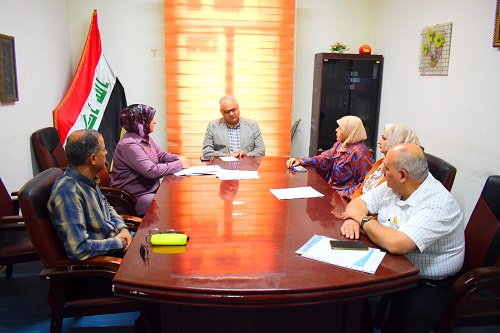
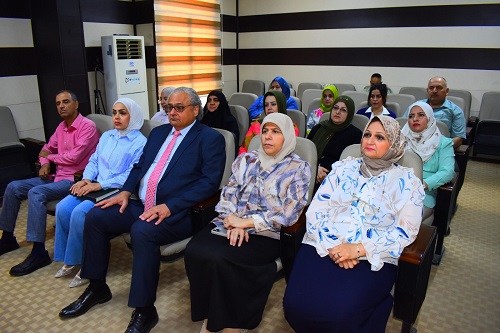
 In accordance with the directives of the Presidency of the University of Baghdad / Department of Media and Government Communication, the Media Unit at the Center for the Revival of Arab Scientific Heritage organized an educational awareness workshop on Wednesday morning, November 26, 2025, at 10:00 a.m., titled “The Role of Educational Institutions in Supporting the Deaf and Mute.” The workshop was held in Professor Nabeela Abdul Muneem Dawood Hall, with the attendance of several professors and academics. It was presented by Assistant Professor Dr. Zainab Kamil Kareem and Lecturer Dr. Liqaa Shakir Al-Sharifi, both faculty members at the Center. Dr. Liqaa Al-Sharifi delivered her research titled “The Rights of the Deaf and Mute in Iraq Between Legislation and Implementation.” The study examined the legal framework regulating the rights of the deaf and mute in Iraq, highlighting the legislation that guarantees their rights to education, healthcare, social welfare, and social integration. Al-Sharifi discussed the gap between what the laws stipulate and what is actually implemented on the ground, pointing out the challenges this group faces, such as the lack of specialized services, the shortage of staff trained in sign language, and limited societal awareness. She emphasized the need to strengthen governmental and institutional efforts to ensure that the deaf and mute have full access to their rights and are empowered to participate effectively in society.

Dr. Zainab Kamil then presented an overview of her research titled “Famous Figures Who Challenged Disability and Transformed It into Success Stories.” The study focused on a selection of Arab and international personalities who faced various disabilities—including hearing impairments—and succeeded in transforming these challenges into sources of strength and creativity. She highlighted examples of individuals who achieved exceptional success in fields such as science, art, sports, and community work, despite their disabilities. The research illustrated how their stories have become a source of inspiration and motivation for empowering the deaf and mute community, promoting a culture of optimism and resilience, and encouraging educational institutions to provide greater support. It also demonstrated the role of these figures in reshaping societal perceptions of disability and highlighting the capabilities of persons with disabilities.

The workshop included several discussions, and at its conclusion, the Media Unit Supervisor expressed gratitude to the two researchers for their dedicated efforts in serving the University and our beloved Iraq.

589953964_1176074857957956_8745517444162845597_n
587111910_1176074854624623_8518052261525382974_n

Seminar

The Center for the Revival of Arab Scientific Heritage Organizes a Seminar

The Center for the Revival of Arab Scientific Heritage at the University of Baghdad organized a seminar on Monday, November 24, 2025, entitled “Repetition in the Holy Qur’an.” The event was held in Professor Nabeela Abdul Muneem Dawood Hall, with the attendance of several faculty members from the Center. The lecture was presented by Assistant instructor Hind Amer Fadel, a faculty member at the Center, who discussed repetition in the Qur’an as a prominent rhetorical device based on reiterating words or meanings to achieve various purposes. She explained that repetition is not a mere restatement without value; rather, it is used to affirm meaning and firmly embed it in the mind, especially in doctrinal matters that require clarification and emphasis, such as monotheism, resurrection, and prophethood. She added that repetition also helps attract the listener’s attention, appearing in different forms that suit the context and theme of each Surah. Repetition is evident in Qur’anic narratives, where events are retold in varying styles that introduce new meanings and highlight additional aspects of the story. It is also employed to enhance the Qur’anic rhythm and verbal harmony, which give the text its unique beauty and profound impact.

Thus, repetition is considered an artistic and rhetorical element that deepens understanding and highlights the miraculous nature of the Holy Qur’an.

Training

Female Faculty Members of the Center for the Revival of Arab Scientific Heritage Participate in a Training Workshop within the Activities of Anti-Drug Week

A group of female faculty members from the Center for the Revival of Arab Scientific Heritage at the University of Baghdad participated on Monday, November 17, 2025, in a training workshop organized by the Center for Continuing Education at the University of Baghdad as part of the activities of Anti-Drug Week. The workshop was presented by Professor Dr. Arkan Saeed Khattab, Director of the Center, with the attendance of a number of specialists and individuals concerned with awareness-related issues. The workshop addressed the main themes related to the drug epidemic, the most prominent methods of combating it, and the negative effects it leaves on society. It also discussed modern prevention strategies and the role of educational institutions in raising awareness among students and promoting healthy and responsible behavior. The participating faculty members showed clear engagement through presenting viewpoints and scientific interventions that contribute to supporting national efforts aimed at limiting the spread of drugs, emphasizing the importance of continuing such awareness programs within the university environment.

The workshop concluded with an emphasis on the importance of integrating the roles of scientific and educational centers to enhance community awareness and develop sustainable training programs in the field of drug prevention.

Meetings

Director of the Center for the Revival of Arab Scientific Heritage Holds Preparatory Meetings for the 2025 Annual Conference

Professor Dr. Laith Majid Hussein, Director of the Center for the Revival of Arab Scientific Heritage at the University of Baghdad, held a series of meetings over two days with the Center’s staff as part of the ongoing preparations for the Seventh International Conference entitled “The History of Science Among the Arabs,” scheduled to be held on December 2–3, 2025. The meetings aimed to discuss the final stages of preparation and to finalize the necessary organizational arrangements to ensure the success of the conference’s activities. The meetings addressed the review of the conference’s scientific program, mechanisms for receiving participants and guests, and ways to enhance logistical support. Discussions also covered the provision of all required technical and administrative needs to organize a distinguished conference that reflects the Center’s scientific standing and ongoing efforts. During the meetings, the Director emphasized the importance of cooperation among all departments and effective coordination between academic and administrative staff. He affirmed that the success of the conference depends on teamwork, collective effort, and the optimal use of accumulated experience in organizing academic events. At the conclusion of the meetings, an agreement was reached on a set of executive procedures and follow-up schedules to ensure that all arrangements are completed ahead of the conference date and to create a supportive academic environment that enables the achievement of the conference’s intended goals.

Workshop

An Environmental Workshop Held by the Center for the Revival of Arab Scientific Heritage about the Environment and Drinking Water

The Department of Human Studies at the Center for the Revival of Arab Scientific Heritage / University of Baghdad held a workshop on Wednesday, November 19, 2025, entitled “The Environment and Drinking Water Between Heritage and Modernity.” The event took place in Professor Nabeela Abdul Muneem Dawood Hall, with the attendance of a number of specialists and individuals interested in environmental affairs. The session was chaired by instructor Dr. Sahar Hassan Abdul Rasul and presented by biological researcher Farah Hatif from the Environmental Studies Department.

During the workshop, the researcher discussed the importance of sustainable development and its role in preserving water resources, with a particular focus on the sixth Sustainable Development Goal related to clean water and sanitation. She emphasized that ensuring access to safe and clean water for all is one of the most essential pillars of development in any society.

The workshop also reviewed traditional practices in water management and methods of water preservation throughout different eras, comparing them with modern techniques adopted by contemporary institutions to ensure the quality and safety of drinking water. This comparison highlighted the integration between traditional expertise and modern scientific knowledge.

The workshop included several key objectives, most notably raising awareness about the importance of protecting water sources, promoting positive behaviors in water consumption, and enhancing societal understanding of the environmental challenges related to the water sector.

The researcher concluded with several recommendations, the most important of which were strengthening cooperation between governmental and community institutions to protect water resources, supporting projects that contribute to improving water quality, intensifying awareness programs on the sustainable use of water, and ensuring its preservation for future generations.

The workshop also featured several discussions on methods of safety and prevention when dealing with unsafe water. At the end of the event, the Center’s administration thanked the researcher for efforts and wished continued success and prosperity.

585884390_1170696151829160_2051198205158003338_n
586825930_1170695671829208_2012967068242377139_n

Seminar

Under the supervision of Professor Dr. Laith Majid Hussein, Director of the Center for the Revival of Arab Scientific Heritage at the University of Baghdad,the Center organized a seminar on Monday, 17 November 2025, in Professor Nabeela Abdul Muneem Dawood Hall. The seminar was titled “Geographical Routes in the Ancient Arab World.” The lecture was presented  by Assistant instructor  Wasan Adel Abdul Wahab, a faculty member in the Center. She discussed how the determination of land and river routes depended on several important natural considerations, including environmental factors such as terrain, climate, and the availability of navigable waterways. Other considerations included the availability of raw materials, the types of commercial goods transported along these routes, and knowledge of long-distance or remote and rugged paths. Trade caravans sometimes relied on local guides who were familiar with these distant and nearby routes. The researcher emphasized that land and river routes were widely used in the hilly, mountainous, and desert regions of Mesopotamia. They were utilized by commercial caravans and military campaigns due to the limited waterways compared to the extensive canal networks in the alluvial plains. In general, the trade caravans followed shorter land routes, such as the route from Larsa to Isin to Ashnuna, and then proceeding toward Assyria.

582665855_1169226118642830_5961599477785314179_n

Visits the Center

Civil Defense Committee Visits the Center for the Revival of Arab Scientific Heritage and Commends Its Efforts

On Tuesday, November 18, 2025, the Center for the Revival of Arab Scientific Heritage at the University of Baghdad received a committee headed by Mr. Fares Mohammed Fares, Mr. Ihsan Ibrahim Ubaid, and Mr. Mohammed Abdul-Aali Hussein from the Department of Administrative Affairs / Civil Defense Division at the University of Baghdad. The visit came within the framework of joint cooperation to enhance safety procedures in university institutions. The visit included an inspection of the fire-extinguishing system, early warning devices, and emergency exits, in addition to reviewing evacuation procedures and the preventive measures adopted inside the building.

The committee praised the center’s commitment to occupational safety requirements and the efforts of its staff in providing a safe working environment for employees and visitors.

584751977_1169668968598545_6545512397225443406_n
584288186_1169670158598426_3398095972107776025_n
584362184_1169668958598546_3899556841109978426_n

Seminar “Social Media and the Preservation of Architectural Heritage.”

The Center for the Revival of Arab Scientific Heritage Organizes a Seminar “Social Media and the Preservation of Architectural Heritage.”

Under the supervision of Professor Dr. Laith Majid Hussein, Director of the Center for the Revival of Arab Scientific Heritage at the University of Baghdad, the Center organized a seminar on Monday, November 10, 2025, held in Professor Nabeela Abdul Muneem Dawood Hall. it was attended by a number of researchers and academics. The seminar was entitled “Social Media and the Preservation of Architectural Heritage.” The lecture was presented by Lecturer Dr. Imtithal Kazem Sarhan, a faculty member at the Center, who discussed social media as one of the key tools supporting the preservation of architectural heritage. She explained that social platforms play a vital role in raising cultural awareness, documenting historical and architectural heritage sites, and fostering community collaboration by providing interactive spaces for both specialists and the public. These platforms also promote sustainable heritage preservation by encouraging public participation and stimulating interest in heritage among younger generations. Furthermore, social media supports creative initiatives that combine heritage with modern technologies in the management of heritage sites. The researcher also presented an overview of the use of artificial intelligence, research tools, mapping technologies, and web-based applications, emphasizing their active role in enhancing the impact of social media on heritage preservation. By identifying heritage sites and highlighting their historical and cultural importance, these technologies help strengthen their connection to national identity and convey the value of architectural heritage to a wide audience that transcends geographical boundaries.

581924764_1163854552513320_6652567344248682141_n

Workshop“The Influence of Baghdad on Fine Arts,”

The Center of the Revival of Arab Scientific Heritage Organizes a Workshop“The Influence of Baghdad on Fine Arts,”

Under the supervision of Professor Dr. Laith Majid Hussein, Director of the Center for the Revival of Arab Scientific Heritage at the University of Baghdad, the Baghdad Documentation Department organized a workshop on Wednesday, November 5, 2025in the Professor Nabeela Abdul Muneem Dawood Hall. it was attended by a number of researchers and academics specializing in art, sociology, and cultural heritage. The workshop, entitled “The Influence of Baghdad on Fine Arts,” the lecture presented by Assistant Lecturer Surur Mohammed Khalil from the College of Arts – University of Baghdad. She discussed Baghdad’s pioneering role as a complex social and cultural space that has contributed to shaping the aesthetic structure of Iraqi fine art. She emphasized that this art cannot be understood apart from the social and historical structures that produced it. The discussion addressed Baghdadi art as a symbolic system reflecting the dynamics of Iraqi society and its transformations through periods of prosperity, conflict, and war. The researcher also presented examples from the works of Jawad Salim and his colleagues in the Baghdad School of Modern Art, highlighting their embodiment of the dialectical relationship between the artist and society. According to Pierre Bourdieu’s concept of the artistic field, the artist interacts with social structures, values, and institutions to produce visual symbols that express collective identity and reveal a symbolic capital tied to place and history. The workshop aimed to emphasize the significance of Baghdadi fine art, which is not merely an aesthetic practice but a visual social discourse documenting the transformations of collective consciousness and expressing the spirit of the city — between nostalgia and resistance, continuity of heritage, and the question of modernity. The session included several interventions discussing the importance of art and heritage. At the conclusion of the workshop, the center’s administration thanked the researcher, wishing her continued success in serving the University of Baghdad and beloved Iraq.

576871304_1160120282886747_2176658762735677659_n
576958998_1160119939553448_5091764726479486752_n

Training Workshop during Anti-Drug Week

Female Faculty Members of the Center for the Revival of Arab Scientific Heritage Participate in a Training Workshop during Anti-Drug Week


A group of female faculty members from the Center for the Revival of Arab Scientific Heritage, University of Baghdad, participated on Monday  17 November 2025, in a training workshop organized by the Continuing Education Center at the University of Baghdad as part of Anti-Drug Week. The workshop was presented by Professor Dr. Arkan Saeed Khattab, Director of the Center, and attended by a number of specialists and awareness professionals. The workshop addressed the key aspects of the drug abuse problem, highlighting the main methods to combat it and the negative impacts it has on society. It also discussed modern prevention strategies and the role of educational institutions in raising awareness among students and promoting healthy cultural values. The participating faculty members actively engaged in the workshop by sharing insights and scientific interventions that support national efforts to reduce the spread of drugs, emphasizing the importance of continuing to organize such awareness programs within the university environment. The workshop concluded by stressing the importance of integrating the roles of scientific and educational centers to enhance community awareness and to develop sustainable training programs in the field of drug prevention.

584327939_1171386488426793_3027660182586089498_n

Meetings

Director of the Center for the Revival of Arab Scientific Heritage Holds Preparatory Meetings for the 2025 Annual Conference

Professor Dr. Laith Majid Hussein, Director of the Center for the Revival of Arab Scientific Heritage at the University of Baghdad, held a series of meetings over two days with the Center’s staff as part of the ongoing preparations for the Seventh International Conference “The History of Science among the Arabs,” scheduled for 2–3 December 2025. The meetings aimed to discuss the final preparation stages and establish the organizational arrangements necessary to ensure the success of the conference. The meetings reviewed the scientific program of the conference, the procedures for welcoming participants and guests, and ways to enhance logistical support while providing all technical and administrative requirements to organize a distinguished conference befitting the Center and its scholarly efforts.

During the meetings, the Director emphasized the importance of collaborative efforts among all departments and effective coordination between academic and administrative staff. He stressed that the success of the conference depends on teamwork, collective cooperation, and the utilization of accumulated expertise in planning and organizing academic events.At the conclusion of the meetings, a set of executive measures and follow-up schedules were agreed upon to ensure that all preparations are completed before the conference and to establish a supportive academic environment to achieve its objective

584429578_1171370621761713_3246235410416740788_n
586089161_1171371841761591_6631436676883145690_n

Workshop on Environment and Drinking Water

The Center for the Revival of Arab Scientific Heritage Holds a Workshop on Environment and Drinking Water

The Department of Human Studies at the Center for the Revival of Arab Scientific Heritage, University of Baghdad, organized a workshop on WednesdayNovember 2025, in Professor Nabeela Abdul Muneem Dawood Hall. The workshop was titled “Environment and Drinking Water: Between Heritage and Modernity” and was attended by a number of specialists and individuals interested in environmental issues. The session was chaired by Lecturer Dr. Sahar Hasan Abdul Rasool and presented by biologist Farah Hatif from the Environmental Studies Division.During the workshop, the researcher highlighted the importance of sustainable development and its role in preserving water resources, with particular focus on the sixth Sustainable Development Goal concerning clean water and sanitation. She emphasized that ensuring access to safe and clean water for all is a fundamental pillar of development in any society.

The workshop also reviewed traditional practices in water management and preservation across the ages, comparing them with modern technologies employed by contemporary institutions to ensure the quality and safety of drinking water. This comparison underscored the integration between traditional expertise and modern scientific knowledge.The workshop aimed to raise awareness about the importance of protecting water sources, promote positive behaviors in water consumption, and enhance societal understanding of environmental challenges related to the water sector. The researcher concluded with several recommendations, including the need to strengthen cooperation between governmental and community institutions to protect water resources, support projects that improve water quality, and expand awareness programs on sustainable water usage to ensure its availability for future generations. The workshop included several discussions on water safety and proper usage of non-potable water. At the conclusion, the Center’s administration thanked the researcher for her efforts, wishing her continued success and achievement.

585884390_1170696151829160_2051198205158003338_n
586825930_1170695671829208_2012967068242377139_n