Lecture in Japan

Director of the Center for the Revival of Arab Scientific Heritage Delivers Lecture in Japan During the Second Day of the 16th Iraqi–Japanese International Conference

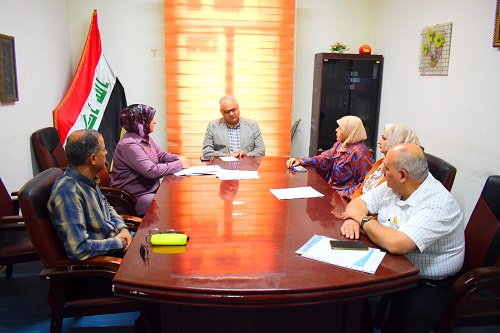
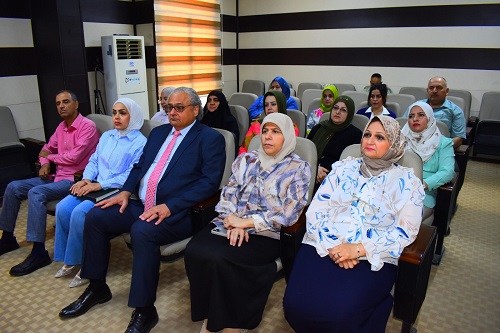
Professor Dr. Laith Majid Hussein, Director of the Center, delivered a scientific lecture in Japan as part of the second day of the 16th Iraqi–Japanese International Conference. He began his talk by emphasizing the historical and human significance of Mesopotamian civilization, describing it as the cradle of human civilizations for thousands of years.

His lecture addressed the scale of the cultural catastrophe that Iraqi heritage suffered following the 2003 war, highlighting that it represents one of the most severe disasters in the contemporary world concerning human heritage. He also shed light on the extensive destruction caused by ISIS between 2015 and 2017 at archaeological and heritage sites, and the devastating effects these attacks had on Iraq’s civilizational legacy.

The lecture reviewed reconstruction and rehabilitation efforts for many sites carried out by international organizations and supporting partners, in addition to other factors threatening archaeological sites, such as random excavations and climate change. This year’s conference included five scientific sessions held across Waseda and Hiroshima universities, alongside the signing of a memorandum of understanding with Tokyo University of Foreign Studies to strengthen academic and research cooperation. The Center’s Director also participated in several academic activities alongside the University President and a delegation of academics from several Japanese research universities.

597017274_1185983146967127_8157248352127756521_n

Congratulations on Victory Day

The administration of the Center for the Revival of Arab Scientific Heritage at the University of Baghdad extends its highest congratulations and blessings to the honorable Iraqi people on the occasion of the anniversary of the Iraqi Victory Day—this cherished national occasion that restored Iraq’s dignity, land, and the unity of its people.On this blessed occasion, Professor Dr. Laith Majid Hussein, Director of the Center, conveys his deepest feelings of pride and appreciation to the sons of our armed forces in all their branches, who, with their blood and sacrifices, embodied the finest images of heroism and wrote for Iraq a new chapter of glory and victory.

Announcement

The Center for the Revival of Arab Scientific Heritage announces the holding of its symposium entitled “World Arabic Language Day” on Thursday, December 18, 2025, at 10:00 a.m., in the Professor Nabeela Abdul-Munim Dawood Hall at our Center.

The invitation is open to everyone.

At the Invitation of Tokyo University of Foreign Studies

A Delegation from the University of Baghdad Signs an Expanded Academic Cooperation Agreement in Japan As part of an academic tour in Japan, on the morning of Friday, December 5, 2025, Professor Dr. Laith Majid Hussein, Director of the Center for the Revival of Arab Scientific Heritage at the University of Baghdad, visited the Tokyo University of Foreign Studies, accompanied by a delegation headed by Professor Dr. Baha Ibrahim Insaf, President of the University of Baghdad, along with a number of university professors, including the Dean of the College of Arts, Professor Dr. Ali Abdul-Amir Sajid, and Professor Dr. Mahmoud Al-Qaisi, Professor of Japanese Studies in the College of Arts.

The visit resulted in the signing of a joint cooperation memorandum between the two sides, encompassing a wide range of academic and research fields, including Japanese studies, the Arabic language, peace studies, Middle Eastern issues, translation, and social and human sciences. The agreement paves the way for new horizons of scientific and intellectual exchange between the two institutions. The memorandum was signed on the Japanese side by Professor Nobu Haruna, President of the University, who praised the significance of the partnership with the University of Baghdad and its scientific role in the region. This agreement comes as part of the University of Baghdad’s efforts to attract Japanese students to study in Iraq under the “Study in Iraq” initiative, and within its broader strategy to expand its international partnerships and support joint academic programs.

594296384_1182783490620426_7498176830700363816_n
595660925_1182783493953759_2104704515992041638_n

University of Baghdad Media Department Explores Mechanisms

University of Baghdad Media Department Explores Mechanisms for Developing the Media Unit at the Center for the Revival of Heritage

On Sunday, December 7, 2025, a delegation from the Media Department at the University of Baghdad—including Dr. Harith Ibrahim Mustafa, Director of the Media Department, Assistant Lecturer Saif Wahab, and Assistant Lecturer Shahad Haidar—visited the Center for the Revival of Arab Scientific Heritage to review the workflow of the Media Unit and discuss its development needs. The delegation was received by Mr. Fares Issa Fares, Administrative Director of the Center, where a number of questions raised by the Director of Media were discussed regarding coordination mechanisms, ways to enhance media work and its requirements, and prospects for mutual cooperation between the two sides. The visit aims to support the Center’s efforts in highlighting its scientific and cultural activities and in developing the performance of its Media Unit in a way that contributes to achieving the University’s vision and mission.

At the conclusion of the visit, the delegation was presented with the shield of the recently held conference along with a certificate of appreciation in recognition of their presence and support for the Center.

595904727_1183617427203699_4512737913866373361_n
596786340_1183617377203704_3576966406433556814_n

Publication of a New Scientific Research Study by Professor Dr. Wasan Hussein

Publication of a New Scientific Research Study by Professor Dr. Wasan Hussein Muhimid on the Role of Father Dr. Yousef Habbi in Preserving Syriac Heritage

A new scientific research paper entitled “Father Dr. Yousef Habbi and His Role in Preserving Syriac Heritage” has been published by Professor Dr. Wasan Hussein Muhimid, a faculty member in the Department of Human Studies at our Center. The study appears in Bin Al-Nahrain Journal, Issue (211–212), Volume (53), for the year 2025.

The research explores the pioneering role played by Father Dr. Yousef Habbi in safeguarding and reviving Syriac heritage through his efforts in historical investigation and the scholarly editing of texts, in addition to his contributions to enhancing the presence of Syriac heritage within contemporary research fields.

The publication of this study reaffirms the ongoing academic efforts of Dr. Wasan Hussein Muhimid in Syriac studies and human heritage, and strengthens her scholarly presence in one of the most prominent specialized peer-reviewed journals

595737487_1183039387261503_8063385899755843753_n

At the Invitation of Tokyo University of Foreign Studies

The Second Day of the Conference “History of Science among the Arabs”

The activities of the second day of our annual scientific conference, “History of Science among the Arabs,” concluded after two days of distinguished participation from researchers and specialists in history and various scientific fields. The conference hosted a series of scientific sessions addressing diverse topics related to the contributions of Arab scholars in different fields of science such as mathematics, astronomy, medicine, and philosophy.During the sessions, recent research was presented and discussed by participants from various local institutions, highlighting the role of Arab heritage in the development of human knowledge. Case studies and examples were also presented on how scientific knowledge transitioned from Arab civilization to Europe and the modern world. The conference also offered broad opportunities for interaction among participants, the exchange of expertise, and the strengthening of research collaboration between universities and academic institutions. One of the most prominent achievements on the second day was the agreement to establish a joint committee aimed at preparing scientific documentation of the historical achievements of Arab science, as well as launching initiatives to support future studies in this field.

The conference concluded with a closing session focusing on exploring future directions of research in the history of science among the Arabs. Participants emphasized the importance of continuing such events to promote cultural and historical awareness. Certificates of appreciation were awarded to researchers in recognition of their efforts and scientific contributions.

593469703_1180918164140292_4242080620882192824_n

the European Film Festival at the University of Baghdad

The Center for the Revival of Heritage Participates in the Launch of the European Film Festival at the University of Baghdad

The European Film Festival commenced on Monday, December 1, 2025, in Al-Shaheed Al-Hakim Hall at the University of Baghdad, with the participation of several European cultural institutions and the attendance of university faculty and students. The festival features screenings of selected short films addressing youth-related issues and highlighting values of diversity, cultural understanding, and artistic creativity. The event drew significant student engagement, with organizers emphasizing that the festival aims to provide an educational and cultural platform that enhances students’ awareness of visual arts and introduces them to European experiences in short-film production. The festival will continue through December 5, including interactive discussion sessions between students and experts on filmmaking techniques and the social messages conveyed through film

593367590_1179559350942840_6154593273189549277_n

The Center for the Revival of Heritage Holds a Workshop

On Sunday morning, November 30, 2025, the Center for the Revival of Arab Scientific Heritage at the University of Baghdad organized an out-of-plan workshop entitled “Applications of the State Employees Discipline Law and Its Role in Limiting Administrative Corruption.” The workshop was held with the participation of a group of legal and administrative specialists, aiming to enhance legislative awareness and promote integrity within governmental work. The event took place in Professor Nabeela Abdul Muneem Dawood Hall. The session was chaired by Professor Dr. Zainab Kamil Kareem, and the lecture was delivered by Assistant instructor Rasha Faleh Al-Taie from the Continuing Education Center at the University of Baghdad. The workshop addressed the most prominent aspects of the State Employees Discipline Law, including regulations governing professional conduct, supervision and monitoring procedures, accountability and disciplinary mechanisms, in addition to discussing several cases of administrative corruption that can be reduced through the proper application of the law. Al-Taie emphasized that effective implementation of the law is one of the fundamental pillars for reinforcing transparency and protecting public funds. She pointed out that adherence to public service regulations reduces violations and strengthens trust between citizens and government institutions. She also highlighted that the relationship between an employee and their supervisor should be based on mutual respect, sound administrative guidance, and compliance with laws and regulations to ensure improved performance and the achievement of institutional goals. The workshop concluded with several recommendations, most notably the need to enhance continuous employee training, develop internal control systems, encourage a culture of reporting violations, and reinforce adherence to the provisions of the law to ensure an ethical and effective work environment. The workshop also included several interventions addressing the rights of administrative employees. At the end of the event, the Center’s administration expressed its gratitude to the lecturer, wishing her continued success in serving the University and our beloved Iraq.

591759664_1178904994341609_541870808301541549_n
591746926_1178904377675004_4422567846255942356_n

Launch of the First Day of Our Annual Scientific Conference “History of Sciences Among the Arabs”

Launch of the First Day of Our Annual Scientific Conference: “History of Sciences Among the Arabs”

The Center for the Revival of Arab Scientific Heritage witnessed the opening of its annual scientific conference, titled “History of Sciences Among the Arabs”, on Tuesday, December 2, 2025, at 10:00 AM, in the Conference Hall of the Urban and Regional Planning Center for Graduate Studies at the University of Baghdad. The event was attended by several deans, prominent academic figures, representatives of the holy shrines, as well as delegates from Christian holy sites and churches, giving the conference a diverse character reflecting the shared interest in the history of sciences and their cultural legacy.

The opening session of the conference began with a comprehensive ceremonial program. The first segment featured the national anthem, followed by the recitation of verses from the Holy Quran, and then the university anthem, adding a formal tone to the commencement of the event.

Following the protocol activities, Prof. Dr. Laith Majid Hussein, Director of the Center, delivered his welcoming speech, in which he greeted the guests and participants and emphasized the importance of the conference in highlighting the scientific achievements of the Arabs and their role in establishing numerous fields of knowledge. The ceremony also included the screening of a documentary film showcasing the Center’s scientific journey and research activities over the past years.

The conference featured several key topics and research sessions, addressing the development of the history of sciences among the Arabs and the contributions of Arab and Muslim scholars in advancing human knowledge in medicine, astronomy, mathematics, chemistry, and other fields that significantly contributed to the construction of civilization.

During the event, the Center Director presented certificates of appreciation to researchers, participants, and attendees in recognition of their scientific contributions, alongside conference plaques honoring those who helped make the event successful.

The first day concluded with interactive discussion sessions that enriched the shared understanding of the conference themes. Activities will continue the following day with additional sessions and scientific contributions, to be held in the hall of Prof. Nabila Abdul-Munim Dawood at the Center.

Workshop

Under the Slogan: “Sign Language as a Bridge of Communication”

The Center for the Revival of Arab Scientific Heritage Organizes a Workshop

 In accordance with the directives of the Presidency of the University of Baghdad / Department of Media and Government Communication, the Media Unit at the Center for the Revival of Arab Scientific Heritage organized an educational awareness workshop on Wednesday morning, November 26, 2025, at 10:00 a.m., titled “The Role of Educational Institutions in Supporting the Deaf and Mute.” The workshop was held in Professor Nabeela Abdul Muneem Dawood Hall, with the attendance of several professors and academics. It was presented by Assistant Professor Dr. Zainab Kamil Kareem and Lecturer Dr. Liqaa Shakir Al-Sharifi, both faculty members at the Center. Dr. Liqaa Al-Sharifi delivered her research titled “The Rights of the Deaf and Mute in Iraq Between Legislation and Implementation.” The study examined the legal framework regulating the rights of the deaf and mute in Iraq, highlighting the legislation that guarantees their rights to education, healthcare, social welfare, and social integration. Al-Sharifi discussed the gap between what the laws stipulate and what is actually implemented on the ground, pointing out the challenges this group faces, such as the lack of specialized services, the shortage of staff trained in sign language, and limited societal awareness. She emphasized the need to strengthen governmental and institutional efforts to ensure that the deaf and mute have full access to their rights and are empowered to participate effectively in society.

Dr. Zainab Kamil then presented an overview of her research titled “Famous Figures Who Challenged Disability and Transformed It into Success Stories.” The study focused on a selection of Arab and international personalities who faced various disabilities—including hearing impairments—and succeeded in transforming these challenges into sources of strength and creativity. She highlighted examples of individuals who achieved exceptional success in fields such as science, art, sports, and community work, despite their disabilities. The research illustrated how their stories have become a source of inspiration and motivation for empowering the deaf and mute community, promoting a culture of optimism and resilience, and encouraging educational institutions to provide greater support. It also demonstrated the role of these figures in reshaping societal perceptions of disability and highlighting the capabilities of persons with disabilities.

The workshop included several discussions, and at its conclusion, the Media Unit Supervisor expressed gratitude to the two researchers for their dedicated efforts in serving the University and our beloved Iraq.

589953964_1176074857957956_8745517444162845597_n
587111910_1176074854624623_8518052261525382974_n

Seminar

The Center for the Revival of Arab Scientific Heritage Organizes a Seminar

The Center for the Revival of Arab Scientific Heritage at the University of Baghdad organized a seminar on Monday, November 24, 2025, entitled “Repetition in the Holy Qur’an.” The event was held in Professor Nabeela Abdul Muneem Dawood Hall, with the attendance of several faculty members from the Center. The lecture was presented by Assistant instructor Hind Amer Fadel, a faculty member at the Center, who discussed repetition in the Qur’an as a prominent rhetorical device based on reiterating words or meanings to achieve various purposes. She explained that repetition is not a mere restatement without value; rather, it is used to affirm meaning and firmly embed it in the mind, especially in doctrinal matters that require clarification and emphasis, such as monotheism, resurrection, and prophethood. She added that repetition also helps attract the listener’s attention, appearing in different forms that suit the context and theme of each Surah. Repetition is evident in Qur’anic narratives, where events are retold in varying styles that introduce new meanings and highlight additional aspects of the story. It is also employed to enhance the Qur’anic rhythm and verbal harmony, which give the text its unique beauty and profound impact.

Thus, repetition is considered an artistic and rhetorical element that deepens understanding and highlights the miraculous nature of the Holy Qur’an.