Heritage Revival Center Staff Launch a Comprehensive Cleaning Campaign

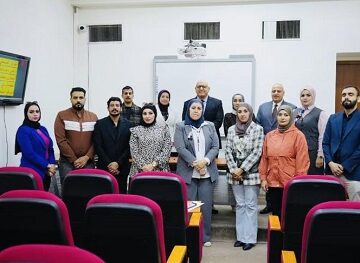
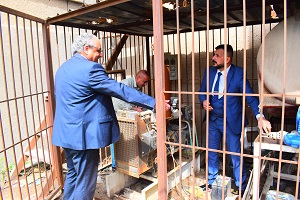
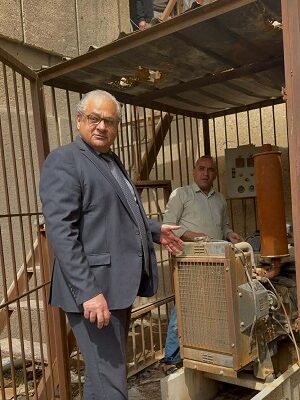
In line with the directives of the University of Baghdad’s administration to enhance the cultural and environmental appearance of university institutions, a number of male staff members at the Center participated in a comprehensive cleaning campaign for the corridors and surrounding areas of the Center. This initiative aims to preserve the aesthetic appeal of the premises and to create a proper work environment that reflects a spirit of cooperation and institutional belonging, while providing a healthy and clean atmosphere for all staff and employees. The Center’s administration affirmed its continued support for such initiatives, which contribute to improving the overall appearance and promoting a culture of teamwork and shared responsibility.

615365814_1213728137525961_2028723665133448714_n
615789808_1213728140859294_1709739090182161659_n

in Arabic and Islamic Manuscripts between Protection and Ornamentation.”

The Center for the Revival of Arab Scientific Heritage at the University of Baghdad held a scientific symposium on Tuesday morning, January 13, 2026, entitled “Art and Craftsmanship in Arabic and Islamic Manuscripts between Protection and Ornamentation.” The symposium was attended by a number of professors, researchers, and individuals interested in manuscripts and heritage, and was held in Professor Nabila Abdul Munim Dawood Hall at the Center. The session was chaired by Professor Dr. Zainab Kamel Karim, Head of the Manuscripts Department at the Center, who emphasized in her opening remarks the importance of manuscripts as a civilizational and intellectual testimony reflecting the development of sciences and arts in Arab and Islamic civilization, and the necessity of balancing their protection and preservation on the one hand with highlighting their aesthetic and artistic value on the other.

The symposium commenced with a lecture by Ms. Muna Naji Abbas from the Ministry of Culture / Iraqi Manuscripts House. Her research paper, entitled “Ornamented Manuscripts between Definition and Care: Selected Holdings of the Iraqi Manuscripts House as a Model,” addressed the artistic and technical aspects of manuscripts, methods of decoration and illumination, and the role these elements play in preserving manuscripts and presenting them simultaneously as artistic and historical artifacts. Dr. Nihal Ni‘ma Majid from the College of Education for Women at the University of Baghdad also participated with a paper entitled “Papermaking in Islamic Heritage,” in which she highlighted the role of manuscripts in documenting history and transmitting knowledge across the ages, as well as the mastery involved in selecting and producing paper.

Meanwhile, Dr. Sundus Zaidan Khalaf, a faculty member at the Center, presented her research paper entitled “The Craft of Inks and Types of Writing Media,” discussing the importance of modern techniques in protecting and conserving manuscripts while preserving their authenticity and heritage value, as well as the selection of manuscript colors and the symbols used by scribes. The symposium included a visual presentation showcasing selected examples of Arabic and Islamic manuscripts, highlighting their artistic and intellectual richness and their great importance in the study of history, science, and the arts. The symposium concluded with fruitful scholarly discussions between the attendees and speakers, collectively emphasizing the need to intensify scientific and institutional efforts to preserve Arabic and Islamic manuscripts as an invaluable human heritage and a bridge connecting the past with the present, safeguarding the nation’s identity for future generations.

615829828_1210310634534378_6172544459469524113_n
616237331_1210309951201113_3655574398284127658_n
615796111_1210310977867677_4943685643975344544_n

Celebrating a Distinguished Academic Career at the Heritage Revival Center

Celebrating a Distinguished Academic Career at the Heritage Revival Center

In a gesture of loyalty and appreciation for a distinguished academic and administrative career rich in dedication and achievement, the Center for the Revival of Arab Scientific Heritage at the University of Baghdad honored Professor Dr. Alaa Nafi, the former Director of the Center, on the occasion of her retirement. This recognition comes in appreciation of her outstanding efforts and the valuable scientific and administrative contributions she made, which had a significant impact on developing the Center’s work and advancing its academic mission.

The honoring ceremony was conducted by Professor Dr. Laith Majid Hussein, Director of the Center for the Revival of Heritage, who praised in his speech her prominent role, sincerity, and dedication in performing her duties. He emphasized that her contributions and imprint will remain present in the Center’s journey and achievements.

At the conclusion of the ceremony, the staff of the Center expressed their sincere gratitude and appreciation to Professor Dr. Alaa Nafi, wishing her continued health and well-being, and a happy retirement filled with comfort, success, and ongoing fulfillment.

615416718_1209548957943879_9137426902359137546_n
615496201_1209549094610532_7834135353770026700_n
614782492_1209384824626959_3268755776530326721_n

Seminar

Heritage Revival Center Organizes a Seminar “Types of Interpretation by the Close (Associated) Meaning.”

The Center for the Revival of Arab Scientific Heritage at the University of Baghdad organized a seminar on Monday morning, January 12, 2026,., entitled “Types of Interpretation by the Close Meaning.” The seminar was attended by a number of researchers and academics and was held in Professor Nabila Abdul Munim Dawood Hall. The lecture was delivered by Professor Dr. Taha Sabti Ibrahim, Head of the Department of Pure Sciences at the Center.

The lecturer explained that interpretation by the close meaning refers to explaining a word or a verse through a meaning that is related to the original meaning by implication, by a part of it, or by example (type). He then outlined the types of interpretation by the close meaning, beginning with interpretation by implication (al-lāzim), in which the derived meaning is not directly indicated by the wording but is necessarily entailed by it, both rationally and customarily—just as writing necessarily implies the existence of a writer. An example of this is interpreting the word “tadḥā” as “to sweat” in the verse: “And you will not suffer therein from thirst, nor from exposure to the sun” (Surat Ṭā Hā, verse 119). Commentators have offered two explanations for its meaning: first, that one will not be exposed to the sun and thus harmed by its heat; and second, that one will not sweat. Sweating is a natural consequence of exposure to harmful sunlight.

The researcher further clarified interpretation by part, which occurs when the exegete mentions only a part of the meaning that a word may carry in order to indicate the remaining meanings. An example is interpreting “the sacred ordinances of Allah” as the rituals in the verse: “That is so. And whoever honors the sacred ordinances of Allah—it is best for him in the sight of his Lord” (Surat al-Ḥajj, verse 30). If “the sacred ordinances” are understood to mean everything that is inviolable, this represents interpretation by the original meaning; however, if they are understood as the rituals of Hajj, this constitutes interpretation by part of the meaning, since the rituals are one aspect of what must not be violated.

Finally, the lecturer referred to interpretation by example (type), in which the exegete mentions a specific example or type of the word’s meaning, such as interpreting the word “their imam” as the Book, the Prophet, or deeds in the verse: “On the Day We will call every people by their imam. Then whoever is given his record in his right hand—those will read their records, and they will not be wronged even as much as a thread” (Surat al-Isrā’, verse 71). In this verse, “imam” may refer to their Book, their Prophet, the leader of their era, or their deeds; each of these interpretations represents a type and an example of the original meaning

The center of heritage revival organizes workshop

The Center for the Revival of Arab Scientific Heritage at the University of Baghdad organized a workshop on Sunday morning, January 11, 2026entitled “Instilling the Principles of Integrity and Responsibility in the Workplace.” The workshop was attended by a number of professors, researchers, and individuals interested in institutional and developmental affairs. The session was chaired by Mr. Fares Issa Fares, Director of Administration, and the lecture was delivered by Assistant Lecturer Ali Yassin Samin, a faculty member at the Center.The workshop aimed to promote the values of professional integrity and a sense of individual and collective responsibility, and to highlight the role of these values in building a positive and productive work environment that contributes to improving institutional performance and reinforcing a culture of commitment and integrity. The workshop focused on several key themes, most notably the concept of integrity and responsibility in the workplace from ethical and professional perspectives, the impact of integrity-based professional conduct on institutional success, as well as the presentation of practical models and applied methods for instilling these values in various work environments. The workshop witnessed interactive discussions and scholarly contributions from the attendees, which enriched its themes and facilitated the exchange of experiences and expertise. Participants emphasized the importance of continuing to organize such workshops that strengthen human and professional values within society. The organization of this workshop comes as part of the administrative efforts of the Center for the Revival of Heritage to support ethical and intellectual development and to contribute to building cadres that are aware of the importance of ethics and responsibility across various fields of work

615297168_1208918751340233_1741099269600631205_n
613281062_1208918851340223_2245636748192534372_n

Congratulations

On the occasion of the 104th anniversary of the establishment of the valiant Iraqi Police, commemorated on the ninth of January each year, we are pleased to extend our highest congratulations and sincerest feelings of pride to all members of the Iraqi Police—officers and ranks alike—in recognition of the great sacrifices they have made and continue to make in order to maintain security and stability and to safeguard the dignity of the home and its citizens. This cherished national occasion represents a moment of pride and honor for a history rich in dedication and discipline, and it embodies the pivotal role of the Iraqi Police in upholding the rule of law, building a state of institutions, and protecting national achievements. We pray to Almighty God to protect Iraq and its people, to grant our security forces continued success and guidance, to bestow His vast mercy upon the martyrs of the police, and to grant a speedy recovery to the wounded.

May the Iraqi Police always be well, and may they continue to serve with honor year after year

Seminar (Iraqi Cultural Heritage between Destruction and Rehabilitation.)”

The Heritage Revival Center Organizes a Seminar  (Iraqi Cultural Heritage between Destruction and Rehabilitation.)”

The Center for the Revival of Arab Scientific Heritage at the University of Baghdad organized a seminar on Thursday morning, January 8, 2026, entitled “Iraqi Cultural Heritage between Destruction and Rehabilitation.” The seminar was held in Professor Nabila Abdul Munim Dawood Hall and attended by a number of researchers and academics. The lecture was delivered by Professor Dr. Laith Majid Hussein, Director of the Center. The seminar addressed the current state of Iraqi cultural heritage and the systematic destruction it has suffered over the past decades, particularly the targeting of museums and archaeological sites, along with acts of vandalism, looting, and theft of historical artifacts that represent Iraq’s civilizational identity. The seminar included a visual presentation illustrating the extent of the damage inflicted on the Iraqi Museum, as well as several other museums and archaeological sites, documenting scenes of destruction, vandalism, and looting. These actions have had a negative impact on the country’s cultural and historical legacy. During his lecture, the Director of the Center also highlighted the significant losses suffered by cultural institutions, pointing to the efforts being made to rehabilitate museums and recover stolen artifacts, as well as the role of academic and cultural institutions in protecting heritage and raising awareness of its importance. In conclusion, he emphasized the necessity of concerted national and international efforts to preserve Iraqi cultural heritage as a global human legacy

613094549_1206811384884303_1115359482221910727_n
613429083_1206811711550937_230683653309177410_n
613426080_1206812154884226_8143617157018275032_n

Announcement of a Training Course

The Center for the Revival of Arab Scientific Heritage at the University of Baghdad announces the organization of a specialized training course entitled:

“Editing and Preserving the Arabic Manuscript”  This course is held in cooperation with the Continuing Education Center at the University of Baghdad and the Center for the Revival of Heritage, within the framework of scientific and professional skills development programs.

The course aims to introduce participants to the importance of the Arabic manuscript, explain the scientific foundations of manuscript editing, and present methods for its preservation and conservation, given its great scientific, cultural, and historical value.

Course duration: Four days

Period: From 1/11 to 1/14

Final day: Dedicated to administering the examination for participants

Venue: Professor Nabila Abdul Munim Dawood Hall at our Center

The invitation is open to all researchers, interested individuals, and students wishing to participate, with appreciation.

Meeting of Continuing Education Unit Officials and Liaison Officers in University Formations

Participation of a Staff Member from Our Center in the Meeting of Continuing Education Unit Officials and Liaison Officers in University Formations

The Center for the Revival of Arab Scientific Heritage / University of Baghdad participated in the meeting held for officials of Continuing Education Units and liaison officers across all university formations. The meeting discussed the mechanisms for organizing training courses throughout the year, methods of implementation, ways to evaluate their performance, as well as the organizational and administrative arrangements related to these courses. Our Center was represented at this meeting by Ms. Fatima Mohammed Ali, the liaison officer from the Center for the Revival of Arab Scientific Heritage for Continuing Education. Her participation played an effective role in discussing the meeting’s key topics and in presenting proposals that contribute to the development of the work of Continuing Education Units. mphasized the importance of having a liaison officer for each university formation within the Continuing Education Center at the University of Baghdad, with the aim of enhancing joint coordination and unifying work mechanisms, thereby contributing to raising the standard of the training courses offered. This meeting comes as part of the university’s ongoing efforts to organize and develop training courses in line with the requirements of professional and institutional development

Heritage Revival Center Organizes a Workshop “Social Heritage in the Digital Age.”

The Department of Human Studies at the Center for the Revival of Arab Scientific Heritage / University of Baghdad organized a workshop on Monday morning, January 5, 2026, at 10:00 a.m., entitled “Social Heritage in the Digital Age.” The workshop was held in Professor Nabila Abdul Munim Dawood Hall as part of the department’s scientific activities aimed at highlighting the importance of employing digital tools in documenting and preserving social heritage. The lecture was delivered by Assistant Lecturer Zainab Khalid, a faculty member at the Center. In her presentation, the speaker discussed how the digital age has transformed humanity’s relationship with social heritage, shifting it from oral memory to a globally documented and accessible space. Digitization has contributed to preserving rituals, dialects, and folk tales, enabled individuals and institutions to participate in documentation through social media, and led to the creation of virtual museums.

She explained the role of reviving heritage through contemporary visual and interactive methods, which has enhanced its continuity and appeal—especially among young people. At the same time, she pointed to several challenges, including the distortion of heritage, the absence of legal frameworks, the loss of digital content due to technical issues, and, at times, its subjection to individual personal considerations, in addition to the dominance of globalization and the prevalence of certain cultures at the expense of national culture. The researcher proposed a number of practical solutions, such as establishing regulations for the digital use of heritage and creating community-based digital initiatives that encourage people to share reliable heritage content under expert supervision. In conclusion, she emphasized that social heritage is not merely a narrated past but a living identity that renews itself with the development of the times. The digital age has opened wide horizons for safeguarding, documenting, and transmitting this heritage to future generations through innovative approaches that combine authenticity with modernity. Preserving our heritage is a shared responsibility that begins with awareness and grows through knowledge, ensuring that our social values remain firmly rooted despite the rapid pace of digital transformation

Arab Scientific Heritage Revival Center Organizes a Seminar

The Arab Scientific Heritage Revival Center at the University of Baghdad organized a seminar on Monday morning, 29/12/2025, at 10:30 a.m., entitled “Mental Health and Its Importance.” The seminar was held in Professor Nabila Abdul-Munim Dawood Hall and was attended by a number of researchers and academics, as part of the Center’s scientific activities aimed at enhancing health awareness in the community.The lecture was delivered by Assistant Lecturer Juman Adnan Hussein, a faculty member at the Center. During the seminar, she discussed the concept of mental health and its importance as a fundamental pillar of public health, highlighting its pivotal role in building the individual and society. She also reviewed the most prominent psychological diseases and disorders that may result from neglecting mental health, explaining the associated side effects and their negative repercussions at both the individual and social levels. The researcher also addressed media-related issues connected to mental health topics, along with the outcomes and contemporary challenges arising from them, emphasizing the necessity of employing responsible and informed media in spreading psychological awareness and promoting a correct understanding of these issues. This seminar comes within the framework of the Arab Scientific Heritage Revival Center’s efforts to disseminate scientific knowledge and contribute to building a more aware society that places greater emphasis on mental health as an integral part of overall well-being

Advertisment

The Manuscripts Department at the Center for the Revival of Arab Scientific Heritage / University of Baghdad announces the organization of a scientific seminar entitled:

“Art and Craftsmanship in Arabic and Islamic Manuscripts between Preservation and Decoration.”

Those wishing to participate in the seminar are kindly requested to contact the numbers listed in the folder.

With appreciation and gratitude.

The invitation is open to all.