Seminar

The Center for Revival of Arab Scientific Heritage Organizes a Seminar

the Center for Revival of Arab Scientific Heritage at University of Baghdad organized a seminar entitled:

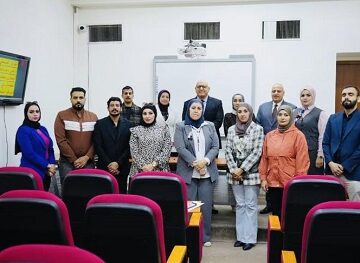
“Sleep in the Holy Qur’an.” The seminar was attended by a number of professors and researchers and was held at Professor Nabila Abdul Munim Dawood Hall. The lecture was delivered by Professor Dr. Zainab Kamil Karim, a faculty member at the Center. In her lecture, Dr. Karim discussed the importance of sleep in human life from both Qur’anic and health perspectives. She explained that the Qur’an refers to sleep in nine verses due to its essential role in physical rest, revitalizing energy, and stabilizing the human psyche. She cited several Qur’anic verses, including: “And We made your sleep [a means for] rest”; “And of His signs is your sleep by night and by day”; and “Allah takes the souls at the time of their death, and those that do not die during their sleep.” She further explained that the Qur’an presents a balanced understanding of sleep, describing it as a divine blessing, a sign of God’s power, and a means of preserving physical and mental health. She emphasized that sleep disorders negatively affect thinking, behavior, and scientific productivity. The lecture included scientific discussions and contributions from attendees regarding the relationship between Qur’anic guidance and modern studies in psychology and medicine. At the conclusion, Dr. Karim recommended adherence to proper sleep practices and health guidelines derived from Qur’anic and Prophetic teachings.

628964165_1232007752364666_941224068747707760_n

Attending the opening

The Center for Revival of Arab Scientific Heritage Participates in the Inauguration of the Museum of the Two Imams Al-Kadhimayn (peace be upon them)

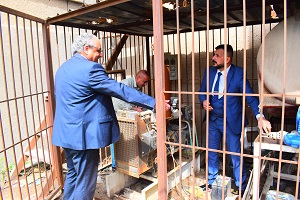
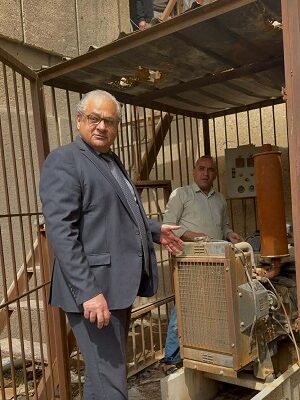
By a kind invitation from the General Secretariat of the Al-Kadhimiya Holy Shrine / Al-Kadhimiya Center for Heritage Revival, our Center participated in the inauguration of the Museum of the Two Imams Al-Kadhimayn (peace be upon them) for Rare Collections and Manuscripts on the morning of Thursday, 5/2/2026. The delegation was led by Mr. Fares Issa Fares, Director of Administration, representing the Center’s Director, along with a number of faculty members and staff, to attend the museum’s opening ceremony held at the Al-Kadhimiya Holy Shrine. This participation came within the framework of strengthening cultural and scientific communication and gaining insight into the museum’s valuable rare collections and manuscripts, which embody the Islamic civilizational and intellectual heritage. At the conclusion of the visit, the Center’s representative expressed gratitude and appreciation to the Al-Kadhimiya Holy Shrine for their warm reception and excellent organization, wishing continued success and prosperity for these cultural institutions that contribute to preserving and reviving Islamic heritage for future generations

627434657_1228411472724294_8820406967728189188_n
627337024_1228411269390981_7133606993299743527_n
627167069_1228411389390969_7975517053348381485_n

Visit

As Part of Its Field Scientific Activities, the Center for Revival of Arab Scientific Heritage Receives a Delegation from the Department of Life Sciences  On the morning of Wednesday, 4/2/2026, the Center for Revival of Arab Scientific Heritage at University of Baghdad received a delegation of faculty members and first-year students, Section (B), from the Department of Life Sciences. The visit was led by Assistant Lecturer Safaa Mohsen Khudair, with the participation of several faculty members from the department. The program included a scientific tour during which the students were introduced to the various departments of the Center.

The delegation was welcomed by the Center’s administration. The visit included a tour of the Center’s library and its scientific and heritage collections, a visit to the Center’s museum, and a walkthrough of its corridors to learn about the Center’s scientific and cultural role in reviving Arab scientific heritage. The visit aimed to enhance the students’ knowledge and to link theoretical aspects with practical scientific applications, thereby contributing to the development of their academic and research skills. At the conclusion of the visit, the delegation expressed its gratitude and appreciation to the administration of the Center for Revival of Arab Scientific Heritage for their warm reception and constructive cooperation

625659036_1227949369437171_1912922139992310714_n
626828756_1227948942770547_3232121784730137915_n

Field Visit

A humanitarian visit was conducted to the Al-Jawad (peace be upon him) Oncology Center at Al-Kadhimiya Teaching Hospital, during which a number of staff members from the Center for Revival of Arab Scientific Heritage at University of Baghdad reviewed the conditions of the patients. During the visit, several specialized chairs for patients suffering from blood cancers were donated as part of the Center’s humanitarian and social support efforts.

A Visit to Strengthen Joint Cooperation

A Visit to Strengthen Joint Cooperation between the Center for Revival of Arab Scientific Heritage and the Great Mosque of Kufa

The Center for Revival of Arab Scientific Heritage at University of Baghdad received on the morning of Tuesday, 3 February 2026, Mr. Nael Mohammed Mohsen Tuwaij, representative of the Secretariat of the Great Mosque of Kufa – Department of Intellectual and Cultural Affairs, in a visit aimed at strengthening ties and enhancing mutual cooperation between the two sides. During the visit, discussions focused on mechanisms for joint scientific and cultural coordination, as well as prospects for future cooperation in ways that serve shared intellectual and scholarly objectives and support cultural and heritage-related activities of common interest. Both parties emphasized the importance of building effective partnerships between scientific and cultural institutions, particularly with the Great Mosque of Kufa, given its religious, historical, and intellectual significance. They also noted that several upcoming activities and programs are planned to be organized in the near future, in a manner that enhances the cultural and academic presence of scientific institutions. This visit comes as part of the Center’s ongoing commitment to strengthening communication and cooperation with religious and cultural institutions and activating joint efforts in the fields of research, awareness, and the revival of intellectual heritage.

627856449_1227042216194553_8649307998556427069_n

workshop “Air Pollution in Baghdad: Causes and Treatments.”

The Department of Pure Sciences at the Center for Revival of Arab Scientific Heritage at University of Baghdad organized a scientific workshop “Air Pollution in Baghdad: Causes and Treatments.”

The workshop was attended by a distinguished group of faculty members and researchers and was held at Professor Nabila Abdul Munim Dawood Hall. The session was chaired by Professor Dr. Taha Sabti Ibrahim, Head of the Department of Pure Sciences, who emphasized in his remarks the importance of addressing the environmental challenges facing the city of Baghdad and the necessity of employing scientific research to develop appropriate solutions and treatments. The lecture was delivered by Professor Dr. Anas Issam Ismail, a faculty member at the Center. He reviewed the major causes of air pollution in Baghdad, explaining that vehicle exhaust emissions are among the most significant sources of pollution, as vehicles release more than half a ton of toxic gases daily, including carbon dioxide, nitrogen monoxide, and sulfur oxides. He also pointed to the widespread use of private electricity generators in residential neighborhoods due to the weakness of the national power supply, which contributes large quantities of pollutants to the atmosphere. He further addressed the random and continuous burning of waste without environmental oversight or treatment, which leads to the emission of fine particulate matter and harmful gases. In addition, he highlighted environmentally unlicensed factories—particularly brick and asphalt plants—that rely on low-quality fuel, resulting in dense emissions that exacerbate pollution levels. He also noted that stagnant weather conditions and heavy cloud cover contribute to the accumulation of pollutants and prevent their dispersion, thereby raising pollution indicators to dangerous levels. Regarding proposed treatments, the lecturer stressed the need to develop the public transportation system, encourage the use of environmentally friendly vehicles, reduce the number of old cars, and expand renewable energy projects. He also called for preventing random waste burning, establishing modern stations for sorting, treatment, and recycling, tightening environmental monitoring of unlicensed factories and obligating them to use emission-reduction technologies or relocate outside residential areas, increasing green spaces within the city due to their effective role in absorbing pollutants and improving air quality, and adopting continuous air-quality monitoring programs, especially during weather conditions that lead to pollutant accumulation. The workshop concluded with constructive scientific discussions and interventions by the attendees, emphasizing the importance of raising environmental awareness and strengthening the role of academic institutions in serving society and addressing environmental challenges.

626982460_1227031202862321_2863223379143425001_n

seminar “The Moral System in the Islamic Perspective.

The Center for Revival of Arab Scientific Heritage at University of Baghdad organized a seminar “The Moral System in the Islamic Perspective.”

The lecture was delivered by Professor Dr. Anas Issam Ismail, a faculty member at the Center, in the presence of a number of professors and researchers, at Professor Nabila Abdul Munim Dawood Hall. In his lecture, he explained that the moral system in Islam is distinguished by two fundamental characteristics that set it apart from other ethical systems. The first characteristic is that morality in Islam is not merely linked to the framework of what is lawful and unlawful (halal and haram), but is directly connected to Islamic creed (‘aqeedah). Many Qur’anic verses addressing moral values conclude with expressions affirming their connection to faith in Almighty God, such as the verse: “That is for the one who believes in Allah,” reflecting that faith is the foundation from which the moral system originates.He further noted that the second characteristic lies in the fact that the Islamic moral system is detailed and precise, as outlined in the Holy Qur’an and the purified Prophetic Sunnah. It addresses human behavior comprehensively and meticulously, as seen in the verses concerning seeking permission before entering upon one’s parents and those regarding seeking familiarity before entering houses, emphasizing the semantic and legislative distinction between seeking familiarity (isti’nas) and seeking permission (isti’dhan). He added that the noble Prophetic Sunnah has also played a significant role in consolidating this detailed moral system, since morality is closely connected to human nature. Its principles are firmly established, not subject to deletion or addition, which makes the Islamic moral framework valid for all times and places.

625988416_1226276922937749_4331606566938417743_n
626061983_1226277169604391_2266085338100646582_n

Invitation to attend

The Al-Kadhimiya Holy Shrine has invited the Center for Revival of Arab Scientific Heritage at University of Baghdad to attend the inauguration ceremony of the Museum of the Two Imams Al-Kadhimayn (peace be upon them) for Rare Collections and Manuscripts.

The invitation was delivered by Mr. Murtadha Ali, representing the Department of Public Relations, and he was received by Mr. Fares Issa Fares, Director of the Center’s Administration. The inauguration ceremony will be held on Thursday morning, 16 Sha‘ban 1447 AH / 5 February 2026 in the hall of Al-Jawadayn Religious School (Bab Al-Sayyida Fatima, peace be upon her) داخل the Holy Shrine. The opening of this museum comes as part of the Shrine’s ongoing efforts to preserve Islamic and scholarly heritage, safeguard rare manuscripts, and highlight the civilizational legacy of the Pure Imams (peace be upon them), in a manner that strengthens academic and cultural cooperation with institutions and research centers. The Shrine emphasized the importance of the Center’s attendance, given its active role in serving scientific and intellectual heritage, noting that its participation will contribute to enriching this significant cultural event.

626863091_1226259986272776_5760024608614992620_n

Receives a Delegation from the Al-Askari Holy Shrine

The Center for Revival of Arab Scientific Heritage at University of Baghdad Receives a Delegation from the Al-Askari Holy Shrine

the Center for Revival of Arab Scientific Heritage at University of Baghdad received a delegation from the Al-Askari Holy Shrine on the morning of Sunday, 1/2/2026. The esteemed delegation included Dr. Ahmed Al-Mulla and Mr. Sajjad Abdul Latif. They were welcomed by Professor Dr. Laith Majeed Hussein, Director of the Center, in an atmosphere marked by mutual respect and constructive cooperation. During the visit, discussions focused on prospects for scientific and cultural collaboration between the Holy Shrines and our Center, particularly in the fields of research, documentation, and scholarly publishing, in ways that contribute to strengthening institutional work and serving Islamic and cultural heritage. At the conclusion of the visit, the delegation of the Al-Askari Holy Shrine presented a collection of books and journals published by the Shrine as a gift to our Center. In return, the Center presented them with a selection of its specialized books and journals, affirming the depth of the relationship and the fruitful cooperation

624765381_1225160123049429_1025984455346884972_n
623816403_1225160169716091_7869503229381995500_n

A Faculty Member Publishes an essay

Professor Dr. Wasan Hussein Muhaimid, a faculty member in the Department of Human Studies at the Center for the Revival of Arab Scientific Heritage, has published a scholarly article entitled (Cities of Iraq in the Lectures of Yousif Rizqallah Ghanima) in Najm Al-Mashriq Journal, Issue No. (124), Thirty-first Year, Fourth Issue for 2025. This publication comes as part of her ongoing research efforts in the fields of humanities and historical studies

618951827_1216105343954907_1719457884328647879_n

Center’s participation 

Under the patronage of the Office of the President of the University of Baghdad, the eleventh meeting of the liaison officers of the University of Baghdad Museum was held on Tuesday, January 20, 2026, at in Dr. Mahdi Hantoosh Hall, College of Engineering. The meeting witnessed the participation of Ms. Enas Gharib Mousa, the museum liaison officer at our Center, as part of the Center’s efforts to strengthen institutional communication and actively engage in activities related to museum and cultural affairs at the University of Baghdad. This meeting comes within the framework of supporting the work of the University of Baghdad Museum and coordinating efforts among liaison officers in a manner that contributes to the development of museum work and enhances its academic and cultural role.

Center Launches an Awareness Campaign on the Dangers of Irregular Migration

Heritage Revival Center Launches an Awareness Campaign on the Dangers of Irregular Migration

Following the directives of the Department of Media and Government Communication / University of Baghdad Presidency, the Center for the Revival of Arab Scientific Heritage initiated an awareness campaign that included the distribution of brochures, pamphlets, and posters highlighting the dangers of irregular migration to a number of university students across the halls and colleges of the University of Baghdad. The campaign provided students with educational explanations about the causes of irregular migration and its negative impacts on both individuals and society. It also addressed the associated legal and humanitarian risks, while emphasizing the importance of community awareness and the role of academic institutions in reducing this phenomenon. This initiative comes as part of efforts to strengthen social responsibility and promote an awareness culture among students, contributing to the development of a conscious youth capable of confronting contemporary challenges.

618101935_1215601607338614_5025097983308983817_n
618666960_1215601640671944_4660065668492139459_n
617488765_1215601737338601_4337869062357175198_n