A Visit to Strengthen Joint Cooperation

A Visit to Strengthen Joint Cooperation between the Center for Revival of Arab Scientific Heritage and the Great Mosque of Kufa

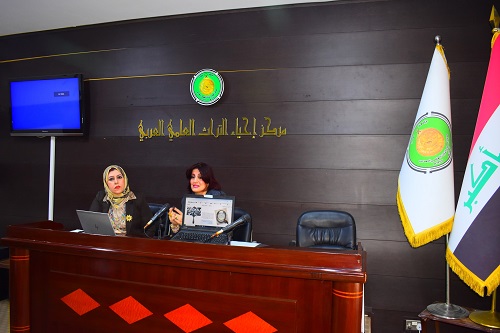
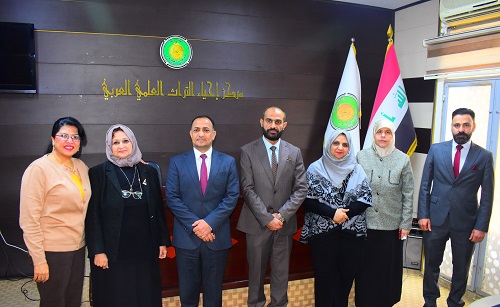
The Center for Revival of Arab Scientific Heritage at University of Baghdad received on the morning of Tuesday, 3 February 2026, Mr. Nael Mohammed Mohsen Tuwaij, representative of the Secretariat of the Great Mosque of Kufa – Department of Intellectual and Cultural Affairs, in a visit aimed at strengthening ties and enhancing mutual cooperation between the two sides. During the visit, discussions focused on mechanisms for joint scientific and cultural coordination, as well as prospects for future cooperation in ways that serve shared intellectual and scholarly objectives and support cultural and heritage-related activities of common interest. Both parties emphasized the importance of building effective partnerships between scientific and cultural institutions, particularly with the Great Mosque of Kufa, given its religious, historical, and intellectual significance. They also noted that several upcoming activities and programs are planned to be organized in the near future, in a manner that enhances the cultural and academic presence of scientific institutions. This visit comes as part of the Center’s ongoing commitment to strengthening communication and cooperation with religious and cultural institutions and activating joint efforts in the fields of research, awareness, and the revival of intellectual heritage.

627856449_1227042216194553_8649307998556427069_n

workshop “Air Pollution in Baghdad: Causes and Treatments.”

The Department of Pure Sciences at the Center for Revival of Arab Scientific Heritage at University of Baghdad organized a scientific workshop “Air Pollution in Baghdad: Causes and Treatments.”

The workshop was attended by a distinguished group of faculty members and researchers and was held at Professor Nabila Abdul Munim Dawood Hall. The session was chaired by Professor Dr. Taha Sabti Ibrahim, Head of the Department of Pure Sciences, who emphasized in his remarks the importance of addressing the environmental challenges facing the city of Baghdad and the necessity of employing scientific research to develop appropriate solutions and treatments. The lecture was delivered by Professor Dr. Anas Issam Ismail, a faculty member at the Center. He reviewed the major causes of air pollution in Baghdad, explaining that vehicle exhaust emissions are among the most significant sources of pollution, as vehicles release more than half a ton of toxic gases daily, including carbon dioxide, nitrogen monoxide, and sulfur oxides. He also pointed to the widespread use of private electricity generators in residential neighborhoods due to the weakness of the national power supply, which contributes large quantities of pollutants to the atmosphere. He further addressed the random and continuous burning of waste without environmental oversight or treatment, which leads to the emission of fine particulate matter and harmful gases. In addition, he highlighted environmentally unlicensed factories—particularly brick and asphalt plants—that rely on low-quality fuel, resulting in dense emissions that exacerbate pollution levels. He also noted that stagnant weather conditions and heavy cloud cover contribute to the accumulation of pollutants and prevent their dispersion, thereby raising pollution indicators to dangerous levels. Regarding proposed treatments, the lecturer stressed the need to develop the public transportation system, encourage the use of environmentally friendly vehicles, reduce the number of old cars, and expand renewable energy projects. He also called for preventing random waste burning, establishing modern stations for sorting, treatment, and recycling, tightening environmental monitoring of unlicensed factories and obligating them to use emission-reduction technologies or relocate outside residential areas, increasing green spaces within the city due to their effective role in absorbing pollutants and improving air quality, and adopting continuous air-quality monitoring programs, especially during weather conditions that lead to pollutant accumulation. The workshop concluded with constructive scientific discussions and interventions by the attendees, emphasizing the importance of raising environmental awareness and strengthening the role of academic institutions in serving society and addressing environmental challenges.

626982460_1227031202862321_2863223379143425001_n

seminar “The Moral System in the Islamic Perspective.

The Center for Revival of Arab Scientific Heritage at University of Baghdad organized a seminar “The Moral System in the Islamic Perspective.”

The lecture was delivered by Professor Dr. Anas Issam Ismail, a faculty member at the Center, in the presence of a number of professors and researchers, at Professor Nabila Abdul Munim Dawood Hall. In his lecture, he explained that the moral system in Islam is distinguished by two fundamental characteristics that set it apart from other ethical systems. The first characteristic is that morality in Islam is not merely linked to the framework of what is lawful and unlawful (halal and haram), but is directly connected to Islamic creed (‘aqeedah). Many Qur’anic verses addressing moral values conclude with expressions affirming their connection to faith in Almighty God, such as the verse: “That is for the one who believes in Allah,” reflecting that faith is the foundation from which the moral system originates.He further noted that the second characteristic lies in the fact that the Islamic moral system is detailed and precise, as outlined in the Holy Qur’an and the purified Prophetic Sunnah. It addresses human behavior comprehensively and meticulously, as seen in the verses concerning seeking permission before entering upon one’s parents and those regarding seeking familiarity before entering houses, emphasizing the semantic and legislative distinction between seeking familiarity (isti’nas) and seeking permission (isti’dhan). He added that the noble Prophetic Sunnah has also played a significant role in consolidating this detailed moral system, since morality is closely connected to human nature. Its principles are firmly established, not subject to deletion or addition, which makes the Islamic moral framework valid for all times and places.

625988416_1226276922937749_4331606566938417743_n
626061983_1226277169604391_2266085338100646582_n

Invitation to attend

The Al-Kadhimiya Holy Shrine has invited the Center for Revival of Arab Scientific Heritage at University of Baghdad to attend the inauguration ceremony of the Museum of the Two Imams Al-Kadhimayn (peace be upon them) for Rare Collections and Manuscripts.

The invitation was delivered by Mr. Murtadha Ali, representing the Department of Public Relations, and he was received by Mr. Fares Issa Fares, Director of the Center’s Administration. The inauguration ceremony will be held on Thursday morning, 16 Sha‘ban 1447 AH / 5 February 2026 in the hall of Al-Jawadayn Religious School (Bab Al-Sayyida Fatima, peace be upon her) داخل the Holy Shrine. The opening of this museum comes as part of the Shrine’s ongoing efforts to preserve Islamic and scholarly heritage, safeguard rare manuscripts, and highlight the civilizational legacy of the Pure Imams (peace be upon them), in a manner that strengthens academic and cultural cooperation with institutions and research centers. The Shrine emphasized the importance of the Center’s attendance, given its active role in serving scientific and intellectual heritage, noting that its participation will contribute to enriching this significant cultural event.

626863091_1226259986272776_5760024608614992620_n

Receives a Delegation from the Al-Askari Holy Shrine

The Center for Revival of Arab Scientific Heritage at University of Baghdad Receives a Delegation from the Al-Askari Holy Shrine

the Center for Revival of Arab Scientific Heritage at University of Baghdad received a delegation from the Al-Askari Holy Shrine on the morning of Sunday, 1/2/2026. The esteemed delegation included Dr. Ahmed Al-Mulla and Mr. Sajjad Abdul Latif. They were welcomed by Professor Dr. Laith Majeed Hussein, Director of the Center, in an atmosphere marked by mutual respect and constructive cooperation. During the visit, discussions focused on prospects for scientific and cultural collaboration between the Holy Shrines and our Center, particularly in the fields of research, documentation, and scholarly publishing, in ways that contribute to strengthening institutional work and serving Islamic and cultural heritage. At the conclusion of the visit, the delegation of the Al-Askari Holy Shrine presented a collection of books and journals published by the Shrine as a gift to our Center. In return, the Center presented them with a selection of its specialized books and journals, affirming the depth of the relationship and the fruitful cooperation

624765381_1225160123049429_1025984455346884972_n
623816403_1225160169716091_7869503229381995500_n

A Faculty Member Publishes an essay

Professor Dr. Wasan Hussein Muhaimid, a faculty member in the Department of Human Studies at the Center for the Revival of Arab Scientific Heritage, has published a scholarly article entitled (Cities of Iraq in the Lectures of Yousif Rizqallah Ghanima) in Najm Al-Mashriq Journal, Issue No. (124), Thirty-first Year, Fourth Issue for 2025. This publication comes as part of her ongoing research efforts in the fields of humanities and historical studies

618951827_1216105343954907_1719457884328647879_n

Center’s participation 

Under the patronage of the Office of the President of the University of Baghdad, the eleventh meeting of the liaison officers of the University of Baghdad Museum was held on Tuesday, January 20, 2026, at in Dr. Mahdi Hantoosh Hall, College of Engineering. The meeting witnessed the participation of Ms. Enas Gharib Mousa, the museum liaison officer at our Center, as part of the Center’s efforts to strengthen institutional communication and actively engage in activities related to museum and cultural affairs at the University of Baghdad. This meeting comes within the framework of supporting the work of the University of Baghdad Museum and coordinating efforts among liaison officers in a manner that contributes to the development of museum work and enhances its academic and cultural role.

Center Launches an Awareness Campaign on the Dangers of Irregular Migration

Heritage Revival Center Launches an Awareness Campaign on the Dangers of Irregular Migration

Following the directives of the Department of Media and Government Communication / University of Baghdad Presidency, the Center for the Revival of Arab Scientific Heritage initiated an awareness campaign that included the distribution of brochures, pamphlets, and posters highlighting the dangers of irregular migration to a number of university students across the halls and colleges of the University of Baghdad. The campaign provided students with educational explanations about the causes of irregular migration and its negative impacts on both individuals and society. It also addressed the associated legal and humanitarian risks, while emphasizing the importance of community awareness and the role of academic institutions in reducing this phenomenon. This initiative comes as part of efforts to strengthen social responsibility and promote an awareness culture among students, contributing to the development of a conscious youth capable of confronting contemporary challenges.

618101935_1215601607338614_5025097983308983817_n
618666960_1215601640671944_4660065668492139459_n
617488765_1215601737338601_4337869062357175198_n

Heritage Revival Center Organizes a Lecture on the Quran’s Approach to Strengthening Faith

Heritage Revival Center Organizes a Lecture on the Quran’s Approach to Strengthening Faith: A Study in Gradual Spiritual Development

As part of its distinguished activities commemorating the National Quran Day, the Center for the Revival of Arab Scientific Heritage at the University of Baghdad held, on Tuesday morning, January 20, 2026, at 10:00 a.m., a religious workshop entitled “The Gradual Approach of the Quran in Islamic Creed.” The lecture was delivered by Professor Dr. Anas Issam Ismail, a faculty member at the Center. He spoke about the Islamic creed and the revelation of the Quran, emphasizing that, as is well-known to specialists in Islamic sciences, Islamic rulings and guidance were not revealed all at once but were revealed gradually, taking into account the circumstances of people and their readiness to receive them. One prominent example is the prohibition of alcohol, which was not forbidden immediately. It was first introduced by highlighting its harms, then prohibited during prayer times, and finally subjected to a complete prohibition. This principle illustrates that gradual guidance in the Quran applies not only to jurisprudential rulings but also to the establishment of Islamic belief. By tracing Quranic verses according to the order of revelation, one observes that issues of creed are presented sequentially and gradually, corresponding to the development of faith within individuals. For instance, in the early stages of revelation, the concept of divine oversight is established, as in the verse: “Indeed, Allah has been ever, over you, an Observer” (Quran). The discourse then progresses to affirming the perfection of Allah’s attributes, as in: “Indeed, Allah is Hearing and Seeing,” and subsequently to the affirmation of His precise knowledge of hidden thoughts, as in: “And We know whatever his soul whispers to him.” Thus, it becomes clear that the Quran employs a wise and gradual method to instill faith, taking human nature into account and preparing hearts and minds to comprehend the truths of belief step by step, until the creed is firmly established in the hearts of believers.

617900022_1215549254010516_1846984954955636262_n
618646339_1215549224010519_9103806366647022013_n

Program in Celebration of the National Quran Day

Heritage Revival Center Holds a Weekly Religious and Cultural Program in Celebration of the National Quran Day

As part of a series of religious activities organized in observance of the World Week of the National Quran Day, the Center for the Revival of Arab Scientific Heritage at the University of Baghdad held, on Monday morning, January 19, 2026, at 11:00 a.m., in Professor Nabila Abdul Munim Dawood Hall, a workshop entitled “The Religious Significance of the Quran in China: A Historical Perspective” delivered by Dr. Liqaa Shaker Al-Sharifi, a faculty member at the Center.

The researcher addressed the religious status of the Quran among Muslims in China, noting that since the arrival of Islam in the country in the 7th century CE, the Quran has served as a spiritual and cultural reference, preserving the identity of Muslims within a multi-cultural society. With the arrival of Muslim traders and scholars during the Tang Dynasty, the Quran became the foundation of religious education in mosques and traditional schools.

Over the centuries, the Quran played a key role in unifying Chinese Muslims and instilling ethical and religious values among them, despite the political and social challenges they faced. Early attempts were also made in China to translate its meanings into Chinese to facilitate understanding and to relate its teachings to the local cultural context. The workshop included examples of Quranic manuscripts and ancient Chinese translations that illustrated these aspects.

In the modern era, the Quran continues to serve as a symbol of religious steadfastness and the preservation of Islamic identity. Dr. Al-Sharifi emphasized that its presence in China is not merely a ritual practice but represents a historical continuity reflecting the interaction of Islam with Chinese civilization over many centuries.

617481130_1214745860757522_1894517733900915275_n
616799501_1214745580757550_6493850745780661175_n

Workshop on the Occasion of the National Quran Day

Heritage Revival Center Organizes a Workshop on the Occasion of the National Quran Day

The Center for the Revival of Arab Scientific Heritage at the University of Baghdad organized, on Sunday morning, January 18, 2026, as part of a series of activities held from January 17 to 22 in celebration of the National Quran Day, a workshop entitled “The Relationship between Quranic Recitations and the Quranic Script.” The lecture was delivered by Professor Dr. Taha Sabti Ibrahim, a faculty member at the Center. The close relationship between Quranic recitations (qirā’āt) and the Quranic script (rasm) is evident in the fact that one of the main conditions for accepting a recitation is its conformity with the Uthmanic script of one of the revered Mushafs, even if only potentially. Since the Quran has historically been referred to by two primary names—al-Qur’ān and al-Kitāb—this lecture highlighted the direct connection between these terms. Quranic recitations fall under the concept of the Quran as a text meant for recitation and worship, while the Quranic script is associated with the concept of the Book as a written text preserved in the Mushafs. This workshop aimed to deepen the understanding of the interrelation between the oral and written dimensions of the Quran and to underscore its significance in Islamic scholarship and devotion

615438629_1214031704162271_5890948095948721156_n
616527859_1214031537495621_3662907700819134469_n

Course on Editing and Preserving Arabic

Conclusion of the Training Course on Editing and Preserving Arabic Manuscripts at the Heritage Revival Center

The Center for the Revival of Arab Scientific Heritage at the University of Baghdad concluded its specialized manuscript course entitled “Editing and Preserving Arabic Manuscripts,” held from January 11 to 14, in cooperation with the Continuing Education Center at the University of Baghdad. The course aimed to develop the skills of researchers and enthusiasts in the field of Arabic manuscript editing, introducing the scientific and methodological foundations used in verifying and preserving heritage texts, thereby contributing to supporting scholarly research and safeguarding the Arab scientific heritage. The course included the presentation of several specialized research papers. Professor Dr. Zainab Kamel Karim, a faculty member at the Center, presented a paper entitled “Fundamentals of Manuscript Editing.” Dr. Liqaa Amer Ashour, also a faculty member at the Center, presented “Manuscript Cataloging and Its Role in Supporting Research and Text Verification.” Dr. Sundus Zaidan Khalaf contributed a paper titled “Introduction to Textual Verification,” while Assistant Professor Dr. Nihal Ni‘ma Majid from the Department of History, College of Education for Women, presented “Challenges in Manuscript Editing,” discussing the major difficulties faced by researchers in this field.

At the conclusion of the course, Assistant Professor Dr. Iman Saleh Mahdi presented a paper entitled “Critiquing Manuscript Editing,” emphasizing the importance of rigorous scientific review in manuscript verification processes. The course concluded with a final assessment exam to evaluate the participants’ level of learning and the achievement of the course’s educational objectives. Ms. Fatima Mohammed Ali, the liaison officer for the course, played an active role in organizational and administrative matters, supervising and following up on all technical aspects, which contributed to the successful completion of the course. The Heritage Revival Center affirmed at the conclusion of the course its commitment to continuing the organization of future training courses and workshops dedicated to Arab scientific heritage and manuscript editing, in support of researchers and in reinforcement of the University’s academic and cultural role.

616798753_1213816767517098_8808619324748128638_n
616498865_1213816304183811_3405278214444758016_n
617510873_1213816474183794_4479949245938519529_n
616384186_1213816250850483_3662266890351833756_n