Visit to the Manuscript

A Field Visit to the Manuscript repairing House at the Sunni Endowment Office

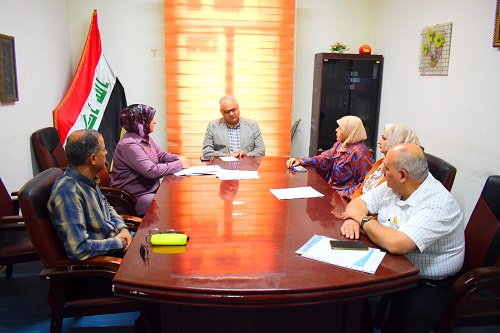
On Tuesday, May 19, 2026, a number of professors and researchers from the Center for the Revival of Arab Scientific Heritage at the University of Baghdad visited the Manuscript  repairing House at the Sunni Endowment Office. The visit aimed to strengthen scientific cooperation and learn about the efforts being made to preserve and maintain manuscript heritage.

During the visit, the delegation observed the workflow at the House and the mechanisms for preserving and restoring manuscripts. They also met with Mr. Raad Saad Ibrahim Al-Mashhadani, the Director of the House, where a fruitful scientific dialogue took place. This dialogue addressed ways to develop joint work and exchange expertise in the field of manuscript maintenance and the preservation of scientific and cultural heritage.

The delegation commended the significant efforts made by the House’s staff in serving Arab and Islamic heritage. They expressed their gratitude and appreciation for the warm welcome and generous hospitality, praying that God Almighty would grant everyone success in further scientific and professional contributions.

701757962_1311453791086728_729403424284553967_n

visits the Great Mosque of Kufa

A delegation from the Center for the Revival of Arab Scientific Heritage visits the Great Mosque of Kufa

Under the supervision of Professor Dr. Laith Majeed Hussein, Director of the Center for the Revival of Arab Scientific Heritage at the University of Baghdad, a delegation of professors and staff members from the Center visited the Great Mosque of Kufa in Najaf on Sunday, May 17, 2026. The visit aimed to strengthen scientific and cultural cooperation between the two sides.

The delegation was received by the Director of Public Relations at the mosque administration, who welcomed the guests. The visit included a tour of several of the mosque’s halls and sections, during which the delegation learned about the most prominent historical and heritage landmarks it houses. They also discussed prospects for joint cooperation between the mosque administration and the Center for the Revival of Arab Scientific Heritage.

The two parties also discussed the possibility of holding joint scientific seminars, workshops, and cultural visits to support scientific and cultural activities and promote interest in Arab and Islamic scientific heritage.

This visit comes within the framework of the Center’s commitment to building bridges of cooperation with religious, cultural, and scientific institutions in a way that serves the scientific and intellectual movement and preserves the civilizational and cultural heritage

The President of the University of Baghdad issues a directive to protect the university environment

Based on the University of Baghdad’s commitment to promoting environmental sustainability and preserving the campus’s cultural character, the University President, Professor Dr. Alaa Abdul Hassan Attia, issued a directive prohibiting any practices or actions that could harm biodiversity and green spaces within the university campus. These elements are considered fundamental pillars for achieving ecological balance and maintaining the university’s aesthetic and academic identity.

The directive also instructs all departments, staff, and students to fully comply with the issued instructions and to work towards protecting the university environment and preserving its natural elements. Necessary measures will be taken against violators. Furthermore, the directive is to be circulated to university housing to inform residents of its contents and ensure their adherence.

This directive aligns with the University of Baghdad Council’s decision during its seventeenth session for the 2025/2026 academic year. During that session, the University President announced the launch of a project to restore biodiversity within the campus, aiming to protect vegetation, raise environmental awareness, and promote sustainability within the university. The President of the University of Baghdad affirmed that these steps are part of a comprehensive vision aimed at making the university environment a model of integrated civilization and academic excellence, combining scientific advancement with the preservation of natural resources, thus enhancing the university’s standing both locally and internationally.

This initiative contributes to several Sustainable Development Goals, including Goal 4 (Quality Education), Goal 11 (Sustainable Cities and Communities), Goal 15 (Life on Earth), and Goal 17 (Partnerships for the Goals)

The Center for the Revival of Heritage Organizes a Seminar

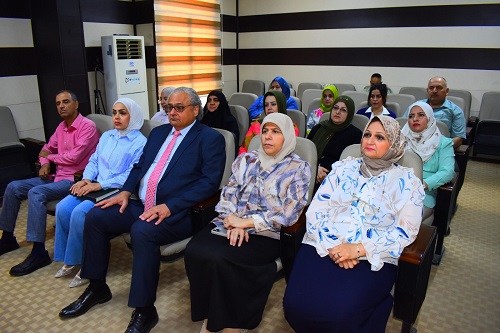
The center for the revival heritage center organizes seminar on Sunday, May 17, 2026  entitled “Economic Life in the Andalusian City of Carmona.” The seminar was presented by Assistant instructor  Zainab Jamal Nawrouz, amember at the center and was attended by a number of professors and researchers in the Professor Nabila Abdul-Munim Dawood Hall. The researcher discussed the economic life of the Andalusian city of Carmona and its remarkable economic prosperity, which was due to its strategic geographical location on the banks of the distinctive Guadalquivir River and the fertility of its agricultural lands. This made it one of the important cities in Andalusia, and its inhabitants relied heavily on agriculture. The city was renowned for cultivating grains, olives, and grapes, in addition to raising livestock, which constituted an important economic resource for the population. Economic activity in Carmona was not limited to agriculture alone. The city also witnessed the development of handicrafts, as its inhabitants excelled in weaving, pottery, and metalwork. This contributed to stimulating trade and meeting the needs of the residents and neighboring markets. She explained the prominent role of trade in supporting the city’s economy, given its proximity to important trade routes in Andalusia. This facilitated the flourishing of markets and increased trade with other cities. The political stability and economic prosperity the city enjoyed during certain periods also contributed to boosting economic activity and the development of its commercial life.

Carmona is a prime example of an Andalusian city that combined agriculture, industry, and trade, granting it a significant economic position in the history of Andalusia

The center of heritage revival organizes seminar 

The Center for the Revival of Arab Scientific Heritage at the University of Baghdad organized a seminar on Tuesday, May 12, 2026, entitled “The Jurisprudence of Priorities in the Holy Quran.” The seminar was presented by Assistant instructor Hind Amer Mohammed, one of the center’s members, and was attended by a number of professors and researchers. It was held in the Professor Nabila Abdul-Munim Dawood Hall at the Center’s headquarters.

The researcher discussed the fundamental concept of “jurisprudence of priorities,” highlighting the Quranic approach to prioritizing actions and rulings. This jurisprudence focuses on the principle of prioritizing the most important over the merely important, giving precedence to the greater interests of religion and life, and the paramount importance of the Quranic text itself. The priority of creed and faith serves as a fundamental principle preceding rulings and details. She emphasized that the objectives of Islamic law elevate the preservation of life, the establishment of justice and mercy, and the general welfare of people above secondary and minor matters. The seminar also included a detailed presentation and explanation of the order of righteous deeds in the Quran, such as honoring parents, establishing prayer, and reconciling people. It demonstrated the impact of this jurisprudence on achieving psychological and social balance for Muslims and placing everything in its proper context to serve the goals of the tolerant Sharia.

At the conclusion of the lecture, the attendees engaged in extensive scholarly discussions, enriching the topic with sound academic and traditional perspectives. This reflected the center’s ongoing role in reviving Arab-Islamic intellectual thought and addressing contemporary intellectual issues from an authentic Islamic heritage perspective.

The Heritage Revival Center holds a session

The Center for the Revival of Arab Scientific Heritage held its fifth meeting of the 2026 academic year on Monday, November 5, 2026. The meeting was chaired by Professor Dr. Laith Majeed Hussein, Director of the Center, and attended by several department heads and council members.

The meeting included a discussion of the Center’s research plan and mechanisms for its development, aligning with the university’s commitment to supporting scientific research and serving Arab and Islamic heritage. The council also reviewed faculty research projects and discussed the requirements for their completion within the specified timeframes.

Furthermore, the council addressed several administrative and organizational matters related to the Center’s obligations and the mechanisms for distributing teaching duties to ensure the smooth operation of academic and administrative processes.

During the meeting, department heads emphasized the importance of strengthening cooperation within the Center and intensifying efforts to elevate the research and scientific standards. They commended the role of researchers and faculty members in enriching the scientific movement and heritage studies with rigorous research. At the end of the session, the need to follow up on the implementation of the recommendations and decisions that would support the center’s scientific and academic progress was emphasized.

699330962_1304840965081344_4044581914081845149_n

The Center for Reviving Arab Heritage Organizes a Seminar

the Center for Reviving Arab Scientific Heritage at the University of Baghdad organized a seminar On Sunday May 10, 2026, entitled “Geographical Maps among the Arabs and Muslims.” The seminar was presented by Assistant Lecturer Walaa Dhiaa Nassif, a faculty member at our center.

She spoke about Arab-Islamic civilization and the significant development it witnessed in the field of geographical mapmaking. Muslim scholars paid extensive attention to describing regions, seas, cities, and trade routes, relying on journeys, explorations, and direct observations. This interest contributed to building an advanced scientific foundation in geography and navigation.

The researcher emphasized that while Muslim geographers benefited from the knowledge of previous civilizations, they did not merely copy it. They worked to develop maps, adding a high degree of accuracy and scientific organization, making them an important reference for centuries.

Arab-Islamic maps were also distinguished by their illustration of trade routes, natural features, and political boundaries. Many of them divided the world into clear geographical regions. Among the most prominent scholars who excelled in this field were Al-Idrisi, Al-Mas’udi, and Ibn Hawqal. The world map drawn by Al-Idrisi is considered one of the most prominent geographical achievements of the Middle Ages, due to its great accuracy, which contributed to the development of geography and navigation and remained an important source of knowledge for many years.

The Center for the Revival of Arab Scientific Heritage Receives a Civil Defense Delegation

As part of its ongoing efforts to provide a safe working environment and ensure the safety of its academic and administrative staff, the Center for the Revival of Arab Scientific Heritage received a delegation from the Civil Defense Directorate (Karrada Branch) for an inspection visit aimed at reviewing and developing public safety procedures within the Center.

The visiting delegation included Captain Ahmed Jabbar Zayer and Commissioner Fadel Faraj Salman from the Karrada Civil Defense, accompanied by Mr. Nour El-Din Saad, the University’s Civil Defense Officer.

The visit included a field inspection to assess the current safety procedures. The main focus was on evaluating safety conditions, reviewing the safety standards followed at the Center, and identifying the necessary requirements to enhance safety.

The visit also included an inspection of tools and equipment, including civil defense equipment and fire suppression systems, to ensure their readiness and regular maintenance. Preventive measures were also discussed, including developing plans to monitor and secure the work environment to guarantee the safety of employees and staff, in accordance with the University’s general directives. The visit was marked by a fruitful atmosphere of cooperation, with the center’s administration and the Civil Defense delegation agreeing to adhere to all the conditions and standards set forth by the specialists and to update the safety system to align with the center’s status as a significant scientific and heritage institution.

The center’s administration expressed its appreciation for the efforts of the Civil Defense personnel and their keenness on-site monitoring, emphasizing that preserving lives and property is a top priority that aligns with the university’s vision of establishing occupational safety standards.

697247081_1303812461850861_7511300031387384692_n

The Center for Reviving Heritage Organizes a Workshop

As part of a series of activities at the Center for Reviving Arab Scientific Heritage at the University of Baghdad, the Women’s Affairs Unit organized a workshop entitled “Women Between Heritage and Modernity: A Moderate Perspective” on Tuesday ,May 5, 2026, The workshop was presented by Assistant instructor Hind Amer Mohammed, one of the  member at the center, in the Nabila Abdul-Munim Dawood Hall.

Through the workshop, she explored intellectual and social dimensions that place women in their true position as guaranteed by Islam, avoiding both excess and deficiency. She emphasized that Islam honors women and grants them explicit rights to education, work, and community participation, provided that these rights are exercised within ethical guidelines that preserve their dignity and protect their well-being. The researcher also highlighted the necessity of grounding these principles in the essential familial and educational role of women, and providing the tools and opportunities to expand women’s participation in building the institutions of contemporary society. She also affirmed that a moderate vision is the ideal solution for confronting contemporary challenges, as it ensures that women are not marginalized or have their identity and values ​​dissolved into alien frameworks. Rather, it empowers them to be active contributors to the advancement of society while preserving its moral principles.

The workshop concluded with recommendations emphasizing the need to strengthen societal awareness of this moderate vision, so that women remain the bulwark that bridges the authenticity of the past with the aspirations of the future, a true partner in building society, and a faithful guardian of its values

689745956_1299902265575214_1006187628268864512_n

the center of heritage revival receives a delegation from the National Security

Under the slogan of strengthening joint security cooperation, the  center of heritage revival receives a delegation from the National Security Service and the Security Permits Department.

According to  the directives of the Director of the Security Permits and Follow-up Department, Professor Dr. Diaa Talib Mohammed Al-Quraishi, Professor Dr. Laith Majeed Hussein, Director of the Center for Reviving Arab Scientific Heritage at the University of Baghdad, received a high-level security and administrative delegation on Sunday, May 3, 2026. The delegation included the University Security Officer from the National Security Service and Mr. Ali Hussein Thani from the Security Permits and Follow-up Department.

This visit comes within the framework of the center’s ongoing efforts to strengthen cooperation with security and oversight institutions to ensure a safe and secure university environment, both technically and intellectually.

The meeting addressed several vital issues and priority security matters. An agreement was reached on a joint action plan aimed at conducting awareness workshops focused on combating the scourge of drugs and methods of prevention, as well as combating cyber extortion. These workshops will educate staff and students on how to deal with digital threats and enhance cybersecurity as a fundamental step towards developing technical protocols for data protection and ensuring the integrity of the center’s information systems. For his part, Professor Dr. Laith Majeed Hussein welcomed this step, stressing that the center would harness all its capabilities to support these awareness initiatives that serve the public interest, while the visiting delegation praised the warm reception and fruitful cooperation shown by the center in implementing security and preventive directives

The Center for the Revival of Heritage Organizes a Seminar “

The Center for the Revival of Arab Scientific Heritage at the University of Baghdad organized a specialized scientific seminar this morning, Sunday, April 26, 2026, entitled “Scientific and Administrative Traditions in Old Baghdad Schools and Their Impact on Current Schools.” The seminar, held in the Professor Nabila Abdul-Munim Dawood Hall, was attended by a number of professors and researchers and presented by instructor Dr. Leqaa’ Amer Ashour, a lecturer in the Manuscripts Department and a faculty member at our center.

The researcher demonstrated that these institutions were not merely centers of learning, but rather integrated “administrative systems” that laid the foundations for what we know today as modern universities. She focused on two main axes: the scientific traditions in organizing the relationship between professor and student, and the system of “scientific licenses,” which are considered the historical origin of academic degrees, as well as the methods of dialogue, debate, and gradual progression in acquiring knowledge; and the administrative traditions that highlighted the high level of institutional organization, including the endowment system that ensured the continuity of education, the uniform dress code, and comprehensive social welfare for students.

The researcher also emphasized that contemporary academic practices in current universities, including career progression, teaching methods, and administrative structures, are merely an extension and development of those original foundations that originated in Baghdad, thus demonstrating the city’s pioneering role in shaping the concept of the “educational institution.”

The session included valuable contributions from the attending professors, enriching the topic with intellectual and historical discussions and underscoring the importance of reviving this legacy to strengthen the academic identity of Iraqi educational institutions.

Cooperation Between the Center for Reviving Heritage and the Center for Urban Planning

Towards a Safe Environment: Cooperation Between the Center for Reviving Heritage and the Center for Urban Planning

On Thursday April 23, 2026, Professor Dr. Laith Majeed Hussein, Director of the Center for Reviving Arab Scientific Heritage at the University of Baghdad, received Professor Dr. Karim Hassan Alwan, Dean of the Center for Urban and Regional Planning for Graduate Studies. A joint meeting was held to discuss ways to enhance scientific and practical cooperation between the two institutions, reflecting the growing interest in safety and civil defense issues.

The meeting addressed mechanisms for developing public safety systems and civil defense procedures within both institutions, emphasizing the importance of exchanging expertise and knowledge in risk management, emergency planning, and raising the level of preparedness for crises.

The two parties also reviewed several proposals aimed at building a sustainable partnership. These proposals included organizing joint workshops and training courses, launching specialized research projects in urban safety and safe planning, and promoting open scientific cooperation and the exchange of data and expertise among researchers.

At the conclusion of the meeting, both sides affirmed their commitment to developing frameworks for future cooperation that contribute to achieving a safe scientific and institutional environment and support efforts to disseminate a culture of safety and civil defense at both the academic and community levels.

678751955_1290184243213683_3109797331449033390_n
675234981_1290183939880380_5767963546935950636_n