The center ofHeritage Revival Center Organizes a Scientific Seminar

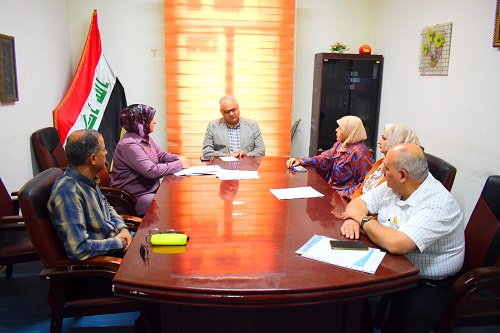
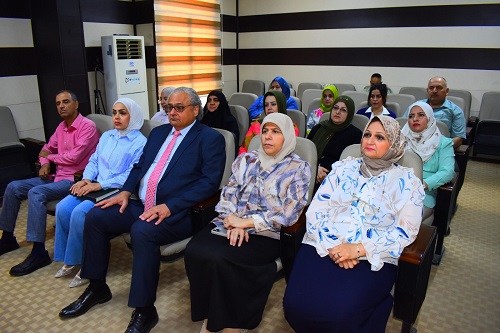
The Department of Pure Sciences at the Arab Scientific Heritage Revival Center / University of Baghdad organized its scientific seminar on the morning of Tuesday, 7/4/2026, entitled “The Art of Crisis Management: Between the Past and the Present,” with the attendance of a distinguished group of professors and researchers, as well as a notable delegation from the Great Mosque of Kufa. The session was chaired by Dr. Sundus Zaidan Khalaf, a faculty member at the Center, who opened the seminar with welcoming remarks, emphasizing the importance of crisis management in light of the rapidly evolving global challenges. She also noted that the seminar aimed to shed light on historical experiences in dealing with crises and linking them to contemporary data in a way that contributes to building more efficient scientific and practical visions. The seminar outlined its key themes, which included studying crises across time, analyzing their causes, and proposing ways to address them, with a focus on contemporary models relevant to current realities. Among the أبرز presentations was that of Assistant Lecturer Hind Amer Fadhil, who discussed crisis management through the ages, highlighting lessons from the past and perspectives of the present. She examined the development of crisis management approaches over time and emphasized the importance of benefiting from historical experiences in addressing current crises. Assistant Lecturer Wasan Adel Abdul Wahab, also from the Center, presented her research paper on “The Political Crisis in Iraq: Causes and Solutions – Water Scarcity as a Model,” in which she analyzed the causes of political crises, focusing on water scarcity and its impacts, and proposed a number of possible solutions. The seminar also featured several other research presentations that enriched the academic discussion and deepened the understanding of crisis management from multiple perspectives. The seminar concluded with a set of recommendations, enhancing the exchange of scientific expertise among academic institutions, benefiting from historical experiences in confronting contemporary crises, supporting applied research in crisis management, and developing effective strategies to address current challenges, particularly in the fields of water and politics.

668450423_1278439991054775_5457227834016358223_n
666306974_1278439987721442_2682239004466398679_n

Heritage Revival Center Pays a Courtesy Visit to Prof.

Authenticity of Place and Stature of Knowledge… Heritage Revival Center Pays a Courtesy Visit to Prof. Nabila Abdul Munim Dawood in Al-Kadhimiya

In an academic and humanitarian gesture reflecting loyalty to pioneers of knowledge, a delegation from the Arab Scientific Heritage Revival Center, headed by Prof. Dr. Laith Majeed Hussein, Director of the Center, and accompanied by a number of distinguished faculty members, paid a visit to Prof. Nabila Abdul Munim Dawood in the holy city of Al-Kadhimiya.

The visit aimed to check on her health and to acknowledge her rich academic journey. During the meeting, the delegation expressed their deep appreciation for her exceptional contributions to the service of Arab heritage, wishing her continued health and well-being so she may carry on her impactful scholarly contributions that have enriched the Arab intellectual library for many years.

The meeting featured an engaging discussion on her latest academic achievements, followed by a tour of her private scholarly library. The delegation viewed a valuable collection of rare books and manuscripts, reflecting the depth of her specialization and the precision of her research throughout her academic career.

At the conclusion of the visit, Prof. Nabila expressed her sincere gratitude and deep appreciation for this kind initiative from the Center’s faculty, praising the vital role the Center plays in preserving heritage and supporting scholars. She also wished everyone continued success and prosperity in their noble academic mission.

Heritage Revival Center Holds a Seminar “Expressions of Humility in the Holy Qur’an.”

The Arab Scientific Heritage Revival Center at the University of Baghdad organized a seminar on Monday, 30/3/2026, entitled “Expressions of Humility in the Holy Qur’an.” The lecture was delivered by Dr. Iman Salih Mahdi, a member at the Center. In a presentation, she explored a semantic and linguistic study of a group of Qur’anic terms that convey meanings of submission, humility, and surrender to God Almighty. The researcher explained that “expressions of humility” refer to the words and phrases mentioned in the Holy Qur’an that indicate a state of deep modesty, reverence, and obedience to God. These meanings are particularly evident in contexts of supplication, repentance, and returning to God, as such expressions reflect the breaking of the (self) and the acknowledgment of one’s need for God’s mercy. This meaning appears in several places in the Holy Qur’an, sometimes expressing the steadfastness of believers and their refusal to submit to hardships. For example, in Surah Aal ‘Imran:(“And how many a prophet [fought] and with him fought many religious scholars. But they never lost assurance due to what afflicted them in the cause of Allah, nor did they weaken or submit.”) [Aal ‘Imran: 146] the phrase “nor did they submit” indicates that they did not yield or become humiliated despite the hardships they faced.It also appears in another context in Surah Al-Mu’minun:

(“And We certainly seized them with punishment, but they did not humble themselves to their Lord, nor did they supplicate [to Him].”) [Al-Mu’minun: 76] , “they did not humble themselves” signifies that they neither submitted to God nor showed humility during the punishment, serving as a reproach for their hardened hearts. Thus, the concept of humility in the Qur’an revolves around meanings of submission and humbleness, whether in its negation from steadfast believers or in the condemnation of disbelievers who fail to submit to God during times of hardship. The researcher also highlighted the semantic differences between these expressions, explaining how each term carries a distinct meaning and context that reflects particular psychological and spiritual dimensions of human beings. This demonstrates the richness and precision of the Qur’anic language in expression. In conclusion, she emphasized the importance of such studies in deepening the understanding of the Qur’anic text and in deriving its rhetorical and educational meanings.

Participation of the Media Unit in an Intensive Training Course

As part of its continuous efforts to develop the journalistic and technical skills of media personnel, the Media Unit at the Center for the Revival of Arab Scientific Heritage at the University of Baghdad participated in a series of intensive training courses organized by the Continuing Education Unit at the College of Media, University of Baghdad.

The participation included the Head of the Media Unit, Ms. Rassel Hashim Al-Hammam, along with Ms. Azhar Salem Dawood and Mr. Khaldoun Abdullah Abdul Nabi. The participants attended three specialized and essential courses in modern media practices.

The first course, “Journalistic Editing” (8 March 2026), focused on modern techniques for content creation, including training in news ticker writing, digital journalistic editing methods, content production for university social media platforms, as well as strategies for combating media misinformation.

The second course, “Television Editing” (15 March 2026), included practical training on the fundamentals of video editing, media importing and organization, in addition to developing skills in preparing and technically understanding the timeline, leading to the practical implementation of editing techniques that support the Center’s media message.

The third course, “Photography (Video and Photography)” (29 March 2026), concluded the Media Unit team’s participation. It addressed the importance of media imagery and the technical foundations of contemporary photography and videography.

The participants expressed their appreciation for this initiative, which opens new horizons for academic and professional cooperation. Certificates of participation were also distributed to the attendees by Prof. Dr. Ammar Taher Mohammed, Dean of the College of Media, with emphasis placed on the continuation of coordination between the Center’s Media Unit and the College of Media to ensure keeping pace with the latest technological developments in journalism and digital media.

659063110_1274014908163950_2821786614904899247_n
659991374_1274014848163956_6502267781559005383_n

The Center for the Revival of Arab Scientific Heritage organized a scientific symposium

The Center for the Revival of Arab Scientific Heritage at the University of Baghdad organized a scientific symposium entitled “Scientific Search Engines and the Humanities” on Tuesday, March 31, 2026, at 10:00 a.m.

The session was chaired by Dr. Salar Ali Khidr, Head of the Department of Pure Sciences, with Dr. Sahar Hassan Abdulrasool serving as the session rapporteur. They outlined the symposium’s objectives, which focused on highlighting modern digital tools that contribute to enhancing the quality of Arab scholarly output and facilitating researchers’ access to international academic resources.

The symposium featured a series of valuable lectures delivered by Assistant Lecturer Dr. Labib Mohsen Abdullah from the Department of Computer Engineering, University of Baghdad, who discussed the technical challenges facing humanities researchers and explored ways to bridge the gap between researchers and global academic search engines.

Assistant Lecturer Dr. Alia Al-Barrak from the Department of Computer Science, University of Baghdad, presented a lecture on the standards of high-quality scientific research and the importance of academic search engines in advancing scholarly writing in both the humanities and pure sciences.

Assistant Lecturer Hind Amer Fadhil, a faculty member at our Center, presented a research paper on the significance of Google Scholar and ResearchGate in humanities research. She emphasized their role in enhancing researchers’ digital visibility and improving the documentation of scholarly citations.

Assistant Lecturer Zainab Jamal Nawroz, also a faculty member at our Center, concluded the symposium with a presentation on the importance of Scopus in advancing humanities research. She explained the mechanisms of publishing in international indexed databases and their impact on improving the global ranking of higher education institutions.

The symposium concluded with several practical recommendations aimed at enhancing academic research skills, including empowering researchers, activating academic profiles, supporting high-quality scholarly publishing, and overcoming digital barriers.

The event also witnessed active scientific discussions and interventions from the audience. At the conclusion of the symposium, the Center’s administration expressed its appreciation to the speakers, wishing them continued success and excellence in their academic careers.

661203557_1272432938322147_4422093671499307796_n
660957099_1272432981655476_414377068258059314_n

A Faculty Member from Our Center Serves as a Member of a Thesis Defense Committee.

A Member from Center  of heritage revival participates as a member on a Thesis Defense Committee 

Assistant Professor Dr. Rasha Issa Fares, a member at the Arab Scientific Heritage Revival Center / University of Baghdad, participated as a member of the master’s thesis defense committee for the student (Maha Najeh Aboud) in the Department of Arab Intellectual and Scientific Heritage at the Institute of Arab History and Scientific Heritage for Graduate Studies.The defense took place on Monday, 30 March 2026, for the thesis entitled: “The Sources of Ibn Kathir (d. 774 AH / 1373 AD) and His Methodology in His Book ‘Shama’il al-Rasul (Peace and Blessings Be Upon Him) and the بيان of His Outward and Pure Character.’” The student was awarded a grade of ممتاز (Excellent), and we wish her continued success in her academic journey. In conclusion, in recognition of her distinguished academic efforts and active participation, Dr. Rasha Issa Fares was awarded a letter of appreciation from the Deanship of the Institute of Arab History and Scientific Heritage for Graduate Studies, in appreciation of her role in advancing the scientific and academic level. The Arab Scientific Heritage Revival Center at the University of Baghdad held its scientific seminar entitled “Academic Search Engines and the Humanities” on the morning of Tuesday, 31/3/2026, in the Professor Nabila Abdul Munim Dawood Hall at the Center.

Screenshot

“The Role of Childhood Psychological Trauma.”

The Center for the Revival of Arab Scientific Heritage at the University of Baghdad organized a workshop entitled “The Role of Childhood Psychological Trauma and Its Impact on Suicide” on Tuesday, March 24, 2026, at 11:00 a.m. The event was held in Professor Nabila Abdul Munim Dawood Hall and was attended by a number of faculty members and researchers. The workshop was delivered by Lecturer Dr. Israa Saad Salih, a faculty member at the Center. In her lecture, she highlighted the importance of childhood as the foundation for shaping an individual’s personality, focusing on the profound effects of early psychological trauma, such as neglect and domestic violence, on mental health in later stages of life. Dr. Salih also explained the relationship between these early adverse experiences and the increased risk of developing depression and anxiety, which may, in some cases, lead to suicidal behavior. She emphasized the importance of early intervention and preventive measures to reduce the long-term psychological consequences of childhood trauma. The workshop witnessed active participation from the attendees, who raised numerous questions and contributed valuable discussions, particularly regarding prevention strategies, early intervention, and the role of families and educational institutions in mitigating the effects of psychological trauma. At the conclusion of the workshop, the speaker stressed the importance of promoting community awareness of children’s mental health and providing safe and supportive environments that contribute to raising a psychologically resilient generation capable of facing future challenges.

657726282_1266781042220670_3911375495156131142_n

workshop

The Center for the Revival of Heritage Organizes a Workshop “The Role of Childhood Psychological Trauma and Its Impact on Suicide.”

The Center for the Revival of Arab Scientific Heritage at the University of Baghdad organized a workshop on Tuesday, 24/3/2026, , entitled “The Role of Childhood Psychological Trauma and Its Impact on Suicide.” The workshop was attended by a number of professors and researchers in the field and was held in Professor Nabila Abdul Monem Dawood Hall.

The lecture was delivered by Dr. Israa Saad Saleh, a faculty member at the Center. The workshop focused on the importance of childhood as a foundational stage in shaping an individual’s personality, highlighting the profound effects of early psychological traumas—such as neglect and domestic violence—on mental health in later stages of life. The researcher also discussed the link between these early experiences and an increased risk of depression, anxiety, and, in some cases, suicidal behaviors.

The workshop witnessed active engagement from attendees, with numerous questions and interventions enriching the discussion, particularly regarding prevention mechanisms, early intervention strategies, and the role of families and educational institutions in mitigating the effects of psychological trauma.

In conclusion, the researcher emphasized the necessity of raising societal awareness about the importance of children’s mental health and providing safe, supportive environments that contribute to raising a generation with psychological stability and the ability to face life’s challenges.

657521984_1266780482220726_3841369589165147341_n

Discussion Panel “Reshaping the Historical

The Center for the Revival of Heritage Organizes a Discussion Panel “Reshaping the Historical Research Methodology with Artificial Intelligence.”

The Baghdad Documentation Department at the Center for the Revival of Arab Scientific Heritage, University of Baghdad, organized a discussion panel on Tuesday,17/3/2026,entitled “Reshaping the Historical Research Methodology with Artificial Intelligence.” The panel was attended by a number of researchers and faculty members interested in historical studies.

The lecture was delivered by Assistant Professor Dr. Raheem Farhan Saddam, a faculty member at the Center. He discussed the major transformations taking place in historical research methodology in light of the rapid developments in artificial intelligence technologies, highlighting the role of these tools in analyzing historical sources, accelerating documentation processes, and opening new horizons for researchers to reinterpret the past with modern perspectives.

The lecturer emphasized that history remains a humanistic discipline grounded in interpretation and critical analysis. He noted that artificial intelligence cannot fully replace historians but provides advanced tools to enhance the efficiency of their work. He added that the integration of AI’s technical capabilities with human analytical insight can create a qualitative shift in understanding history—not only in re-reading the past but also in applying its lessons to build a more stable and informed future.

The lecture also included several interventions from attendees, discussing the challenges of employing AI in historical studies and the importance of maintaining scientific methodology and objectivity, alongside developing strategies to enhance researchers’ skills in line with these technological transformations. The session concluded with an emphasis on the importance of continuing such academic events, which contribute to the development of scholarly research and strengthen the integration between the humanities and modern technologies.

653894769_1260203646211743_8576660412008138666_n

Visit

On Tuesday, 17/3/2026, a delegation from the General Secretariat of Al-Kufa Mosque visited our Center as part of efforts to strengthen cultural cooperation and institutional communication. The delegation extended an official invitation to attend the activities of the 15th Cultural Ambassador Festival.

The delegation was received by Prof. Laith Majid Hussein, Director of the Center, and Mr. Fares Isa Fares, Director of the Center’s Administration. The delegation outlined the framework of this year’s festival under the theme “Kufa: Land of Promise and City of Covenant,” scheduled to take place from 25 to 27 March 2026. The festival program includes a diverse range of cultural and intellectual events bringing together leading researchers and thinkers, alongside literary and artistic activities showcasing the civilizational heritage of the city of Kufa.Our Center expressed its sincere gratitude and appreciation for the kind invitation and affirmed its commitment to active participation in this distinguished cultural event, contributing to the enhancement of scientific and cultural cooperation

654230131_1260964009469040_8068395364349283586_n

Seminar

The Center for the Revival of Heritage Organizes a Seminar “Sunspots in Ancient and Modern Sources and Their Climatic Effects.”

The Center for the Revival of Arab Scientific Heritage at the University of Baghdad organized a scientific seminar on Sunday morning, 15/3/2026, entitled “Sunspots in Ancient and Modern Sources and Their Climatic Effects.” The seminar was held in the hall of Professor Nabila Abdul-Munim Dawood and attended by a number of professors and researchers.

The lecture was delivered by Dr. Salar Ali Khidr, Head of the Department of Humanities. He introduced sunspots as an astronomical phenomenon appearing on the surface of the Sun, reviewing what has been recorded about them in ancient scientific sources as well as in modern studies. He explained their nature, cyclical patterns, and the main climatic effects associated with solar activity, highlighting the relationship between the increase or decrease in the number of sunspots and potential changes in Earth’s climate.

The seminar also featured a scientific presentation with modern images and data illustrating how sunspots form and their role in affecting the solar radiation reaching Earth. The event included scientific discussions and questions from attendees, allowing for an exchange of ideas on the importance of studying solar activity and its climatic impacts.

workshop

The Center for the Revival of Heritage Organizes a Workshop under the Theme: “Mesopotamian Women – Their Presence and Role in Ancient Society”

The Women’s Affairs Division at the Center for the Revival of Arab Scientific Heritage, University of Baghdad, organized an unscheduled workshop on Sunday 15/3/2026, entitled “Women in Mesopotamian Society: An Analysis of Their Position and Role within Family and Religious Structures.” The workshop was held in the hall of Professor Nabila Abdul-Munim Dawood and attended by a number of faculty members and Center staff.

The lecture was delivered by Dr. Israa Saad Saleh, a faculty member at the Center. She explained the status and role of women in the civilization of Mesopotamia through the study and analysis of cuneiform texts and historical sources, which clearly demonstrate the important contributions women made to Mesopotamian society. These sources indicated that women were not marginal figures but active participants in various aspects of life.

The workshop addressed women’s presence in religious life, highlighting their roles in ancient beliefs and myths as goddesses of high status. It also explored women’s political influence, showcasing female figures who held significant positions such as queens or queen mothers. Additionally, the workshop examined women’s contributions to economic, cultural, and daily life within the society.

Discussions also pointed out that laws and historical documents from Mesopotamia reflect women’s clear rights and social status, demonstrating their importance in building the society, contributing to its stability, and supporting its development.

657726282_1266781042220670_3911375495156131142_n