Workshop

Under the Slogan: “Sign Language as a Bridge of Communication”

The Center for the Revival of Arab Scientific Heritage Organizes a Workshop

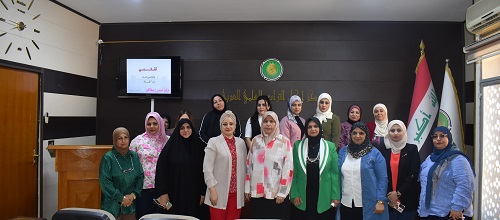
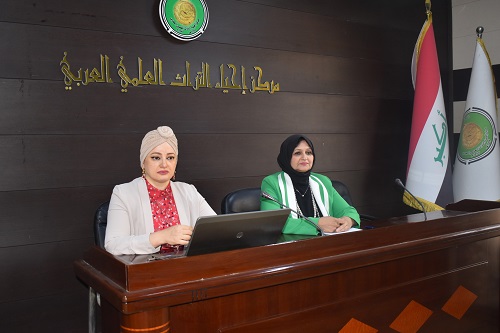
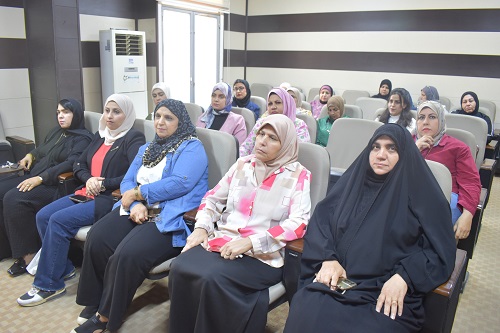
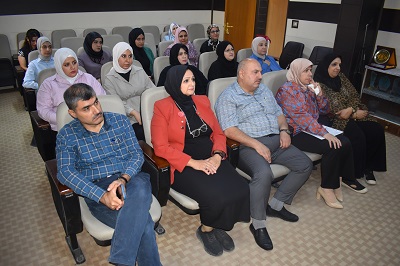
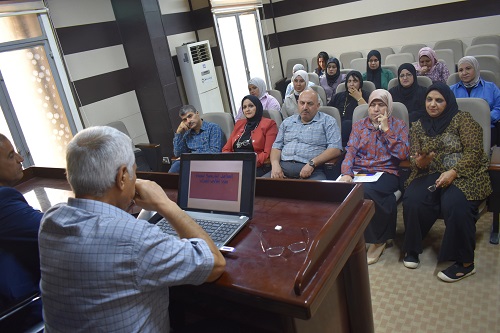
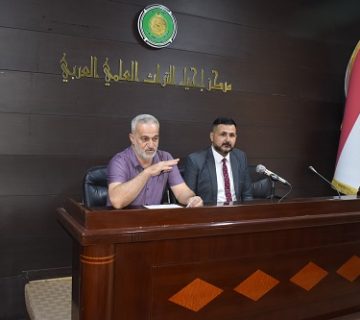
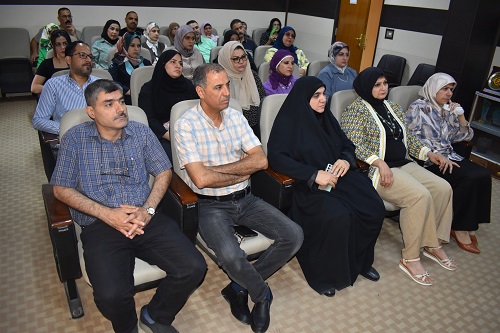
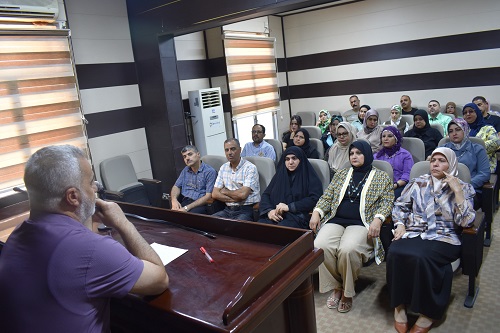
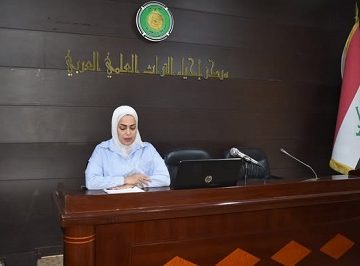
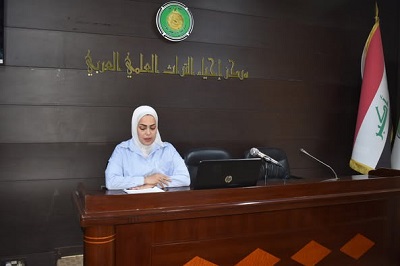
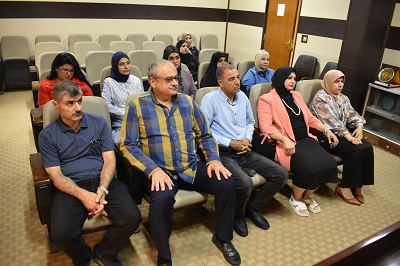
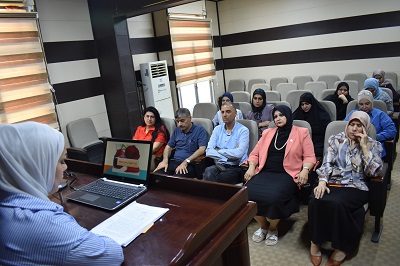
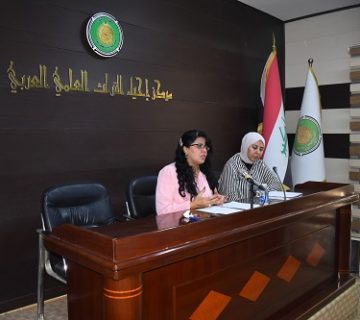
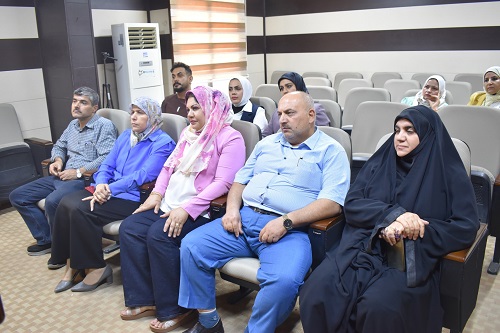
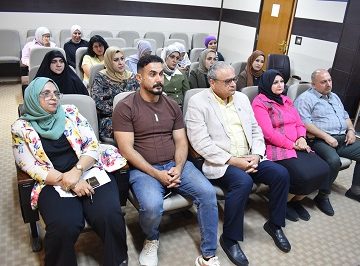
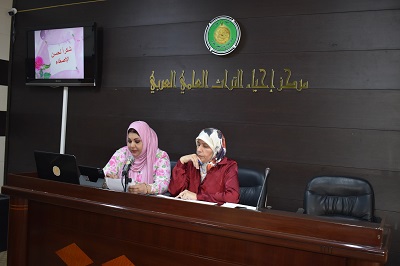
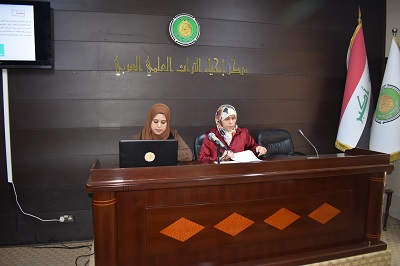
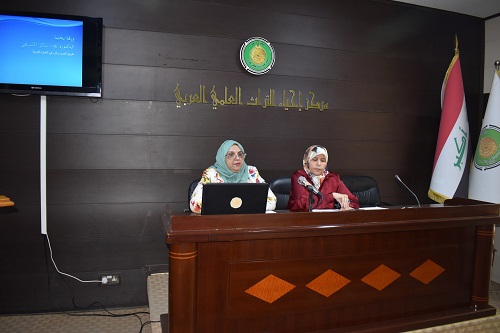
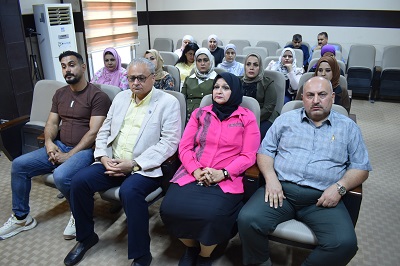
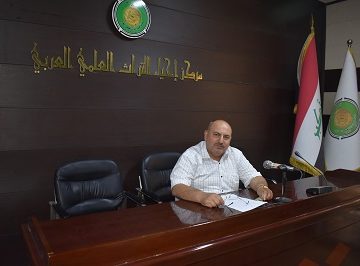
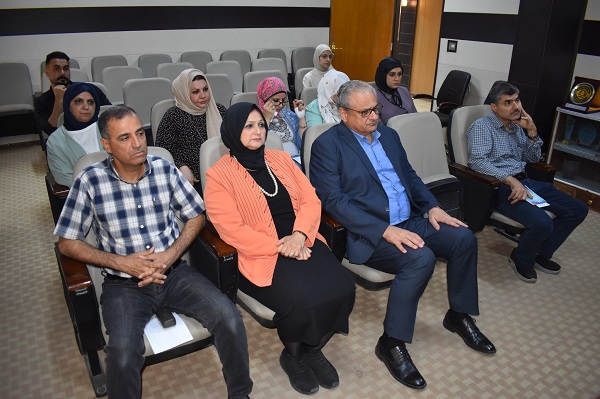
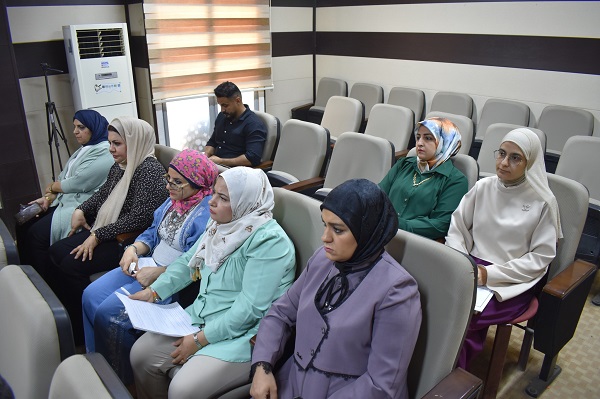
 In accordance with the directives of the Presidency of the University of Baghdad / Department of Media and Government Communication, the Media Unit at the Center for the Revival of Arab Scientific Heritage organized an educational awareness workshop on Wednesday morning, November 26, 2025, at 10:00 a.m., titled “The Role of Educational Institutions in Supporting the Deaf and Mute.” The workshop was held in Professor Nabeela Abdul Muneem Dawood Hall, with the attendance of several professors and academics. It was presented by Assistant Professor Dr. Zainab Kamil Kareem and Lecturer Dr. Liqaa Shakir Al-Sharifi, both faculty members at the Center. Dr. Liqaa Al-Sharifi delivered her research titled “The Rights of the Deaf and Mute in Iraq Between Legislation and Implementation.” The study examined the legal framework regulating the rights of the deaf and mute in Iraq, highlighting the legislation that guarantees their rights to education, healthcare, social welfare, and social integration. Al-Sharifi discussed the gap between what the laws stipulate and what is actually implemented on the ground, pointing out the challenges this group faces, such as the lack of specialized services, the shortage of staff trained in sign language, and limited societal awareness. She emphasized the need to strengthen governmental and institutional efforts to ensure that the deaf and mute have full access to their rights and are empowered to participate effectively in society.

Dr. Zainab Kamil then presented an overview of her research titled “Famous Figures Who Challenged Disability and Transformed It into Success Stories.” The study focused on a selection of Arab and international personalities who faced various disabilities—including hearing impairments—and succeeded in transforming these challenges into sources of strength and creativity. She highlighted examples of individuals who achieved exceptional success in fields such as science, art, sports, and community work, despite their disabilities. The research illustrated how their stories have become a source of inspiration and motivation for empowering the deaf and mute community, promoting a culture of optimism and resilience, and encouraging educational institutions to provide greater support. It also demonstrated the role of these figures in reshaping societal perceptions of disability and highlighting the capabilities of persons with disabilities.

The workshop included several discussions, and at its conclusion, the Media Unit Supervisor expressed gratitude to the two researchers for their dedicated efforts in serving the University and our beloved Iraq.

589953964_1176074857957956_8745517444162845597_n
587111910_1176074854624623_8518052261525382974_n

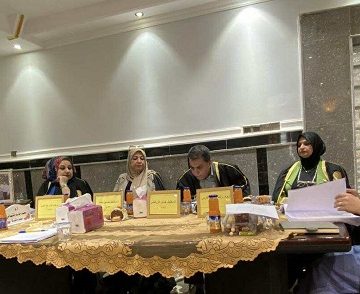
Participation in thesis committee

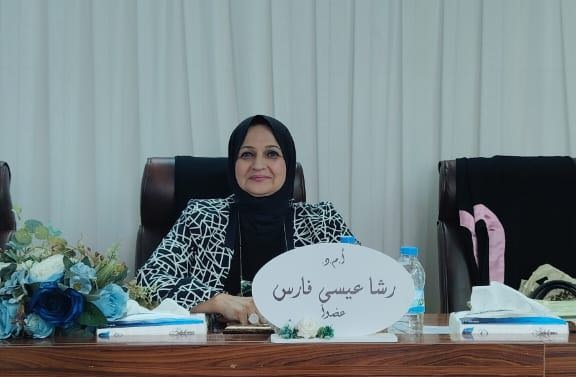
Asst. Prof. Dr. Rasha Issa Faris, a faculty member at the Center for the Revival of Arabic Scientific Heritage at the University of Baghdad, participated on Thursday, October 30, 2025, in the Dar Al-Salam Hall at the Union of Arab Historians, as a member of the examination committee for the Ph.D. membership  submitted by the student Shaimaa Fadel Nassif, entitled “The Intellectual Movement in Samarkand through Al-Dhahabi’s Tarikh al-Islam (748 AH / 1374 AD)”, at the Institute of Arab History and Scientific Heritage for Postgraduate Studies.

The defense was attended by a number of professors and researchers specializing in Islamic history and scientific heritage. After reviewing the committee’s report, the student was awarded the degree of Excellent (Distinction). Congratulations to the student, with best wishes for continued success and progress in her academic journey.

527721457_1083914443840665_4972151800628805972_n

workshop Enhancing the Role of Women

Under the supervision of Prof. Dr. Laith Majid Hussein, Director of the Center for the Revival of Arabic Scientific Heritage at the University of Baghdad, our Center organized a scientific workshop on Sunday, October 26, 2025, at 11:00 a.m., in cooperation with the Center for Strategic Studies and under the patronage of the Women’s Affairs Division at the University of Baghdad. The workshop was attended by a number of female researchers and was held in Professor Nabeela Abdul Muneem Dawood Hall. The workshop, entitled “Enhancing the Role of Women in Political Work and Decision-Making,” was chaired by Asst. Prof. Dr. Rasha Issa Faris, Head of the Baghdad Documentation Department and faculty member at our Center. The lecture was delivered by Asst. Prof. Dr. Rana Mouloud Shaker, faculty member at the Center for Strategic and International Studies at the University of Baghdad.

Dr. Shaker discussed the importance of strengthening women’s participation in decision-making, emphasizing that it is one of the essential conditions for building a genuine and inclusive democracy. She noted that this process requires integrated efforts, represented through several recommendations — including the need for active government entities to enact supportive legislation, strengthening the family’s role in raising children on the principle of support and confidence, particularly for women, and the use of media to craft positive discourse, imagery, and attitudes toward women.

571346082_1151061143792661_2317165163424545686_n
571216195_1151061250459317_5711649937299331457_n
571225640_1151061270459315_8505367999925842373_n

Center for the Revival of Arab Scientific Heritage Organizes a Workshop

Under the supervision of Professor Dr. Laith Majeed Hussein, Director of the Center for the Revival of Arab Scientific Heritage at the University of Baghdad, the Department of Pure Sciences at the Center organized a workshop on Wednesday, October 22, 2025, held in Professor Nabeela Abdul Muneim Dawood Hall, that attended by a number of professors and academics.  The workshop,entitled “Historical Factors Behind the Emergence of Cities in the Upper Euphrates Region,” was chaired by Professor Dr. Taha Subti Ibrahim, Head of the Department of Pure Sciences at our Center. The lecture was delivered by Professor Dr. Saadi Ibrahim Al-Darraji, a retired faculty member of the Center, who discussed the most significant historical factors that contributed to the establishment and continuity of settlement in the Upper Euphrates cities. Among these factors were geographical, economic, administrative and political, military, and social aspects.

Dr. Al-Darraji particularly emphasized the economic factor, especially trade and ancient transportation routes, as well as traditional industries and the importance of agricultural activity in the cities of the region. He also highlighted the historical significance of ancient urban centers with deep roots in history, such as Anah, Haditha, Al-Wus, and Jubbah, noting that most of them emerged along the Euphrates on small fortified islands dating back at least to the Assyrian era, with continuous habitation throughout the Sasanian, Roman, and Islamic periods. The researcher further discussed archaeological sites and major cultural landmarks in the cities of the Upper Euphrates, presenting examples of military, religious, and public architecture. The workshop included several academic discussions and contributions related to the topic. In conclusion, the Center’s administration expressed its appreciation to the distinguished researcher, wishing him continued success in his scholarly endeavors.

571003333_1147838140781628_7049004126714648153_n
570109910_1147838010781641_2807873858843049753_n

Membership

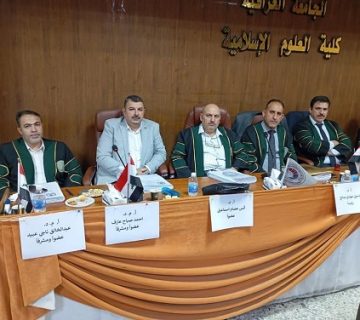
On the morning of Sunday, June 22, 2025, at 9:00 a.m., Professor Dr. Anas Issam Ismail, a faculty member at the Center for the Revival of Arab Scientific Heritage at the University of Baghdad, participated as a committee member in the thesis of a doctoral dissertation at the Islamic Sciences College, Al-Iraqia University.

The dissertation, presented by the student Helo Wahid Al-Din Saeed, was titled “The Features of the Da’wah Methodology of Abu Hamid Al-Ghazali (d. 505 AH) and Its Application in Contemporary Peaceful Coexistence – A Doctrinal Study.” The student was awarded a “Pass” grade based on the decision of the supervising committee. We present  best wishes for continued success in his academic journey.

Visit

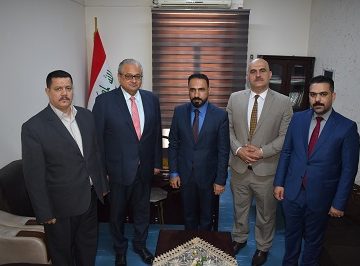
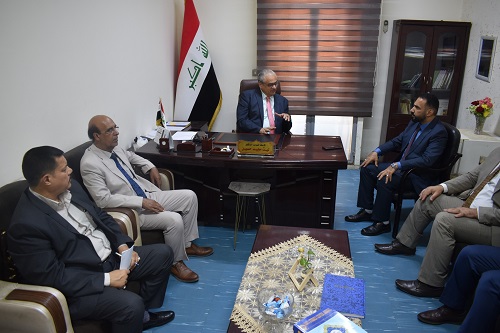
A delegation from the Center for Kufa Studies, headed by Professor Dr. Hasanein Jaber Al-Helou, Director of the Center, along with a number of professors and researchers, visited the Center of heritage revival on the morning of Tuesday, June 24, 2025. The delegation was received by Dr. Laith Majid Hussein, Director of the Center for the Revival of Arab Scientific Heritage at the University of Baghdad. During the meeting, both parties discussed the organization of joint scientific activities, including the planning of seminars, conferences, and collaborative scientific and cultural events in the future. These efforts aim to foster the exchange of expertise, advance knowledge, and build bridges of academic cooperation between researchers and scholars. The visit concluded with the presentation of a copy of the Center for Kufa Studies Scientific Journal to the Center—an initiative reflecting mutual appreciation and a shared commitment to strengthening future collaboration. Dr. Hussein expressed his gratitude to the visiting delegation and wished them continued success and prosperity.

510801975_1052821413616635_3719339054402458861_n
512715663_1052820846950025_1291107972203810797_n
499835218_1052821106949999_6443575317909430992_n

The center of heritage revival organizes workshop

At the invitation of Assistant Professor Dr. Laith Majid Hussein, Director of the Center, the Administrative Affairs Division at the Center, in cooperation with the Division of Accounts for Research and Service Centers at the University of Baghdad, organized a workshop on Tuesday, June 24, 2025, at 10:00 a.m., with the attendance of a number of professors and researchers. The workshop, which focused on explaining the mechanism of health insurance, was presented by Mr. Majid Qasim Al-Khatib, Head of the Payroll Unit. He spoke about the procedures through which individuals can access health services, the costs of treatment, and medical examinations. He explained that the aim of health insurance is to provide financial protection when healthcare is needed.

Mr. Al-Khatib also noted that there are several types of health insurance, including government, private, and supplementary insurance. He clarified the importance of health insurance, emphasizing that it ensures individuals receive necessary healthcare, reduces financial burdens, and improves public health. Furthermore, he explained that health insurance involves the deduction of a portion of the salary to cover healthcare costs, either on a monthly or annual basis. At the conclusion of the workshop, the Center’s administration expressed its gratitude to Mr. Majid Al-Khatib and wished him continued success.

509955947_1052019020363541_7136549920986436820_n
506599631_1052019010363542_2987588714877539733_n

seminar

The center of heritage revival organizes a seminar entitled “Al-Mustansiriya School: A Unique Model in Islamic Education.

Under the supervision of Assistant Professor Dr. Laith Majid Hussein, Director of the Center for the Revival of Arab Scientific Heritage at the University of Baghdad ,the Center organized a seminar on the morning of Tuesday, June 17, 2025, at 10:00 a.m. The event was held in the lecture hall of Professor Nabeela Abdul Muneem Dawood and was entitled “Al-Mustansiriya School: A Unique Model in Islamic Education.”The lecture was delivered by Assistant Lecturer Zainab Jamal Nawroz, a faculty member at our Center. She discussed the founding of Al-Mustansiriya School in Baghdad in the year 631 AH (1234 CE) by the Abbasid Caliph Al-Mustansir Billah. The school became one of the greatest educational institutions of its time, notable for teaching all Islamic jurisprudential schools of thought, making it a symbol of intellectual plurality and academic openness during its era.

What distinguished the Mustansiriya School was the comprehensiveness of its curriculum. It went beyond teaching jurisprudence and Islamic law to encompass various branches of science. Architecturally, the school stood out with its functional and artistic elegance, contributing richly to the scientific and cultural legacy of Islamic civilization.The lecturer added that the administrative and instructional systems at Al-Mustansiriya were advanced for their time, with scheduled class sessions and the issuance of academic certificates upon graduation—an early example of organized educational structure, reflecting the intellectual advancement of the Abbasid state.To this day, Al-Mustansiriya remains a source of pride for the Islamic world, representing a civilizational and educational legacy and serving as an inspiring model for educational institutions past and present.

504425315_1046332827598827_5055735353014279736_n
505368858_1046333354265441_8572416474965820074_n
506082131_1046334247598685_8621657730325856778_n

Workshop Applications of Artificial Intelligence in Women’s Health”

Heritage Revival Center Organizes a Workshop Applications of Artificial Intelligence in Women’s Health”
Under the supervision of Assistant Professor Dr. Laith Majid Hussein, Director of the Center for the Revival of Arab Scientific Heritage at the University of Baghdad, the Women’s Affairs Division in the Center organized a workshop on Wednesday morning, May 21, 2025, in Professor Nabeela Abdul-Munim Dawood Hall, with the attendance of a number of professors and researchers.The workshop was entitled:“Applications of Artificial Intelligence in Women’s Health”The session was chaired by Dr. Zainab Khalid Mahmoud, a member in the Center, and the lecture was presented by Dr. Juman Adnan Hussein who spoke about the rapid technological advancements that highlight Artificial Intelligence (AI) as one of the most significant tools transforming the field of women’s health—ranging from preventive care and accurate diagnosis to treatment and improving quality of life. Thanks to deep learning techniques and big data analysis, doctors and patients can now access personalized and rapid solutions based on scientific precision, which reduces medical errors and enhances women’s health outcomes across various life stages.The researcher highlighted the most important AI applications in this field, such as early detection of breast and cervical cancers, improved IVF outcomes, pregnancy monitoring, fetal health tracking, and even managing menopause symptoms. These technologies also help bridge gaps in areas lacking specialized medical services by offering remote diagnostics and smart assistive tools. She also emphasized the challenges related to data ethics and the importance of ensuring inclusivity in AI models to represent all racial and social groups.This introduction opens the door to exploring how AI is reshaping the future of women’s healthcare, while maintaining a balance between innovation and potential risks. In conclusion, the workshop included several contributions and discussions focused on these applications and their proper use.
494515447_1026703682895075_122562569844060574_n

Trade Between Heritage and Modernity”

The Center for the Revival of Arab Scientific Heritage Holds a Scientific Symposium Entitled “Trade Between Heritage and Modernity

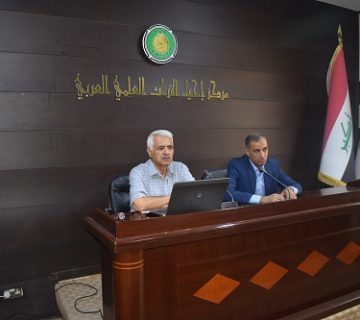
Under the supervision of Assistant Professor Dr. Laith Majid Hussein, Director of the Center for the Revival of Arab Scientific Heritage at the University of Baghdad, the Manuscripts Department organized a scientific symposium on Wednesday, May 14, 2025**, at 10:00 AM in **Professor Nabeela Abdul Moneim Dawood Hall**, with the attendance of a number of academics and researchers. The symposium was entitled: “Trade Between Heritage and Modernity.”The session was chaired by Professor Dr. Zainab Kamel Kareem, Head of the Manuscripts Department, who opened the session with a speech emphasizing the importance of connecting trade practices from ancient times with those of the modern era, highlighting the economic and cultural significance of trade in society.Dr. Zainab presented research paper titled:”Trade in the Holy Qur’an and the Prophetic Sunnah,”in which she explained that trade is among the noblest professions encouraged in Islam, as it provides sustenance for individuals and communities. She emphasized the importance of the Muslim trader adhering to the ethics and values of the faith, especially in light of the growing prevalence of questionable and prohibited practices in modern-day commerce.Following this, Dr. Liqaa Shakir Al-Sharifi, a faculty member at the Center, presented a paper titled:”The Silk Road and Its Impact on Arab Trade”discussing the significance of the Silk Road as one of the most prominent historical trade routes that linked the East and the West. She noted that it was not merely a path for the movement of goods, but also a channel for the exchange of ideas and cultures, highlighting the vital role Muslim and Chinese merchants played in developing cross-cultural commercial networks.Next, Dr. Liqaa Amer Ashour, also a member from the Center, presented a research paper entitled:”Heritage Trade and Its Role in Promoting National Identity,”where she addressed the concept of heritage trade as a component of the cultural economy, focusing on the sale and promotion of traditional local products. She emphasized how this form of trade contributes to preserving both tangible and intangible heritage, supporting artisans and creatives, integrating traditional crafts into the formal economy, and encouraging cultural tourism.The final paper was presented by Assistant Lecturer Walaa Diaa Nassif, a faculty member at the Center, under the title:”The Impact of Digital Transformation on Modern Trade,”in which she discussed e-commerce and digital transformation as key forces of innovation and progress in the global trade landscape. She highlighted how businesses can harness technology and innovation to explore new opportunities and achieve sustainable success in the digital economy.The symposium also featured several academic interventions and discussions that reflected the strategic importance of trade in shaping the future. In conclusion, Dr. Laith Majid Hussein expressed his gratitude to the participating researchers and wished them continued success in serving the university and our beloved Iraq.
The center of heritage revival organized workshop

under the supervision of Assistant Professor Dr. Laith Majeed Hussein, Director of the Center for the Revival of Arab Scientific Heritage at the University of Baghdad, the center organized workshop entitled (Intellectual extremism and ways to treat it) in Nabila A. Almunam Dawood hall in the center on Monday 12th/5/2025 with presence by number of researchers , the lecture was given by prof. Dr. Anas Esam Ismaiel (one of the center’s members) who talked about The intensity and fighting that our contemporary reality has reached baffles rational people and astonishes the wise. In fact, intellectual fanaticism and behavioral extremism are innate in the nature of the human psyche and need to be refined through raising and educating generations on the fundamentals of true religion, placing scholars in the appropriate position for them, and through monitoring and direct supervision of educational and cultural institutions and social media sites by decision makers and honest scholars, and not leaving the reins of affairs to anyone who wants to incite fanatic thought and sedition. The workshop included several interventions and discussions. In conclusion, the director of the center thanked the researcher, wishing him continued success in serving our university and great Iraq.
497372386_1020690400163070_264727641259481793_n
495188717_1020690386829738_1254749499029570421_n

Visit

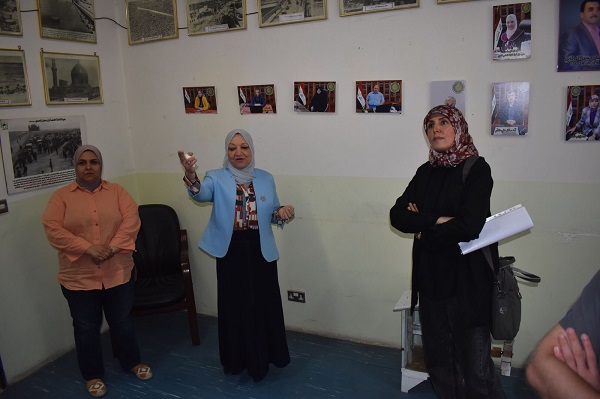
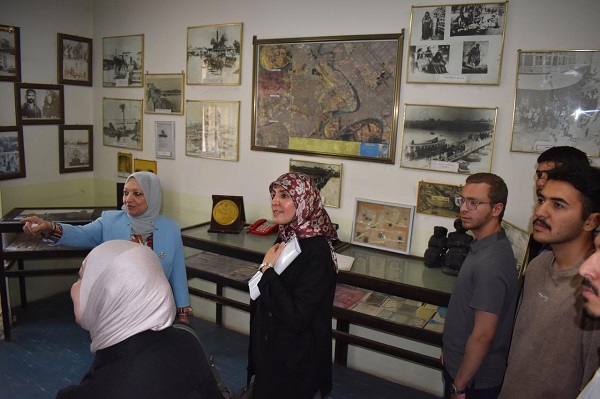
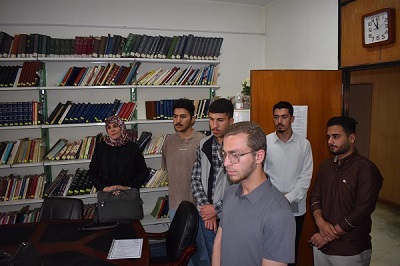
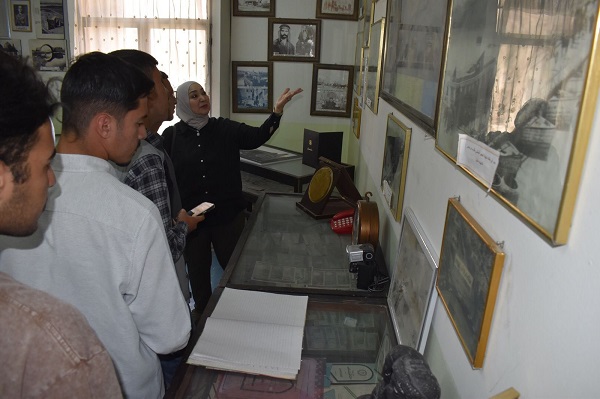
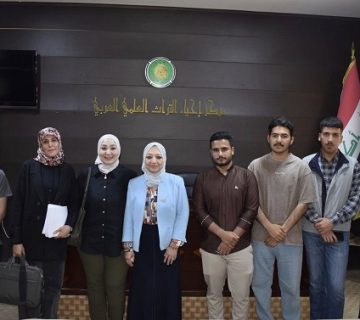
Numbers of forth class students /college of political sciences /university of Baghdad visited The center of heritage revival on Tuesday 22nd/4/2025, they had received by the director of the center prof. Dr. Alaa n. Jasim and the administrative manager Mr. Fares Essa Fares and They toured the halls of the center and got to know the most prominent scientific figures who have worked since the establishment of the center. They also toured the library and the center’s museum and were shown the most prominent manuscripts, valuable books, and archaeological collections. At the end of the visit, the director of the center thanked the student delegation for their visit, wishing them continued success in serving our university and our beloved Iraq.