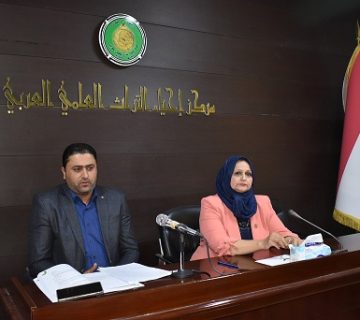
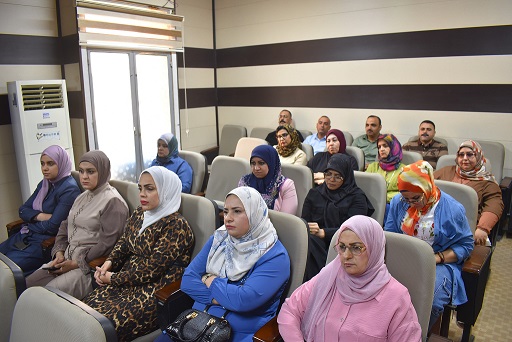
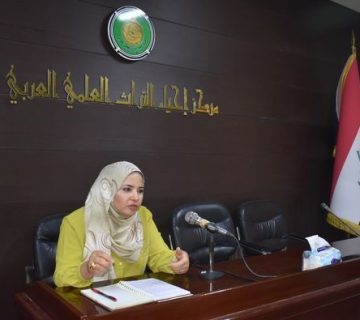
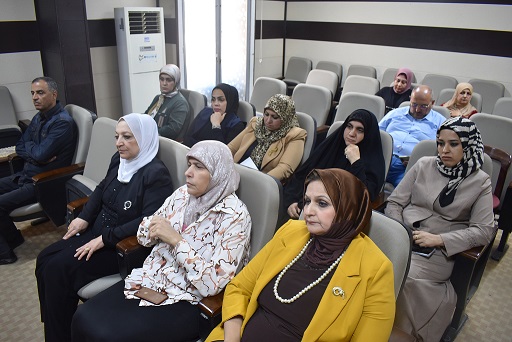
seminar entitled ( types , characteristics and specialization of Arabic proverbs)

The center of revival heritage organizes seminar entitled ( types , characteristics and specialization of Arabic proverbs)

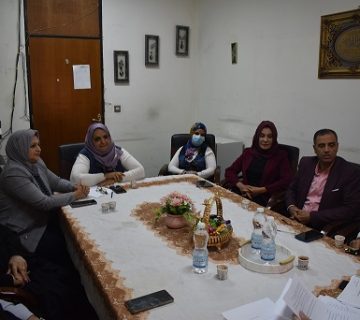
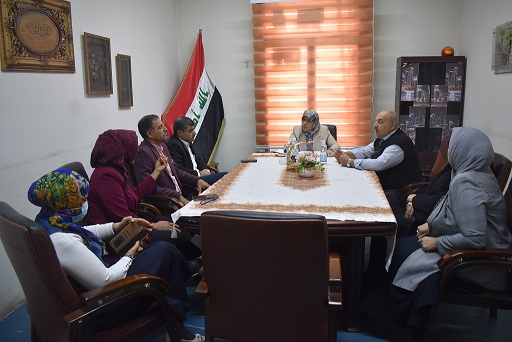
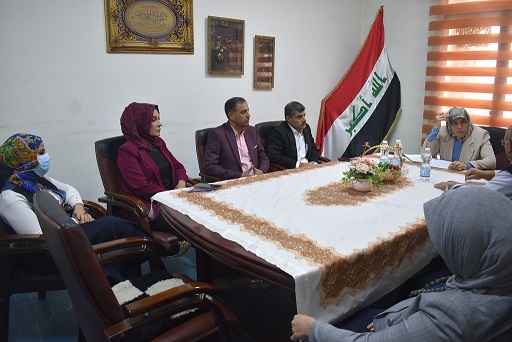
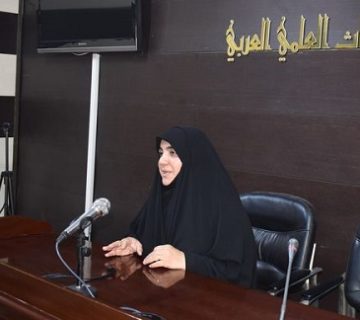
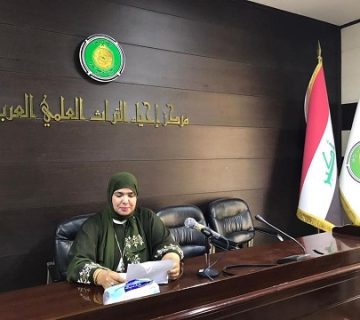
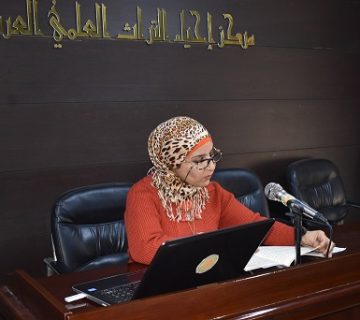
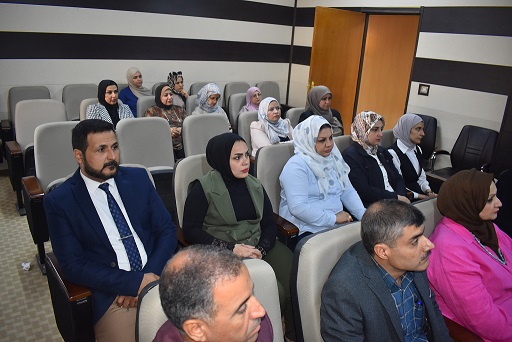
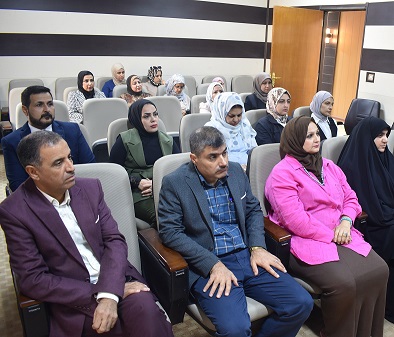
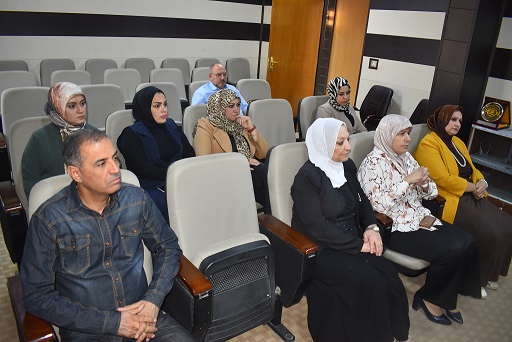
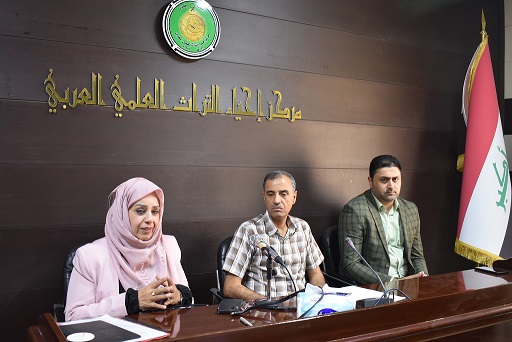
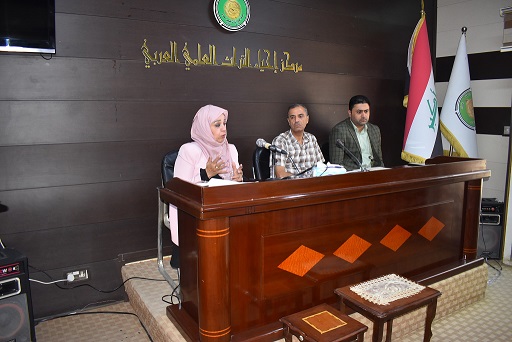
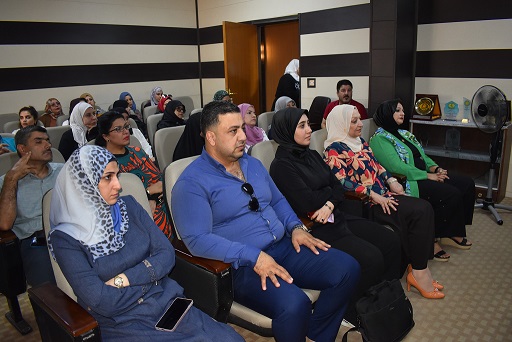
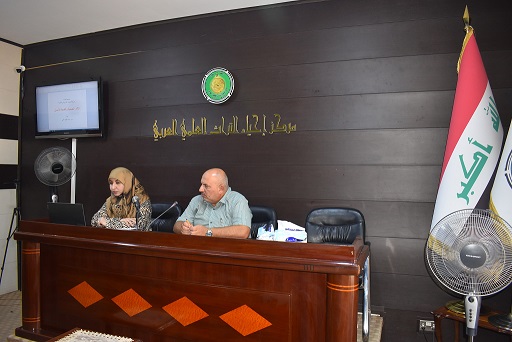
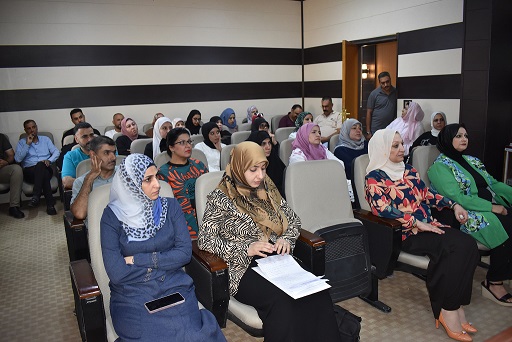
Under the supervision of the director of the center of heritage revival prof. Dr. Alaa Nafea Jasim , the center organized a seminar entitled( types , characteristics  and specialization of Arabic proverbs)on Thursday 7th/11/2024 ,sited in the hall of the center, the lecture is presented by assist prof. Dr. Eman Salih Hadi (one of the center’s lecturers) who defined them as one of the Arabic arts  it is used to compare one situation to another, and the proverb in the language is the likeness and the similarity, and its striking is an expression of its rhythm and its explanation, and in speech it is to mention for a situation what suits it and resembles it and shows from its beauty or ugliness what was hidden, and since what is meant by it is to explain the situations, it was a story and a tale, and the word striking was chosen for it because it comes when wanting to influence and arouse emotion, as if the one striking the proverb is striking the ear of the listener with it, striking its effect to his heart, as for the terminology, Ibn al-Sikkit said: The proverb is a word that differs from the word for which it is struck and its meaning agrees with the meaning of that word. They likened it to the example that someone else works on, and there are many types of proverbs, including the Quranic proverb, classical Arabic proverbs, and colloquial proverbs, which are more widespread and used than the two previous types because they stick in the minds and are considered part of the popular heritage. In conclusion, the Director of the Center thanked the lecturer, wishing her continued success

The digital system is one of the ways to achieve marketing for heritage and historical buildings)

The center of heritage revival organizes seminar entitled( The digital system is one of the ways to achieve marketing for heritage and historical buildings)

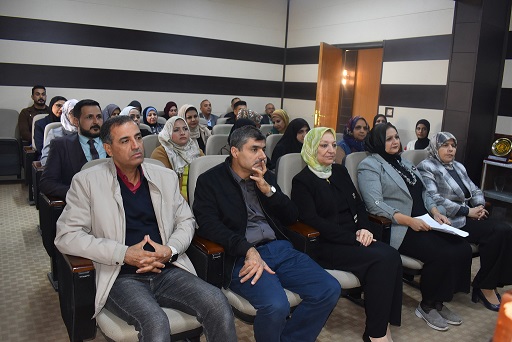
Under the supervision by the director of the center prof. Dr.Alaa Nafea Jasim , the center of heritage revival organized a seminar entitled (The digital system is one of the ways to achieve marketing for heritage and historical buildings)on Tuesday 12th/11/2024 where sited on the hall Nabila A. Dawood in the center , the lecture is presented by the instructor Dr. Emtithal K. Sarhan who talks about  The digital transformation of heritage, antiquities and historical sites is a revolution of the new world that we are living now, as archiving heritage through social networking sites and using modern programs and applications is considered to reach this heritage, its management and its innovations to the largest spread and the widest circle of the world. The world is a small village, and through this virtual and three-dimensional world, it is possible to archive and preserve its tools and demonstrate its innovations over time and through this vast world. In conclusion, the director of the center thanked the researcher, wishing her continued success in serving our distinguished university and our beloved Iraq.
The center of heritage revival organizes seminar

 Under the supervision by prof. Dr. Alaa Nafea Jasim (the director of the center ) , the center of heritage revival organized seminar entitled (Shrines attributed to Jews in Iraq) on Tuesday 5th/11/2014 where sited on the gallery of Nabila A. Dawood in the center , the lecturer is present by assist prof. Dr. Wasan Hussein Mohaimeed who talked about About the shrines attributed to the Jews, some of them are for several prophets, and for their religious men from the rabbis and the righteous, some of them are sacred to them and some of them they do not care about, and some of them are pure fabrications, their aim in attributing them to them is to strengthen their existing idea regarding the deep roots of their history and the antiquity of their presence in Iraq in all its regions, and among these shrines are Seth, son of Adam, Benjamin, son of Jacob, the Prophet Job, the shrine of Rabbi Yehuda, son of Yetira, the shrine of Rabbi Yosef the Galilean or Galilea, and the shrine of Sheikh Isaac the Gaonite or Gaonite.

465551695_888487330050045_5599112432596763600_n
465221926_888489603383151_8641065588757379245_n

Awareness workshop Definition of the Integrity Penalties Law

The center of heritage revival organizes (Awareness workshop) (Definition of the Integrity Penalties Law)

Under the supervision by prof. Dr. Alaa Nafea Jasim , the center of heritage revival organizes workshop in cooperation with Federal Integrity Commission entitled (Definition of the Integrity Penalties Law) on Tuesday 29th/10/2024 on the Nabila A. hall in the center with presence by many members and researchers , the session headed by assist. Prof. Dr. Rasha Essa Fares (one of the center’s members) to present the program  Within the anti-corruption program entitled (Introduction to the Integrity Penalties Law), the lecture was given by the respected legal advisor (Manaf Ahmed Shaalan), speaking about the work of the Integrity Commission in combating corruption and the penalties that result from that according to the Integrity Commission Law, represented by imprisonment, financial fines, dismissal from work, travel ban, and the mechanism for recovering funds in the event that the accused are convicted, as the law aims primarily to reduce levels of corruption and encourage reporting of corruption cases within procedures that provide protection for whistleblowers and enhance transparency in work. In conclusion, the director of the center thanked the lecturer, wishing him continued success
464312687_883641133867998_2984909653682409619_n

seminar ( yemen political circumstances in Islamic era )

The center of heritage revival organizes seminar ( yemen political circumstances in Islamic era )

Under supervision by prof. Dr. Alaa Nafea Jasim (the director of the center ) , the center of heritage revival organizes seminar entitled ( yemen political circumstances in Islamic era ) the lecture was given by Dr. Sahar Hassan Abdul Rasoul, a lecturer at our center, who explained that Yemen’s political conditions resulted from two axes: the first was the entry of the people of Yemen into Islam after the spread of Islam in the Arabian Peninsula. Envoys were sent to it, and the year in which the people of Yemen entered Islam differed. The second axis is that Yemen, during the era of the Umayyad and Abbasid Caliphates, was stable and did not witness any events. However, during the Umayyad Caliphate, it was characterized by the large number of governors, and often the governor did not last more than a few months and was dismissed. During the Abbasid Caliphate, Yemen was not stable due to its distance from the center of the Caliphate and the mountainous nature, so independent states were formed

464087468_880296837535761_8823779531444681419_n
464454085_880296797535765_9004752904670485335_n

Participation in scientific conference


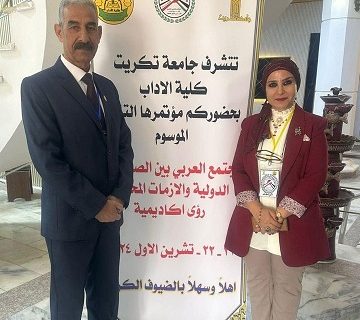
Assist. Prof. Dr. was an Hussein Muhaimeed (humanity sciences department) participated in the ninth scientific conference that hold by university of Tikrit /college of art through 21-22/10/2024 .Dr. was an Hussein presented a research  entitled (the moral dimension of tolerance in the thought of Imam Ali (peace be upon him) and its impact on rejecting religious extremism)that deals with The sublime principles of Islam derived from the constitution of Muslims, the Holy Quran, in preserving the rights of non-Muslims who are called the People of the Covenant. The policy of the Noble Messenger Muhammad (peace be upon him and his family) with them was an application of these principles in a way that achieves coexistence far from religious extremism that negatively affects the fabric of the single society. Since the Prophet Muhammad (peace be upon him and his family) is the city of knowledge and Imam Ali (peace be upon him) is its gate, who overflows with mercy, humanity and moral loftiness that overwhelms all his subjects, including the People of the Covenant, its research included paragraphs starting with Imam Ali’s (peace be upon him) view of the People of the Covenant, his relationship with their religious men, granting them freedom of belief and worship, his dealings with them, his justice and compassion towards them, and his standing with them before the judiciary, then his debates with the People of the Covenant, and the conversion of many of them to Islam at his hands. In conclusion, certificates and conference bags were distributed to the researchers and their hospitality, hoping for continued scientific communication with the professors of our Iraqi universities. To work as one hand, serving the scientific process in our beloved Iraq

THE organizes seminar Urban Structures in the Mamluk Era


Under the supervision of the Director of the Center, Professor Dr. Alaa Nafeh Jassim, the Center for the Revival of Arab Scientific Heritage at the University of Baghdad organized a seminar on Monday morning, October 14, 2024, at exactly ten o’clock in the morning, in the hall of Professor Nabila Abdel Moneim Daoud, entitled (Urban Structures in the Mamluk Era). The lecture was given by Assistant Professor Dr. Rasha Issa Faris spoke about the most important urban facilities during the Mamluk era, as the country witnessed a great scientific renaissance, as the Mamluk sultans played a role in building many religious, civil and military landmarks, the traces of which still exist. This period was characterized by great interest in the arts of architecture and engineering, and many mosques, schools, cemeteries and khanqahs were built. Among the most prominent Mamluk mosques are the school and mosque of Sultan Qalawun 683-684 / 1284-1285 AD, the Hijazi School, which was established by Mrs. Khoshtar al-Hijaziyya, daughter of Sultan Muhammad Qalawun, the Zahiri School, which was built by King al-Zahir Baybars al-Bunqdari, and the Mu’ayyad School. The researcher touched on the most important khanqahs in Egypt, which are the Khanqah al-Bunduqdariyya, named after Prince Alaa al-Din al-Bunduqdar, the Khanqah of Seriaqos, in addition to many other facilities that played a prominent and effective role in spreading culture and science in a way that serves

The center of heritage revival organizes workshop 

Within the Anti-Corruption Program and under the supervision of Professor Dr. Alaa Nafeh Jassim, Director of the Center, the Center for the Revival of Arab Scientific Heritage at the University of Baghdad organized a workshop entitled (Money Laundering Crime) on Tuesday morning, September 24, 2024, in the hall of Professor Nabila Abdel Moneim Daoud, in the presence of a number of professors and researchers. The lecture was given by the Legal Advisor (Manal Faeq Abbas) and the Legal Advisor (Manaf Ahmed Shaalan) / Federal Integrity Commission, speaking about money laundering, which aims to give a legal character to the funds that represent the proceeds of crimes and their returns, regardless of the type of crime committed and the description of the perpetrator. It is a process resorted to by those working in drug trafficking and transnational and non-organized organized crimes to hide the unreal source of illegal (dirty) money and to camouflage it to give legitimacy to illegal income. The speakers emphasized the crimes that harm the national economy and the national anti-money laundering laws and international agreements, including the Convention against Drug Trafficking and the (Palermo) Convention to Combat Crimes The transnational organization aims to prevent the concealment of the true source of illegally acquired funds and to protect companies that are exploited in money laundering crimes without realizing it. Combating money laundering is part of economic development procedures. In conclusion, the director of the center thanked the lecturers for giving attention to important topics that are considered contemporary problems, hoping to raise these issues in workshops and discussion groups in the future

461183974_857996926432419_7685159022332965344_n
461164687_858001766431935_6604358165152665626_n

Workshop (The psychological impact of drugs on Iraqi society)

Sponsored by prof. Dr. Alaa Nafea Jasim , (the director of the center heritage revival) in the university of Baghdad , the center holds seminar entitled (The psychological impact of drugs on Iraqi society) in cooperation with the center of psychological and educational researches , where sited on Wednesday 18/9/2024 with presence by many researchers ,it presented by instructor Dr. Sahar Ali Mahdi who talked about  (Addiction is a life-threatening danger) Talking about the physiology of addiction in terms of dividing the types of drugs according to their effect on the addicted person and the doubling of the condition and its development over a period according to the type of pills or narcotic substance and the appearance of the first factors on the human nervous system, stressing the need to take precautions and monitor these cases when the infection or addiction begins. Ms. Samaa Faleh Ghali, a lecturer at the Educational and Psychological Research Center, participated with her research paper entitled (The physical and psychological effects of drug addicts), talking about drug addicts suffering from weight loss, red eyes with dark circles around them, fatigue, exhaustion, drowsiness, nausea, and the person being introverted, isolated, tense, anxious, moody, nervous, lying, stealing, and readiness to commit a murder that may lead to the end of his life by death or imprisonment. In conclusion, Prof. Dr. Alaa Nafeh Jassim thanked the lecturers, wishing them continued success and more scientific giving
460193165_854084790156966_3399944764141872902_n
460349083_854084736823638_6247106281503524489_n
459859599_854084830156962_5997850783492061683_n

Meeting

On Monday, September 16, 2014, the Director of the Center for the Revival of Arab Scientific Heritage at the University of Baghdad, Prof. Dr. Alaa Nafeh Jassim, held the first meeting with the heads of departments in our center. The meeting included how to work on developing the work assigned to them by opening field visits to the center from the departments of the various colleges to explain and clarify the heritage and employ it at the present time, i.e. introducing students to the initial and postgraduate studies of the heritage. This represents the center’s openness to the rest of the university’s formations. The director of the center stressed the opening of horizons of cooperation with other institutions. The conference on the history of science among the Arabs and the scientific, administrative and technical preparations were discussed. The 2024 plan was also discussed, in addition to some proposals that serve our center and our venerable university.

459916084_852658890299556_6989062298829690062_n
460349126_852658893632889_4159258123591669084_n

Celebration in the occasion of birth the great prophet Mohammad

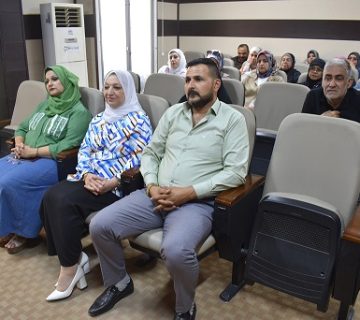
The Center for the Revival of Arab Scientific Heritage holds a celebration on the occasion of the birth of the Greatest Prophet, the Messenger Muhammad (may God bless him and his family and grant them peace) The Center for the Revival of Arab Scientific Heritage at the University of Baghdad organized a celebration on the occasion of the birth of the Greatest Prophet Muhammad (may God bless him and his family and grant them peace) on Monday morning, September 16, 2024, in the hall of Professor Nabila Abdel Moneim Daoud, where Professor Dr. Anas Essam Ibrahim, a lecturer at our center, gave a lecture on the qualities of the Greatest Prophet (honesty, trustworthiness, mercy, the Prophet’s smile in the face of his brother, asceticism, generosity, and courage..) and stressed the importance of adopting these eternal qualities and establishing them for future generations and explaining how to treat one’s wife properly, talk to her, listen to her, be gentle with children, and talk to them with interest and love, and treat hypocrites mercifully without taking revenge on them as long as they declare their Islam. In conclusion, Professor Dr. Alaa Nafeh Jassim thanked the attendees, wishing them continued success and prosperity. Happy New Year
460055827_852339856998126_1330062850611556790_n

The Lecture the historical roots in Jewish sanctities

Assistant Professor Dr. Wasan Hussein Muhaimid, a lecturer in the Department of Humanities / Center for the Revival of Arab Scientific Heritage / University of Baghdad, gave a lecture entitled (The Historical Roots of Jewish Sanctities in Iraq) which was held on Saturday 7/13/2024 in the Word of Life Forum Hall affiliated with the National Evangelical Baptist Church. It was attended by a group of distinguished researchers. In it, she discussed the historical roots of the ancient presence of Jews in Iraq, then touched on their sanctities that are linked to the shrines of their prophets that are still visible to this day, namely the shrine of Joshua bin Nun (Joshua), Ezra (Ezra), Ezekiel (Al-Kifl), Daniel, Obadiah, Jonah (Jonah), and Nahum Al-Qoshi, referring to what was mentioned about these prophets in the Old Testament and what historical sources included of information confirming or denying the burial of these prophets in Iraq. She also discussed the shrines attributed to the Jews that belong to other prophets. Some of their righteous people include Seth, son of Adam, Benjamin, son of Jacob, the Prophet Job, the tomb of Rabbi Judah, son of Yetira, Joses the Galilean, and Isaac the Gaonite. Father Arar Badlian, the church’s pastor, presented the doctor with a certificate of appreciation and a shield of distinction, wishing her continued scientific giving.

451099104_812912164274229_7214534796859160960_n
451190996_812912157607563_5419381370494057118_n