Conference

A Delegation of Professors from the Center for the Revival of Heritage Attends a Scientific Conference

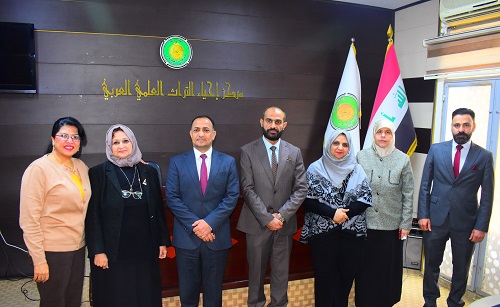
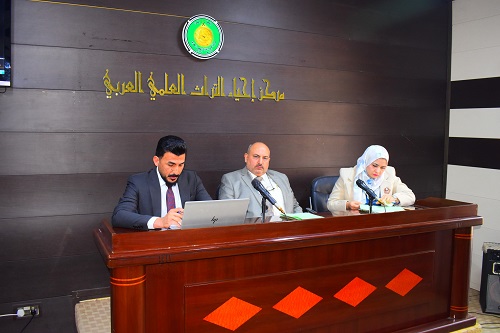
Upon a kind invitation from the President of the Iraqi Academy of Sciences, Professor Dr. Mohammed Hussein Al-Yaseen, to Professor Dr. Laith Majid Hussein, Director of the Center for the Revival of Arab Scientific Heritage, to attend the scientific conference entitled “Arabic Manuscripts between Heritage and Modernity”, held on Thursday, 11 December 2025, with the following day’s sessions conducted virtually via the Google Meet digital platform. Professor Dr. Laith Majid Hussein instructed that a delegation attend the conference on his behalf due to his travel and academic commitments outside Iraq. The delegation was headed by Professor Dr. Anas Issam Ismail, and included Professor Dr. Taha Sabti Ibrahim and Professor Dr. Wasan Hussein Muhaimid, representing the Center.

The conference was convened as part of the Iraqi Academy of Sciences’ efforts to enhance research in Arabic manuscript heritage and to develop methodologies for the study and critical editing of manuscripts in a manner that bridges scholarly authenticity with the requirements of the digital age.The President of the Academy welcomed the delegation, conveying his kind regards to the Director of the Center, and expressed his appreciation for accepting the invitation, emphasizing the importance of opening horizons for future cooperation between the Iraqi Academy of Sciences and the Center for the Revival of Heritage in service of the academic endeavor.

599542752_1186729020225873_8090145351539428447_n

At the Invitation of Tokyo University of Foreign Studies

The Second Day of the Conference “History of Science among the Arabs”

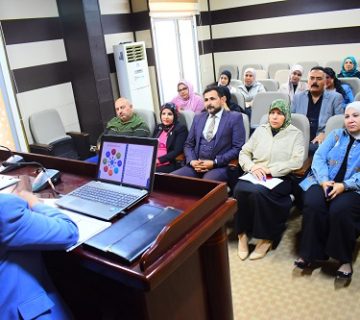
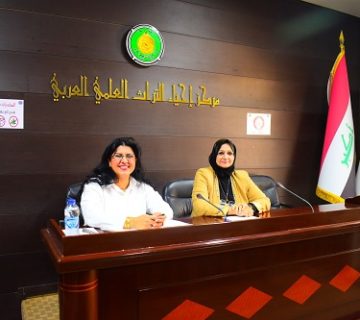
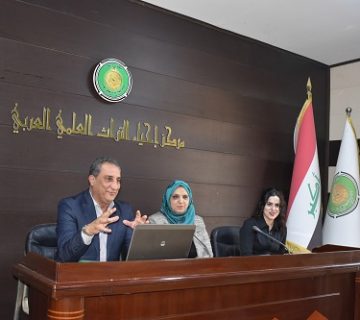
The activities of the second day of our annual scientific conference, “History of Science among the Arabs,” concluded after two days of distinguished participation from researchers and specialists in history and various scientific fields. The conference hosted a series of scientific sessions addressing diverse topics related to the contributions of Arab scholars in different fields of science such as mathematics, astronomy, medicine, and philosophy.During the sessions, recent research was presented and discussed by participants from various local institutions, highlighting the role of Arab heritage in the development of human knowledge. Case studies and examples were also presented on how scientific knowledge transitioned from Arab civilization to Europe and the modern world. The conference also offered broad opportunities for interaction among participants, the exchange of expertise, and the strengthening of research collaboration between universities and academic institutions. One of the most prominent achievements on the second day was the agreement to establish a joint committee aimed at preparing scientific documentation of the historical achievements of Arab science, as well as launching initiatives to support future studies in this field.

The conference concluded with a closing session focusing on exploring future directions of research in the history of science among the Arabs. Participants emphasized the importance of continuing such events to promote cultural and historical awareness. Certificates of appreciation were awarded to researchers in recognition of their efforts and scientific contributions.

593469703_1180918164140292_4242080620882192824_n

the European Film Festival at the University of Baghdad

The Center for the Revival of Heritage Participates in the Launch of the European Film Festival at the University of Baghdad

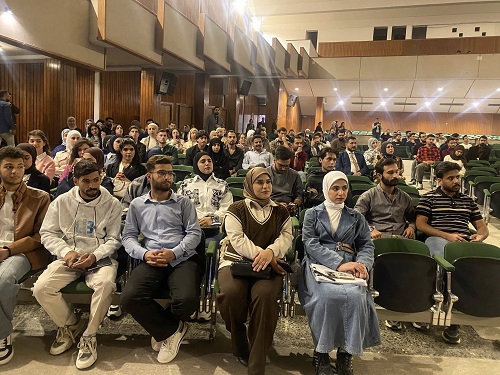
The European Film Festival commenced on Monday, December 1, 2025, in Al-Shaheed Al-Hakim Hall at the University of Baghdad, with the participation of several European cultural institutions and the attendance of university faculty and students. The festival features screenings of selected short films addressing youth-related issues and highlighting values of diversity, cultural understanding, and artistic creativity. The event drew significant student engagement, with organizers emphasizing that the festival aims to provide an educational and cultural platform that enhances students’ awareness of visual arts and introduces them to European experiences in short-film production. The festival will continue through December 5, including interactive discussion sessions between students and experts on filmmaking techniques and the social messages conveyed through film

593367590_1179559350942840_6154593273189549277_n

Workshop

Under the Slogan: “Sign Language as a Bridge of Communication”

The Center for the Revival of Arab Scientific Heritage Organizes a Workshop

 In accordance with the directives of the Presidency of the University of Baghdad / Department of Media and Government Communication, the Media Unit at the Center for the Revival of Arab Scientific Heritage organized an educational awareness workshop on Wednesday morning, November 26, 2025, at 10:00 a.m., titled “The Role of Educational Institutions in Supporting the Deaf and Mute.” The workshop was held in Professor Nabeela Abdul Muneem Dawood Hall, with the attendance of several professors and academics. It was presented by Assistant Professor Dr. Zainab Kamil Kareem and Lecturer Dr. Liqaa Shakir Al-Sharifi, both faculty members at the Center. Dr. Liqaa Al-Sharifi delivered her research titled “The Rights of the Deaf and Mute in Iraq Between Legislation and Implementation.” The study examined the legal framework regulating the rights of the deaf and mute in Iraq, highlighting the legislation that guarantees their rights to education, healthcare, social welfare, and social integration. Al-Sharifi discussed the gap between what the laws stipulate and what is actually implemented on the ground, pointing out the challenges this group faces, such as the lack of specialized services, the shortage of staff trained in sign language, and limited societal awareness. She emphasized the need to strengthen governmental and institutional efforts to ensure that the deaf and mute have full access to their rights and are empowered to participate effectively in society.

Dr. Zainab Kamil then presented an overview of her research titled “Famous Figures Who Challenged Disability and Transformed It into Success Stories.” The study focused on a selection of Arab and international personalities who faced various disabilities—including hearing impairments—and succeeded in transforming these challenges into sources of strength and creativity. She highlighted examples of individuals who achieved exceptional success in fields such as science, art, sports, and community work, despite their disabilities. The research illustrated how their stories have become a source of inspiration and motivation for empowering the deaf and mute community, promoting a culture of optimism and resilience, and encouraging educational institutions to provide greater support. It also demonstrated the role of these figures in reshaping societal perceptions of disability and highlighting the capabilities of persons with disabilities.

The workshop included several discussions, and at its conclusion, the Media Unit Supervisor expressed gratitude to the two researchers for their dedicated efforts in serving the University and our beloved Iraq.

589953964_1176074857957956_8745517444162845597_n
587111910_1176074854624623_8518052261525382974_n

Training

Female Faculty Members of the Center for the Revival of Arab Scientific Heritage Participate in a Training Workshop within the Activities of Anti-Drug Week

A group of female faculty members from the Center for the Revival of Arab Scientific Heritage at the University of Baghdad participated on Monday, November 17, 2025, in a training workshop organized by the Center for Continuing Education at the University of Baghdad as part of the activities of Anti-Drug Week. The workshop was presented by Professor Dr. Arkan Saeed Khattab, Director of the Center, with the attendance of a number of specialists and individuals concerned with awareness-related issues. The workshop addressed the main themes related to the drug epidemic, the most prominent methods of combating it, and the negative effects it leaves on society. It also discussed modern prevention strategies and the role of educational institutions in raising awareness among students and promoting healthy and responsible behavior. The participating faculty members showed clear engagement through presenting viewpoints and scientific interventions that contribute to supporting national efforts aimed at limiting the spread of drugs, emphasizing the importance of continuing such awareness programs within the university environment.

The workshop concluded with an emphasis on the importance of integrating the roles of scientific and educational centers to enhance community awareness and develop sustainable training programs in the field of drug prevention.

Workshop on Environment and Drinking Water

The Center for the Revival of Arab Scientific Heritage Holds a Workshop on Environment and Drinking Water

The Department of Human Studies at the Center for the Revival of Arab Scientific Heritage, University of Baghdad, organized a workshop on WednesdayNovember 2025, in Professor Nabeela Abdul Muneem Dawood Hall. The workshop was titled “Environment and Drinking Water: Between Heritage and Modernity” and was attended by a number of specialists and individuals interested in environmental issues. The session was chaired by Lecturer Dr. Sahar Hasan Abdul Rasool and presented by biologist Farah Hatif from the Environmental Studies Division.During the workshop, the researcher highlighted the importance of sustainable development and its role in preserving water resources, with particular focus on the sixth Sustainable Development Goal concerning clean water and sanitation. She emphasized that ensuring access to safe and clean water for all is a fundamental pillar of development in any society.

The workshop also reviewed traditional practices in water management and preservation across the ages, comparing them with modern technologies employed by contemporary institutions to ensure the quality and safety of drinking water. This comparison underscored the integration between traditional expertise and modern scientific knowledge.The workshop aimed to raise awareness about the importance of protecting water sources, promote positive behaviors in water consumption, and enhance societal understanding of environmental challenges related to the water sector. The researcher concluded with several recommendations, including the need to strengthen cooperation between governmental and community institutions to protect water resources, support projects that improve water quality, and expand awareness programs on sustainable water usage to ensure its availability for future generations. The workshop included several discussions on water safety and proper usage of non-potable water. At the conclusion, the Center’s administration thanked the researcher for her efforts, wishing her continued success and achievement.

585884390_1170696151829160_2051198205158003338_n
586825930_1170695671829208_2012967068242377139_n

Workshop on the Occasion of Anti-Drug Week

The Center for the Revival of Arab Scientific Heritage Organizes a Workshop on the Occasion of Anti-Drug Week

Under the directives of the Presidency of the University of Baghdad and on the occasion of Anti-Drug Week, the Center for the Revival of Arab Scientific Heritage organized an awareness workshop in cooperation with the Government Media and Communication Unit and the Scientific Affairs Division of the Center on Tuesday morning, 18 November 2025, at 11:00 a.m., in Professor Nabeela Abdul Muneem Dawood Hall. The workshop was titled “The Educational Institution and Its Role in Building Student Awareness Against Drug Abuse.” The session was chaired by Assistant Professor Dr. Rasha Issa Fares, and the lecture was delivered by Assistant Lecturer Juman Adnan Hussein, a faculty member of our Center. The workshop aimed to raise awareness and promote a culture of prevention against the scourge of drug abuse among students and staff. The workshop addressed several key topics, including the introduction to the dangers of drug abuse, its health and social effects, and early prevention methods. It also discussed the role of educational institutions in combating this phenomenon through awareness campaigns and support for guidance programs.

The workshop witnessed the participation of several Center staff members, who contributed interventions that enriched the discussion on the importance of cooperation between academic and administrative bodies to curb the spread of this issue and guide young people toward a safe and healthy university environment. At the conclusion of the workshop, the organizers affirmed the Center’s commitment to continue supporting educational and awareness activities that align with the University’s vision of building an informed society capable of confronting social challenges.

586269037_1169706368594805_3557101425906020868_n
585321857_1169893558576086_3073789341711415304_n
583310758_1169707261928049_6567408303574489288_n

The center of heritage revival organizes scientific symposium 

Under the supervision of Professor Dr. Laith Majid Hussein, Director of the Center for the Revival of Arab Scientific Heritage at the University of Baghdad, the Baghdad Documentation Department organized a scientific seminar on Sunday, 16 November 2025, in Professor Nabeela Abdul Muneem Dawood Hall, titled “Baghdad, the City of Peace.” Lecturer Dr. Liqaa Shakir Al-Sharifi opened the session by highlighting Baghdad’s presence in classical and modern poetry, followed by presentations from a group of specialized researchers who discussed various historical, cultural, and social aspects of the city. The seminar featured notable contributions, including studies on Baghdadi customs in the Ottoman era, the city’s historical neighborhoods, and the symbolic significance of its cultural and political monuments. The concluding presentation explored Baghdad’s portrayal in Dr. Taha Al-Rawi’s work “Baghdad, the City of Peace.” Participants emphasized the importance of supporting scholarly research on Baghdad’s heritage and promoting a culture of peace. The session concluded with the Center’s Director expressing gratitude to the attending professors and researchers for their valuable contributions

581317528_1168556365376472_9182277298312705091_n
583296823_1168556305376478_3665944556842914597_n

Announcement Conference

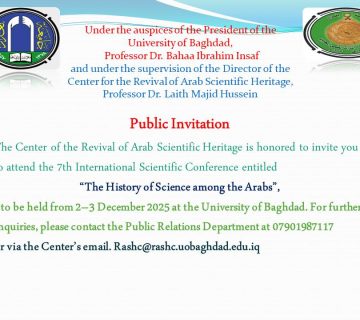
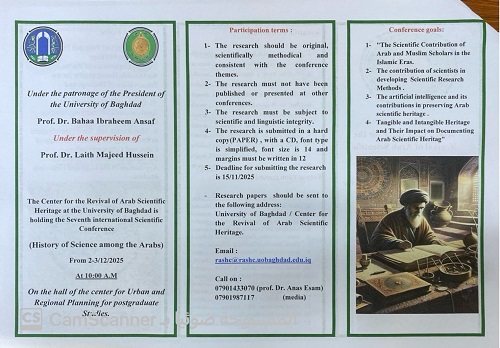
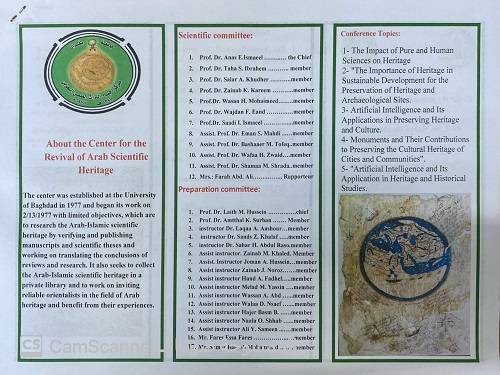
Under the supervision of Professor Dr. Laith Majid Hussein, Director of the Center for the Revival of Arab Scientific Heritage at the University of Baghdad, the Center will hold its 7th International Scientific Conference entitled “The History of Science among the Arabs” on the 2nd and 3rd of December 2025, in the hall of the Center for Urban and Regional Planning for Graduate Studies. Accordingly, individuals wishing to participate in the conference are kindly requested to contact the phone numbers and email address indicated in the folder.

557695406_1132145079017601_3678012555233348550_n
560784857_1132145102350932_1630240301330285568_n

seminar “The Differences in Qur’anic Readings

The center of heritage revival organizes seminar “The Differences in Qur’anic Readings and Their Impact on the Variation of Meaning,”

Under the supervision of Prof. Dr. Laith Majid Hussein, Director of the Center for the Revival of Arabic Scientific Heritage at the University of Baghdad, our Center organized a seminar on Tuesday, October 28, 2025, at 12:00 p.m., in Professor Nabeela Abdul Muneem Dawood Hall, with the attendance of several of the Center’s staff members.

The seminar, entitled “The Differences in Qur’anic Readings and Their Impact on the Variation of Meaning,” was delivered by Asst. Prof. Dr. Iman Saleh Mahdi, a faculty member at our Center. Dr. Mahdi discussed the scholars’ stance on citing Qur’anic readings as evidence. She explained that when the movement of compiling works on Qur’anic readings—both mutawatir (widely transmitted) and irregular (shadhdh)—became active, referring to these readings became an essential necessity in establishing grammatical and linguistic rules. She noted that the use of Qur’anic readings as linguistic evidence began in the Basra and Kufa schools, but the grammarians of the two schools differed in their approaches. The Basrans, since the time of Sibawayh, sought to subject these readings to their established grammatical rules and analogies; they accepted and cited those that conformed to their principles and rejected those that did not, labeling them as irregular.

Participates in the Eighth Scientific Conference

The Center for the Revival of Arabic Scientific Heritage Participates in the Eighth Scientific Conference of the General Authority for Antiquities and Heritage

At the invitation of the General Authority for Antiquities and Heritage, the Center for the Revival of Arabic Scientific Heritage at the University of Baghdad participated in the activities of the Eighth Scientific Conference entitled “The Civilizational Role of the City of Baghdad Through Historical Eras.” The conference was held under the patronage of Dr. Ahmed Fakak Al-Badrani, Minister of Culture, Tourism, and Antiquities, and under the supervision of Mr. Qasim Taher Al-Sudani, Deputy Minister, under the slogan “Baghdad: Authenticity and Everlasting Splendor.”

The conference took place on Monday, October 27, 2025, at 10:00 a.m., in the Cordoba Hall of the Al-Mansour Melia Hotel in Baghdad, with the participation of a distinguished group of researchers, academics, and specialists in the fields of history, archaeology, and heritage. During their participation, representatives of the Center emphasized the importance of such conferences in documenting Iraq’s civilizational heritage and supporting national efforts aimed at preserving cultural identity and strengthening the sense of belonging to the deep-rooted history of the capital, Baghdad.

573072959_1150341660531276_2172968386952635061_n

Center for the Revival of Heritage Organizes a Seminar

Under the supervision of Prof. Dr. Laith Majid Hussein, Director of the Center for the Revival of Arab Scientific Heritage at the University of Baghdad, our Center organized a seminar on Tuesday morning, September 16, 2025 and academics and was entitled “The Art of Gilding in Manuscript Heritage.”

The lecture was delivered by Assistant Professor Dr. Zainab Kamel Karim, a faculty member at our Center, who spoke about gilding as an artistic creativity and a distinguished, essential field within the knowledge frameworks of Islamic arts. She explained that gilding goes beyond being a craft or profession; its aesthetic quality suggests that it is a unique Islamic art, alongside calligraphy, painting, ornamentation, and bookbinding.

For this reason, many studies have focused on gilding, tracing its beginnings, stages of development, colors, and its influences across the different environments in which it flourished. Gilding evolved through various styles — Umayyad, Abbasid, Persian, Egyptian, Andalusian, and Ottoman — each of which became a distinct school of this art.

The researcher added that studying gilding in manuscripts holds great significance, as these works often represent rare pieces of extraordinary artistic beauty, especially Qur’anic manuscripts. Since gilding is an integral part of such manuscripts, it too has suffered damage over time, just as the manuscripts themselves have. Therefore, scholars and conservators must give due attention to preserving this art and safeguarding these precious works.

The seminar included several discussions on the topic, and at the conclusion, the Center’s Director thanked the researcher, wishing her continued success in her academic career.